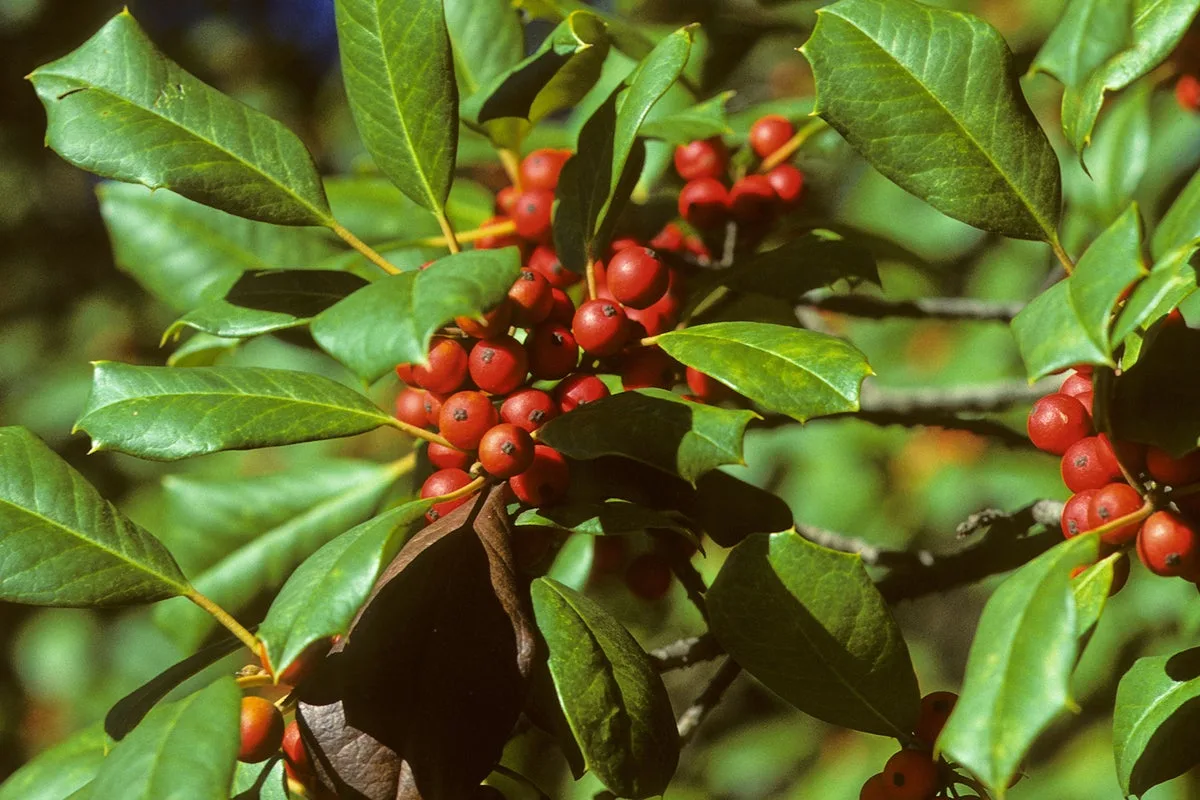
Holly, with its red berries and deep-green foliage, is a staple of winter decor, but it also makes a beautiful year-round garden addition. With hundreds of species and hybrids from around the world, including more than a dozen native to the continental U.S., holly offers diversity for many gardens. Early Christians adopted the evergreen as a symbol of eternal life, while ancient pagans believed it repelled evil spirits and hastened spring's return.
While holly berries provide crucial winter food for birds and wildlife, most are toxic to humans. The best time to plant is early spring, after the last hard freeze but before summer heat. Regular watering during the first year helps roots establish. Most hollies are dioecious, meaning male and female plants are separate; females need a male nearby (within 50 feet) to produce berries. Variety names like 'China Girl' (female) and 'China Boy' (male) can help, but not all are obvious—ask nursery staff if unsure.
Four recommended holly species include: Yaupon holly (native to the U.S. Southeast, hardy in zones 7-9, tolerant of sun and shade); American holly (also known as Christmas holly, hardy in zones 5-9, requires acidic, moist soil); Blue holly (a European hybrid, hardy in zones 5-7, with blue-green spiny leaves); and Winterberry (a deciduous holly that loses leaves in autumn, showcasing bright berries, hardy in zones 3-9).
One species to avoid is English holly, which has become invasive in parts of the U.S., particularly from Vancouver to California. Introduced in the 1800s, its toughness and quick spreading have led it to choke out native vegetation. Avoid planting it in problematic regions and proceed with caution elsewhere.