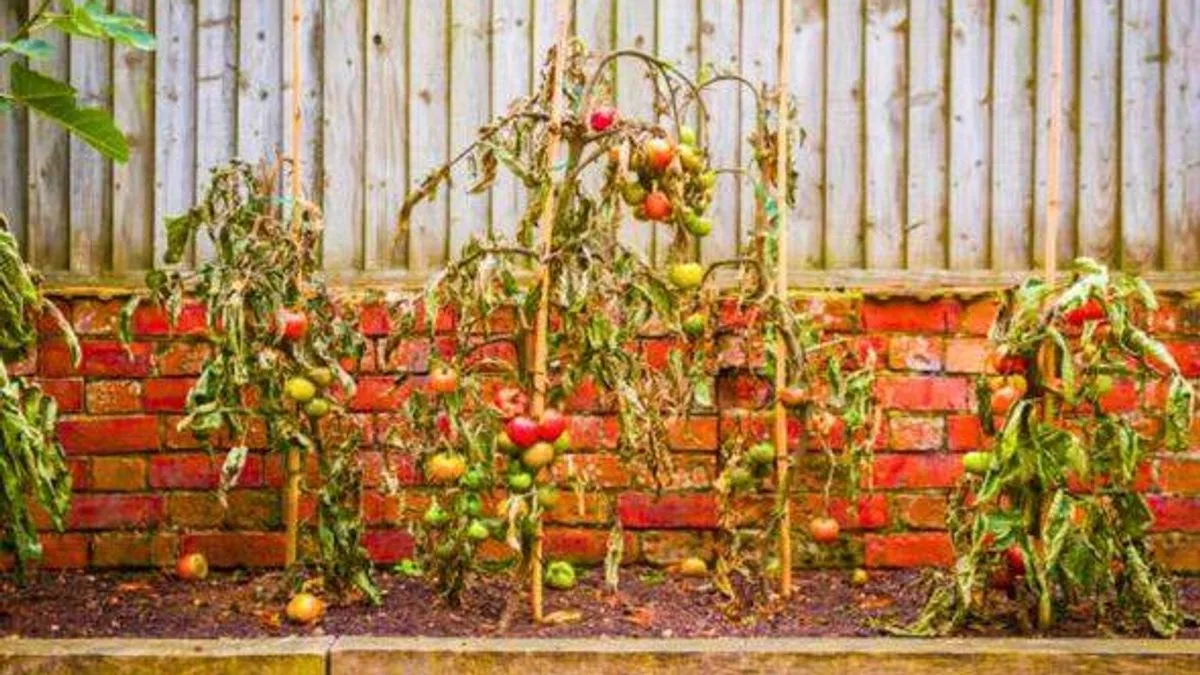
Gardeners are being urged to inspect their tomato plants daily for signs of Late Blight, a disease that can destroy an entire harvest within days if left unchecked. The disease, caused by the pathogen Phytophthora infestans, thrives in the cold, wet conditions of autumn and spreads rapidly through wind and rain.
Horticulturist Beth Otway, founder of Pumpkin Beth, warns that Late Blight marks tomato leaves and stems with brown patches and causes fruit to develop large, dark, leathery spots. 'It spreads rot and disease, turning green or ripening tomatoes a deathly brown,' she said. Infected plants may also exhibit white, fuzzy mould on leaves and stems, and the plant can wilt and die quickly as the disease disrupts photosynthesis and water transport.
If you spot symptoms, act immediately. Remove and bin or burn any affected tomatoes and plant material, including twine. Do not compost infected debris, as spores can survive and spread to other plants. For plants that are severely affected, harvest all ripe and unripe tomatoes that appear untouched by the disease, then dispose of the entire plant.
To prevent Late Blight, water tomato plants at the base in the morning to allow foliage to dry quickly. Avoid overhead watering, which can splash spores onto leaves. Use organic mulch like straw to keep soil moisture low, and always wash hands and sterilise tools before moving between plants to avoid spreading the disease.
Regular inspection is key. Check leaves for dark green patches that turn brown, and look for greasy-looking spots on fruit. Early detection can save your crop from this devastating disease that can wipe out months of hard work.