In the heart of Europe, a battle against encroaching desertification is being waged by a determined group of farmers. On the Great Hungarian Plain, where cracks split the earth and sand dunes advance, a pioneering project using repurposed thermal water offers a glimmer of hope.
A Landscape Transformed: From Fertile Plains to Arid Sands
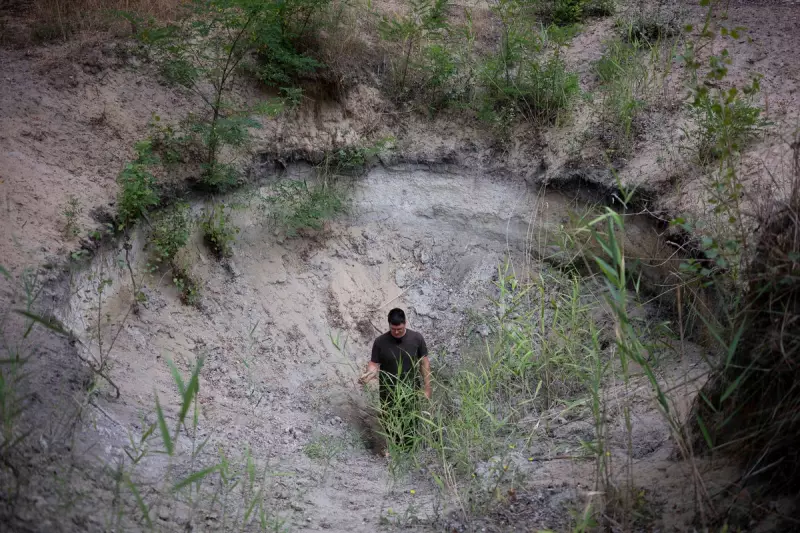
Landowner Oszkár Nagyapáti knows the scale of the crisis intimately. Climbing into a sandy pit on his property, he digs for signs of the groundwater that has been retreating at an alarming rate. "It's much worse, and it's getting worse year after year," he told The Associated Press. The cloudy liquid that slowly seeps into his hand is a faint remnant of what was once abundant.
The region, known as the Homokhátság in southern Hungary, presents a scene more familiar in the Sahara than Central Europe. Once regularly flooded by the Danube and Tisza Rivers and brimming with diverse crops, it is now classified in scientific studies as a semiarid zone. A 2017 paper in the European Countryside journal pinpointed a deadly combination of climate change, improper land use, and poor environmental management as the cause, labelling the aridification unique for this part of the continent.

The consequences are stark: dried-out wells, a plummeting water table, and soil so parched it cracks wide open. A 2024 study by Eötvös Loránd University revealed that unusually dry surface air layers now prevent incoming storm fronts from releasing rain, leading instead to desiccating winds that whip away the precious topsoil.
The 'Water Guardians' Initiative: Mimicking Nature with Thermal Water
Faced with the potential total desiccation of their land, Nagyapáti and a growing band of volunteer "water guardians" decided to act. Their innovative solution taps into a resource Hungary is famous for: thermal water. "There was a point when I felt that enough is enough. We really have to put an end to this," Nagyapáti explained.
Their plan was elegantly simple. After negotiating with authorities and a local thermal spa last year, they secured access to the spa's overflow water, which would otherwise drain unused into a canal. This water, drawn from deep underground and then cooled and purified, is now being redirected to flood a 2.5-hectare (6-acre) low-lying field.
This artificial flooding deliberately mimics the natural cycle of river floods that ended when the waterways were channelised. "When the flooding is complete and the water recedes, there will be 2.5 hectares of water surface in this area," Nagyapáti said. "This will be quite a shocking sight in our dry region."
Creating Microclimates and a National Blueprint
The ambition extends far beyond creating a temporary pond. The guardians hope the flooded area will raise the local groundwater level and, crucially, generate a new microclimate. Surface evaporation should increase humidity, reduce temperatures and dust, and positively impact surrounding vegetation.
Hungarian meteorologist Tamás Tóth emphasises the critical importance of such water retention projects. He states that due to their impact on the local climate, this approach is "simply the key issue in the coming years and for generations to come, because climate change does not seem to stop."
The group's first major intervention followed another hot, dry summer. By blocking sluices along a canal, they allowed the repurposed spa water to gather. By early December, a shallow marsh had formed. For Nagyapáti, this "brings us immense happiness here in the desert" and is expected to have a "huge impact" within a 4-kilometre radius, improving soil water balance and raising the water table.
The crisis is of national significance. Persistent droughts on the Great Hungarian Plain threaten full-blown desertification, damaging crops and impacting GDP. This prompted Prime Minister Viktor Orbán to announce a 'drought task force' in 2025.

Now over 30 strong, the water guardians have already noted improved groundwater levels and a resurgence of flora and fauna near their pilot site. They aim to expand, flooding another field, and hope their model inspires widespread action. "This initiative can serve as an example for everyone," Nagyapáti urged. "Retaining any kind of water, whether in a village or a town, is a tremendous opportunity for water replenishment."
The Associated Press’ climate and environmental coverage receives financial support from multiple private foundations. AP is solely responsible for all content.