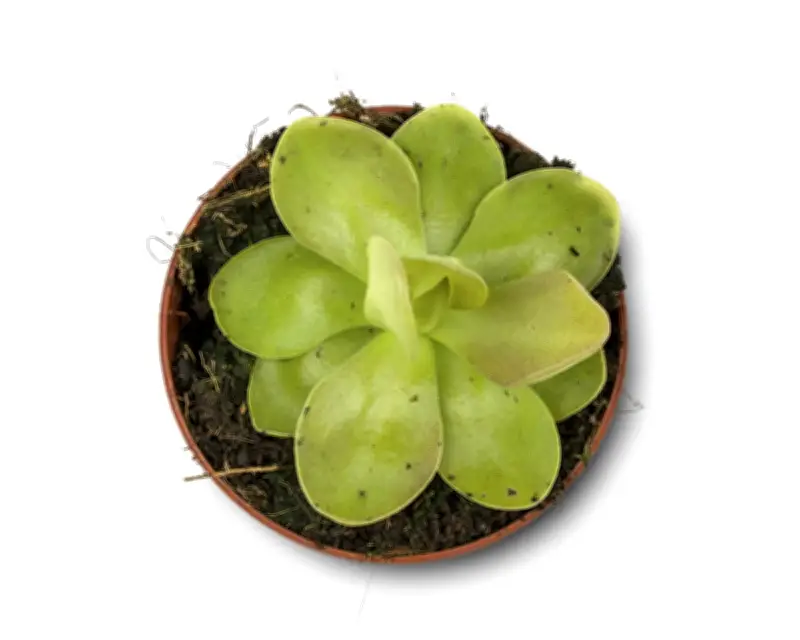
Butterworts, small carnivorous plants with leaves coated in sticky mucilage, can effectively trap adult fungus gnats. When placed next to affected plants, they act as living flypaper, reducing the pest population by catching adults before they breed.
The Fungus Gnat Problem
Fungus gnats are persistent pests that often return after conventional controls. Drying soil, using sticky traps, or applying hydrogen peroxide may only target one stage of the gnat lifecycle, leaving eggs or larvae to continue the infestation. Adult gnats are harmless but annoying, laying eggs in damp compost.
How Butterworts Work
Butterworts (Pinguicula species) capture tiny flying insects on their sticky leaves. By keeping one or two among houseplants, they catch adult gnats, preventing egg-laying. According to the article, the method involves potting the butterwort in a mineral-poor mix like sand, perlite, or peat moss, avoiding standard compost and fertilizer. Bottom water with rainwater or distilled water only, keeping soil lightly moist.
Testing the Hack
The author placed a butterwort beside a gnat-infested fern. Within days, leaves were covered with trapped flies. The adult gnat population declined steeply over two weeks, and the butterwort thrived on the feeding.
Verdict
Butterworts are not a complete solution as they target adults, not larvae in soil. However, fewer adults mean fewer eggs, breaking the cycle. As a self-sufficient, attractive gnat trap, the butterwort earns its place on the windowsill.