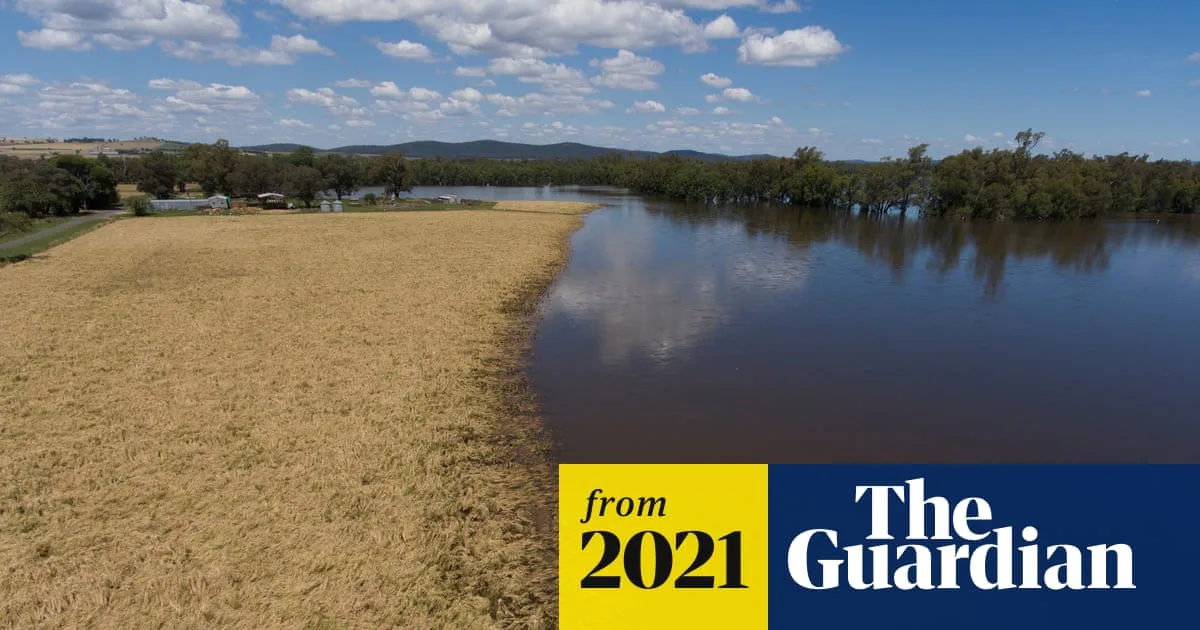
Australia's winter harvest, once forecast to be among the largest on record, is facing significant downgrades due to persistent rain and flooding. The Australian Bureau of Agricultural and Resource Economics and Sciences (ABARES) had predicted in September that total agricultural production would exceed $70bn for the first time, but experts now say the value could be slashed by billions.
The Bureau of Meteorology declared a La Niña event on Tuesday, which has brought untimely rain across cropping regions. Richard Heath, executive director of the Australian Farm Institute, said the forecast would “definitely” come in lower than expected. “It’s been extraordinary weather all around the country, all the cropping areas have received very untimely rain,” he said.
Brett Hosking, chair of Grain Growers and a farmer from Quambatook, estimated economic losses could be “tens of millions” but said it was too early to provide an exact figure. Andrew Whitelaw, an analyst at Thomas Elder Markets, predicted losses in the billions, describing the situation as “scary”. He noted that previous wet harvests had been localised, but this year’s conditions have downgraded crops across New South Wales, Victoria, Western Australia and South Australia.
Whitelaw explained that wet weather degrades protein in wheat, turning high-quality grain suitable for human food into lower-grade feed. Andrew Watson, a grain farmer from the Liverpool Plains, reported 105mm of rain since Saturday, following 70mm the previous weekend. His durum wheat, which would have fetched a premium price, has been downgraded, costing him approximately $500 per tonne for 3,000 tonnes. Much of his unharvested fields are flooded.
Dylan Hirsch, a farmer in Western Australia’s wheatbelt, said frost had already reduced wheat yields by 35% and barley by 10-15%. Mark Swift, a cereal and chickpea farmer near Forbes, fears imminent damage from forecast 50-100mm of rain. Whitelaw warned that for those with completely wiped-out crops, the outcome is akin to drought but with higher input costs due to expensive fertiliser.