
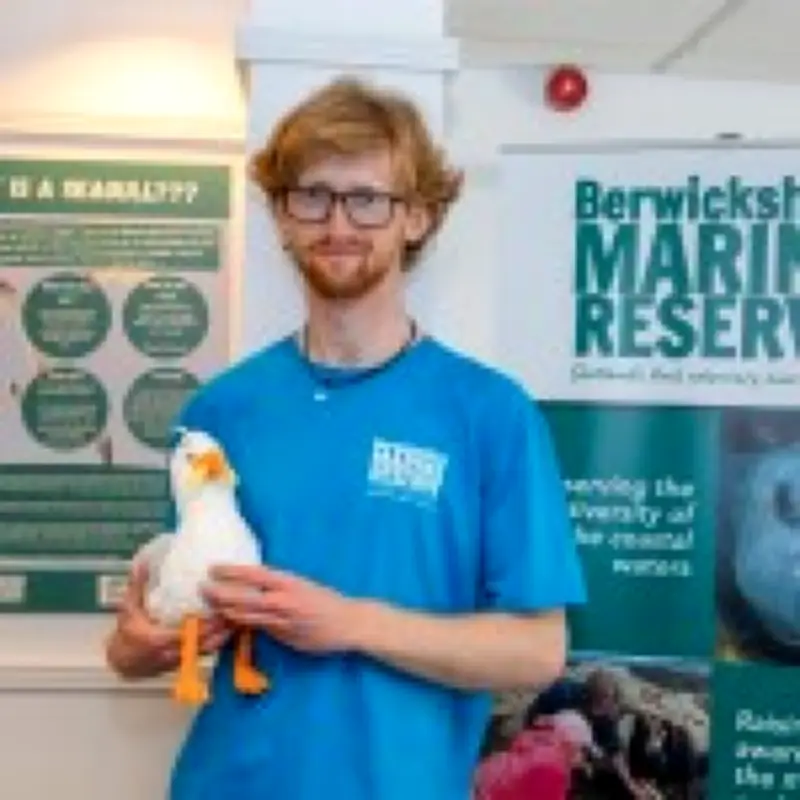
Britain’s first ‘gull ranger’ has started work to improve human and seagull relations, claiming the birds are ‘intelligent and pretty harmless’. Patrick Safford, 24, took to the streets in June as the country’s first gull ranger in the Scottish Borders town of Eyemouth.
Background and Role
After several attacks from seagulls in the area, the charity Berwickshire Marine Reserve decided to create the unique position. The brief is to ‘re-establish a balanced relationship between humans and gulls through education and engagement’. Patrick’s responsibility will be to engage with people and visitors about gulls – the importance of not feeding them, how to behave to avoid conflict and conservation issues.
Patrick, a former ecological consultant and keen birdwatcher, now has the job of educating the public on how to avoid gull attacks and tracking the seagull population. He believes seagulls get an unfairly negative reputation, stating: ‘They’re really interesting, because they’re really intelligent and adaptable. I’ve been interested in gulls for a long time, and it’s always frustrated me that the minority of them that get into conflict with people can get them a lot of hate. I wanted to get involved and see what I could do about it.’
Initial Actions and Findings
So far, Patrick has worked on opening a marine education centre and surveyed locals to find out where gulls nest, where gull attacks are a problem, and how people react. He has criticised deterrents like fake predators, netting and spikes, believing them to be ineffective due to seagulls’ adaptable natures. ‘Deterrents are often ineffective,’ he said. ‘Gulls adapt to them. You’ll often see around Eyemouth a deterrent, with gull chicks nesting next to it anyway. The fake predators, it takes them a short amount of time to realise they’re not a threat to them, and spikes are a bit more effective, but they’re very expensive.’
Funding and Duration
The job is funded by Flora and Fauna International and running until August. To coexist peacefully with gulls, Patrick believes it is a matter of education – and says it is only a minority of gulls that are brave enough to swoop. ‘I think only around 25% of gulls are bold enough to steal food,’ he said. ‘The same with adults swooping to protect chicks, again, it seems to be a minority, and they’re the ones that make the headlines. Then people who haven’t lived with them think they’re all like that and get nervous and scared of them, and the word spreads the wrong way. A few of them can cause conflict, but there are steps we can take to minimise that conflict.’
Practical Advice
Patrick says to avoid gulls stealing food, locals should sit next to walls or awnings to break their flight paths. He also urges residents to avoid littering and not to put rubbish in overfilled bins. To avoid attacks from gulls protecting chicks, he says to give the chicks space, as they only take six weeks to mature.




