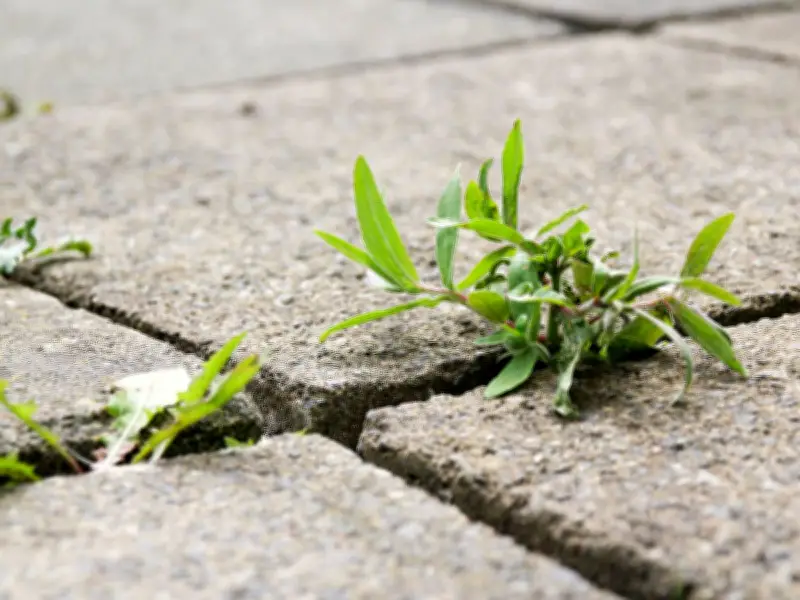
Great British Bake Off champion and bestselling author Nancy Birtwhistle has shared a simple, natural method for eliminating stubborn patio weeds: boiling water. Instead of reaching for vinegar or salt, which can damage surrounding plants, or chemical weedkillers that pose risks to health and the environment, Birtwhistle recommends pouring scalding water directly onto weeds.
Why Avoid Vinegar and Salt?
While many gardeners opt for natural remedies like white vinegar and salt, these approaches can cause more harm than good when applied improperly. Vinegar can immediately scorch and harm plant tissue if it comes into contact with desirable plants, while salt dehydrates vegetation by drawing moisture from its roots. Chemical weed treatments are another option, though they can pollute water sources, disturb ecosystems, and pose risks to human health.
Boiling Water: The Natural Solution
Birtwhistle states she steers clear of weedkillers containing "very toxic chemicals" and instead depends on natural techniques. She noted: "What do you do about those really tough weeds you can't reach by hand? I have a simple tip—let me show you!" She heats water in a kettle, pours it straight onto the weed, and allows it to take effect. She continues: "After a day, you'll see the weed has shrivelled, and after two days, it's almost completely gone. For my vegetable plot, though, I still hand-weed."
How Boiling Water Kills Weeds
Boiling water serves as a brilliant substitute for aggressive chemicals or salt and vinegar solutions, proving far gentler on the environment. The scalding water eliminates weeds by delivering a thermal shock. It essentially cooks the cells, bursts cell walls, and breaks down the plant's proteins. After the cells are compromised, the weed loses its ability to hold water, causing it to rapidly dehydrate, wilt, and perish. Boiling water generally damages the weed's root structure and stops it from sprouting again.
While boiling water is effective against most weeds, it may struggle against firmly established perennial weeds with extensive root systems. In such cases, repeated applications may be necessary.
How to Use Boiling Water on Weeds
Start by boiling fresh water in a kettle. Put on closed-toe footwear and protective gloves to prevent scalding. After the water reaches boiling point, pour it straight onto the weeds, targeting the roots where visible. If the root isn't accessible, direct the water to where the stem meets the ground. Take care not to splash boiling water on surrounding plants, as it will damage whatever it comes into contact with. Allow the boiling water to take effect for a day or two, then assess the weed's condition. If it's shrivelled and lifeless, yank it out or brush it aside. Should the weed emerge again after seven to 10 days, just go through the process once more.
Alternative Methods for Beds and Borders
Manual removal is usually the swiftest and simplest approach to clear weeds from beds and borders. Hoeing proves most successful for eliminating seedlings and can support soil vitality. For more deeply embedded perennial weeds, using a hand fork to extract the root ball may be necessary. Where weeds are especially deep and firmly established, gardeners might require a spade or garden fork to excavate the root system. Those wanting to clear weeds from beds and borders could employ mulch or cardboard. Mulch, including bark and compost, along with cardboard, obstructs sunlight and stops weeds from germinating. For extensive areas with abundant weeds, covering the space with a plastic sheet or tarp is an option.