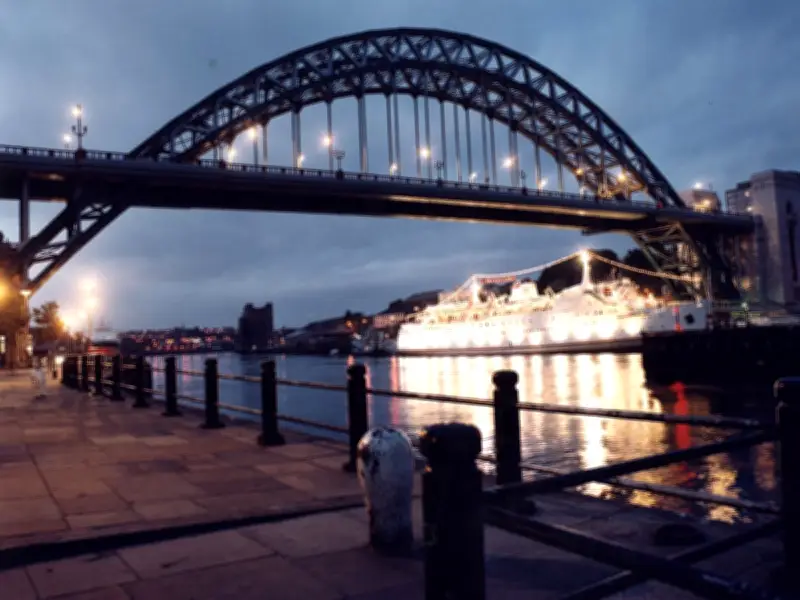
The Tyne Bridge at dusk in 1984, with the floating nightclub Tuxedo Princess berthed underneath, offers a striking contrast to the transformed Quayside of today. The image captures the start of a party era, but the surrounding waterfront was in steep decline.
Decline and Revival of the Quayside
In 1984, the Quayside was increasingly derelict. The River Tyne's maritime glory days were over, and heavy industry was fading. However, revival began in the late 1980s and early 1990s. Tony Flynn, former leader of Newcastle City Council and board member of Tyne and Wear Development Corporation, wrote in his book The Brasilia Of The North: "A masterplan for the Quayside was drawn up by the locally-educated architect Sir Terry Farrell that removed the run-down Quayside sheds and planned a mixed-use development including housing, leisure, and office facilities. The beauty of the scheme was that it gave priority to pedestrians along riverside walkways, with office buildings set back from the quay, designed by different architects but working to the same proportions set down in the overall plan."
Transformation Over Four Decades
Four decades after the 1984 photograph, both the Newcastle and Gateshead sides of the Quayside have been transformed. Landmarks like the Gateshead Millennium Bridge, BALTIC Centre for Contemporary Art, The Glass House (formerly The Sage Gateshead), and the Law Courts, along with new apartments, hotels, bars, and restaurants, have made the Quayside one of the region's most vibrant leisure and cultural destinations. All this sits in the shadow of the Tyne's bridges, the Castle, and other historic sites.
The Tyne Bridge Then and Now
In 1984, the Tyne Bridge was just 56 years old, having opened in October 1928. Today, ahead of its centenary in two years, the bridge is undergoing major restoration, including steelwork repairs, repainting, and structural strengthening, to secure its future.
The Baltic Flour Mill to BALTIC Centre
In the distance on the Gateshead side in 1984, the Baltic flour mill stood. It opened in 1950 as a dual-purpose factory for flour and animal feed, closed in 1982, lay derelict, and was redeveloped into the BALTIC Centre for Contemporary Art, which opened in 2002.
The Tuxedo Princess Story
The Tuxedo Princess, a converted car ferry, opened as a floating nightclub in December 1983. Initially intended for the Newcastle side, legal issues placed it on the Gateshead side under the Tyne Bridge. It became a hotspot for pop stars, TV personalities, and Newcastle United footballers, featuring a revolving dance floor. In later years, its reputation declined, and it was considered out of place with Gateshead's regeneration. A farewell party in December 2007 marked its closure, and the ship was towed to a breakers' yard in Greece in summer 2008.