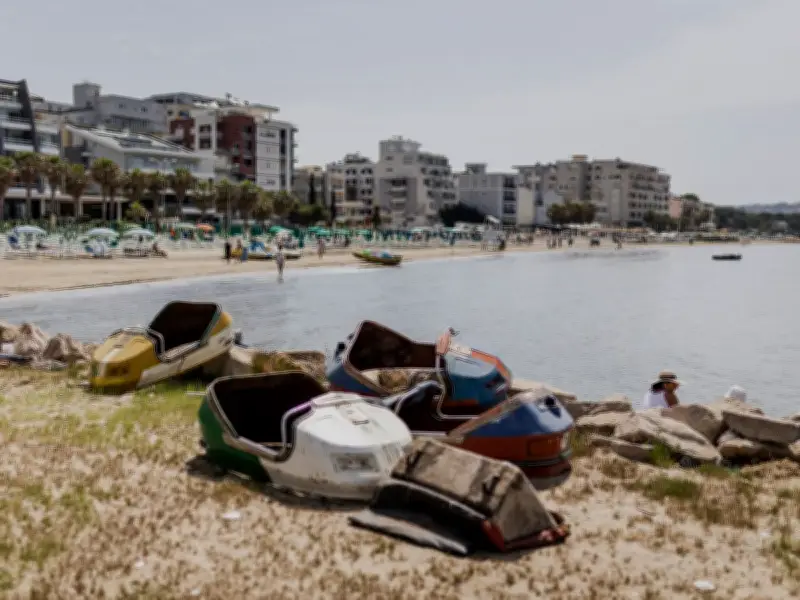
Albania, often called the 'Maldives of Europe' for its white sand beaches, has been ranked as the country with the dirtiest seas on the continent, according to a recent study by Which?. The consumer group analysed 22,289 European Environment Agency (EEA) reports on bathing water quality, finding that only 16% of Albania's beaches were rated 'excellent', while 23% were deemed 'poor' due to significant levels of faecal bacteria. In contrast, 96% of beaches across the European Union met minimum quality standards, and only 7% of UK beaches were rated poor.
Health Risks and Pollution Sources
The contamination stems from sewage overflows and agricultural run-off, which introduce E. coli and intestinal enterococci into the water. These pathogens can cause illnesses such as skin, ear, and eye infections, as well as diarrhoea and vomiting, with children and the elderly being particularly vulnerable.
Tourist Complaints on Social Media
Many visitors have taken to social media to express disappointment. TikTok user @paveltrips described Durres as the 'worst beach in Europe', showing rubbish on the sand, peeling paint, and dilapidated buildings. A TripAdvisor review of Durres beach noted: 'Rubbish strewn everywhere and no sign of any cleaning service attending to it. Pavements on the main Rruga Paravesia are broken and (there are) many potholes and open manholes. High-rise buildings are empty, with unpainted and cracked masonry. Beach had rubbish strewn about.'
Another viral video contrasted expectations versus reality at Ksamil, famous for its photogenic overwater hammocks and swings. Footage from 2024 showed torn hammocks, broken furniture, and overflowing bins. Ksamil Beach holds a dismal 2.7-star rating on TripAdvisor, with a September 2025 review stating: 'The beach has been totally privatised and there is no space to go unless you go to a tacky beach bar and pay 10 euros to be on a crowded beach with sun loungers inches apart and covering the whole beach. A place that social media has bigged up but it’s to be avoided.'
Overcrowding and Privatisation
Several reviews criticised overcrowding. One said: 'Big disappointment. I have never seen a beach with so many sunbeds and umbrellas. You could hardly see any sand. Loud boom boom music dominates. It really should be avoided if you want tranquillity, charm and relaxation.'
How to Check Water Quality
Holidaymakers can consult the EEA's interactive map for real-time beach and lake cleanliness ratings across Europe. In the UK, the Safer Seas & Rivers Service app monitors over 450 locations for water quality alerts.
Exceptions in Albania
Despite the poor overall ranking, some Albanian beaches achieved 'excellent' water quality, including Dhërmi, a village with two beaches, and Vlorë, the country's third-largest city and a popular beach destination.
Top and Bottom Rankings
Cyprus topped the Which? list with 100% of its beaches rated excellent, followed by Greece at 97.1%. The five European countries with the dirtiest bathing waters are: Albania (16.8% excellent), Estonia (56.9%), Poland (58.7%), Hungary (64%), and Belgium (67.9%).
Albania’s National Tourism Agency (NTA) has been contacted for comment.