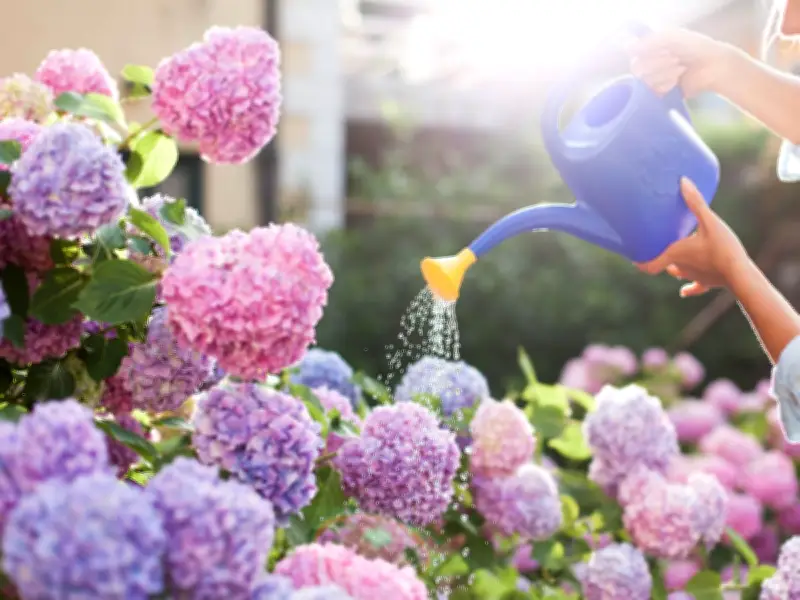
Alan Titchmarsh has shared a simple one-ingredient trick to help hydrangeas thrive during the summer heat, emphasizing that the key to their cultivation lies in their name. Writing in BBC Gardeners' World Magazine, the gardening expert explained that a friend had complained about poor results with hydrangeas on free-draining, sandy soil. Titchmarsh pointed out that the first half of the plant's name, 'hydra,' is derived from the Greek word for 'water,' serving as a reminder that hydrangeas are thirsty plants that will not flourish where moisture is scarce.
The Aluminium Sulphate Solution
Titchmarsh recalled a technique from his parks department days in the 1960s, when he and colleagues watered potted hydrangeas with Hydrangea Colourant, a product based on aluminium sulphate. He noted that this treatment can produce striking results: pink hydrangeas may shift towards mauve, while blue blossoms can take on a 'summer sky' appearance. The same product remains available today, marketed as aluminium and iron salts.
How Soil pH Affects Hydrangea Colour
According to the Royal Horticultural Society (RHS), the colour of hydrangea blooms typically depends on soil pH. Blue or pink flowers tend to be blue in acid soils, mauve in lightly acid to neutral soil, and pink in alkaline conditions. Westland Horticulture, the manufacturer of Hydrangea Colourant, explains that the salt acidifies soil conditions, transforming pink hydrangeas blue and shifting darker pink varieties into mauve tones.
Titchmarsh's advice comes as summer brings scorching weather to the UK, challenging gardeners to keep their borders lush. By adding aluminium sulphate to watering routines, gardeners can enhance bloom colour and ensure hydrangeas thrive even in dry conditions.