Midsummer is a glorious period for garden enthusiasts, with blooms at their most vibrant. Yet it's also prime time for garden pests, with aphids, caterpillars and whitefly thriving in the warmer conditions.
There are countless insecticides available at garden centres, but a growing number of us are increasingly reluctant to use harsh chemicals on flower beds and vegetable patches.
Fortunately, horticultural expert Benedict Vanheems has the perfect solution for those wishing to keep garden pests at bay while simultaneously cutting down on chemical use. And there's a good chance you'll already have the necessary ingredients at home.
How garlic works against pests
He explains: "The secret behind garlic for pest prevention and control lies in its smell, or rather its chemistry. When you cut or mince a garlic, it releases a compound called allicin. This is a sulphur-containing compound which gives garlic its sharp, pungent aroma, it's why we love it in our cooking."
"I absolutely love the stuff," Benedict adds, "but it turns out insects don't. Allicin confuses insects' sensory receptors by masking the signals that guides pests to their target plant."
"Not only that," he says, "but garlic is a natural anti-fungal and anti-bacterial thing as well so it does double duty as a defence against things like powdery mildew."
Making the spray
Garlic really is the complete package," Benedict says, adding that producing your own garlic-based insecticide in the kitchen is remarkably straightforward. He explains that you'll need a 50p bulb of garlic as your main ingredient: "To make our first spray, I'll be using a whole head of garlic, that's around 10 cloves. We've got a litre of water, just over two pints, and I'm going to be using an ecological soap as well."
Benedict opts for Castile soap, though numerous alternatives exist, such as Ecover's multi-purpose cleaning liquid, which is widely available in most UK supermarkets. After peeling the garlic, he places it into a blender with roughly a cup of tap water and blitzes the mixture into what he describes as "a lovely garlicky slurry."
He then adds the remaining ingredients to that mixture — approximately a teaspoon of Castile soap along with a little more water: "Now," he says, "we're just going to give this a really good mix and then leave it basically overnight to infuse so the allicin breaks down and is released into the water."
Straining and storing
The next morning, Benedict strains the liquid through a fine sieve — a muslin cloth would work equally well — to eliminate any leftover garlic particles that could clog the nozzle of your spray gun.
"You're going to be using it in a spray bottle straight away," he says, "then get on and use it. But if you're going to be keeping it for a while, then pop it in a jar back in the fridge where it will keep for up to a week. Any longer than that and the allicin starts to break down and be less effective."
Target pests and stronger mixes
When applied, garlic spray proves particularly potent against soft-bodied pests such as aphids, and slugs "can't stand the stuff," Benedict says.
"Also," he adds, "it's a really effective spray against carrot flies, it confuses them and makes it hard for them to home in on the target crops such as parsnips and carrots."
For more severe infestations, Benedict suggests incorporating a small amount of sunflower oil, canola oil or vegetable oil into the mixture. Roughly two tablespoons of oil should suffice, and leaving the solution for a minimum of 24 hours will allow it adequate time to fully infuse.
You should add at least half a litre of water to this more potent blend, Benedict advises: "I should say that diluting this garlic oil infusion is super important. This is a much more concentrated spray and it could harm your plants if it's not diluted enough and directly in contact with the leaves there. So we need to make sure it's diluted."
Application tips
As with any insecticide — whether purchased from a shop or made at home — it's advisable to carry out a "patch test" on a discreet area of any particularly delicate plants beforehand, to ensure it won't cause discolouration to leaves or petals.
"Timing really matters when using a garlic spray," Benedict says, "because it can affect beneficial bugs as well as the ones we're trying to target."
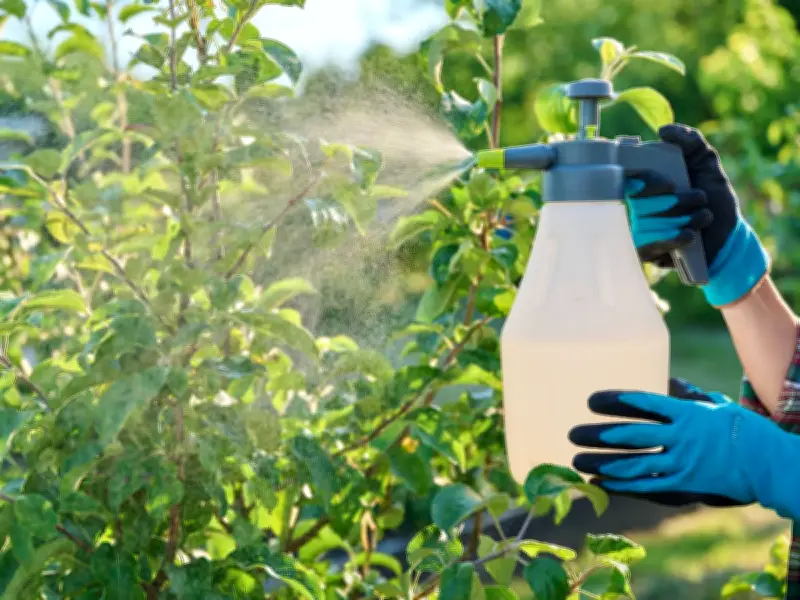
He recommends applying your garlic insect repellent during the evening hours: "This is good for two reasons. First is that direct sunshine on a wet and specifically oily leaf, could cause scorching, and the second reason is that pollinators are far less active in the evening, so we can get on and spray the pests without affecting those guys."
Your homemade insect repellent should be applied two or three times per week when dealing with an infestation, or once weekly as a preventative measure. It's also worth adding an additional spray following heavy rainfall.