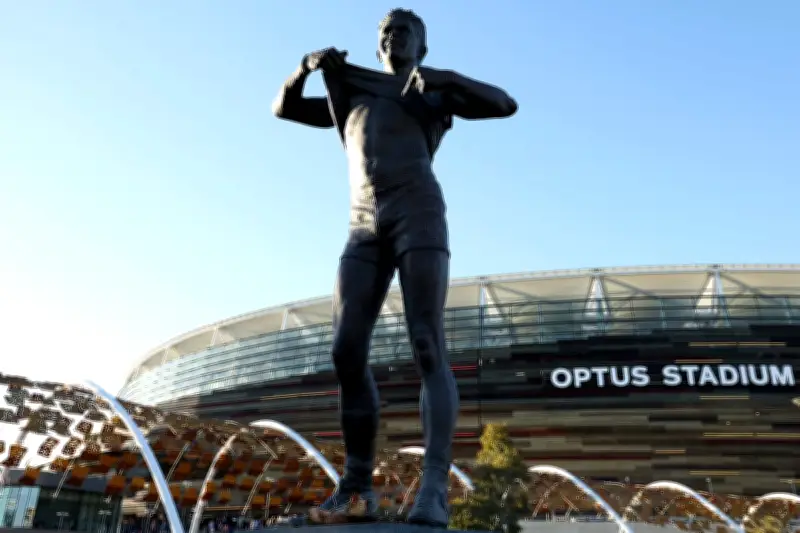
The removal of a statue honouring former AFL player Nicky Winmar's stand against racism has sparked debate about the double standard in public memorialisation. The statue, depicting Winmar lifting his jersey and pointing at his skin in response to racial abuse in 1993, was swiftly taken down by the Western Australian government after Winmar's domestic violence conviction.
Memorialising the Living: A Complex Moral Question
Paul Daley, a Guardian Australia columnist, argues that the removal highlights the fraught nature of honouring living people. The question arises: should a memorial be amended to document a transgression, or removed entirely? The official answers from governments appear arbitrary.
Daley notes that public statues are not histories themselves but can foster discussion about changing values. The removal of the Winmar statue symbolises the state's cancellation of him due to his crime, similar to Bassendean council's removal of mentions of Rolf Harris in 2014.

Double Standard with Colonial Monuments
Critics point to a double standard: Perth still hosts statues of colonisers like James Stirling, who led the 1834 Pinjarra massacre, and the Forrest brothers, who advocated for killing Aboriginal people. Historian Chris Owen notes that John Forrest shot Aboriginal people himself during an expedition in 1874. Alexander Forrest's statue features a slung rifle, a nod to brutal pastoral history.
Daley contrasts this with Melbourne's removal of the Burke and Wills statue, which will likely be replaced by an Indigenous-themed monument. He also cites the statue of Lachlan Macquarie in Sydney, who orchestrated the Appin Massacre and abduction of Aboriginal children, yet remains celebrated as a 'perfect gentleman'.
Conclusion: Statues as Moments in Time
Daley concludes that statues are inanimate and represent moments in time. They can be removed and forgotten, but the double standard persists. The Winmar statue's removal, while addressing domestic violence, does not address the ongoing presence of monuments to those who committed far greater crimes against Aboriginal people.