
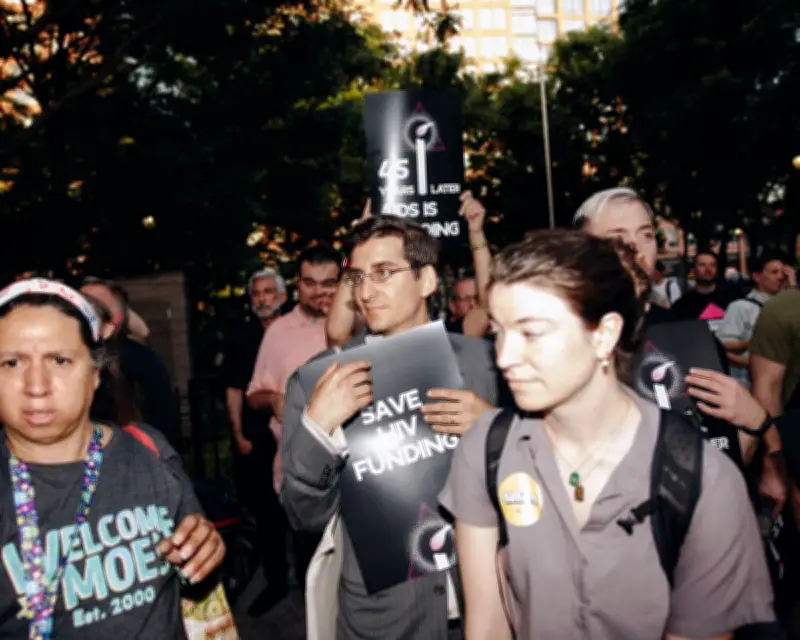
The United States government has unveiled sweeping cuts to international HIV/AIDS funding, a move that activists and global health experts warn could reverse decades of progress against the epidemic. The reductions, announced by the White House, target the President's Emergency Plan for AIDS Relief (PEPFAR), a program credited with saving over 25 million lives since its inception in 2003.
Details of the Funding Cuts
According to the official statement, the US will reduce its PEPFAR contribution by 30% for the fiscal year 2027, slashing approximately $1.5 billion from the program's current budget of $5 billion. The cuts are part of a broader effort to reduce federal spending and reorient foreign aid priorities. The administration argues that other nations and private sector partners should shoulder more of the financial burden.
“We have made tremendous strides, but the era of US taxpayers being the sole financiers of global HIV/AIDS efforts must end,” a senior administration official said. “We will continue to support the program, but at a more sustainable level.”
Impact on Global Health
Health organizations have condemned the decision, emphasizing that PEPFAR provides antiretroviral therapy to over 20 million people worldwide, most in sub-Saharan Africa. The funding cuts could lead to treatment interruptions, increased mother-to-child transmission, and a resurgence of AIDS-related deaths.
“This is a catastrophic blow to global health,” said Dr. Anthony Fauci, former director of the National Institute of Allergy and Infectious Diseases. “We are talking about millions of lives at risk. The US has a moral responsibility to maintain its commitment.”
According to UNAIDS, the cuts could result in up to 500,000 additional AIDS-related deaths by 2030 and 1.5 million new HIV infections. The organization has urged the US to reconsider, warning that the progress made over the past two decades could be undone.
Activist Response
Activists have mobilized quickly, organizing protests outside the White House and US embassies around the world. The advocacy group Health GAP called the cuts “a death sentence for millions.”
“This is not a budget issue; it’s a human rights crisis,” said Asia Russell, executive director of Health GAP. “The US is turning its back on the most vulnerable people on the planet. We will fight this with every tool at our disposal.”
Several members of Congress have also voiced opposition, with bipartisan legislation proposed to restore funding. However, with a slim majority in both chambers, the path forward remains uncertain.
Broader Implications
The cuts come amid a broader trend of declining US foreign aid, with the administration proposing reductions across multiple health and development programs. Critics argue that this isolationist approach undermines US soft power and global stability.
“The US has been a leader in the fight against HIV/AIDS for two decades,” said Dr. Tedros Adhanom Ghebreyesus, director-general of the World Health Organization. “This decision sends a dangerous signal that the US is retreating from its global health commitments.”
As the debate intensifies, the world watches to see whether the US will reverse course or follow through with the cuts, potentially reshaping the landscape of global health for years to come.




