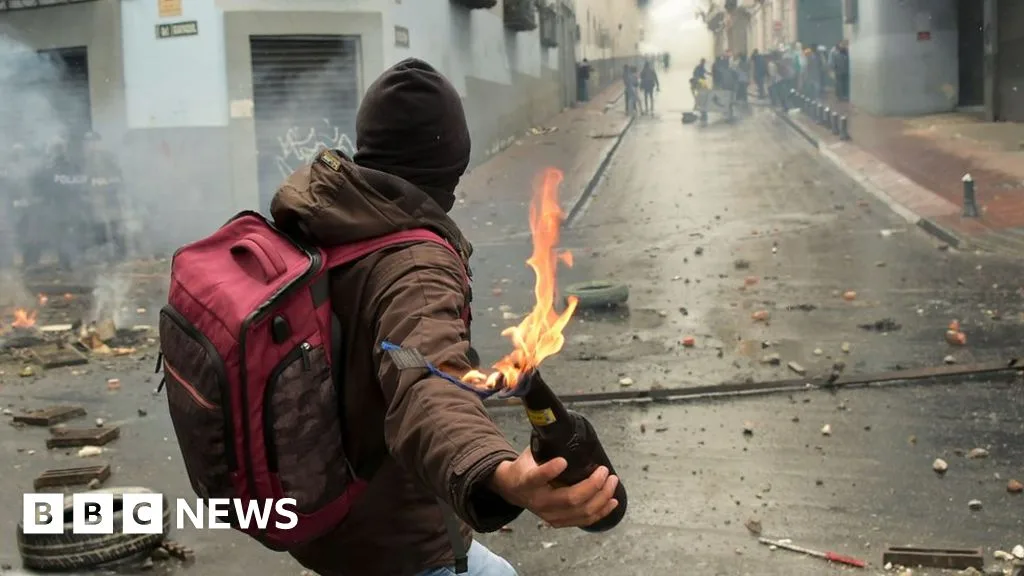
Ecuador's government has declared a state of emergency following widespread protests against the end of fuel subsidies. President Lenin Moreno announced the measure on Thursday to 'ensure citizens' security and avoid chaos' as demonstrators blocked roads and bridges across the country.
The protests were triggered by Mr Moreno's decision to end 40-year-old fuel subsidies, which cost the government $1.3bn (£1bn) annually. The move is part of a broader plan to revive Ecuador's struggling economy and reduce its debt, including a $4.2bn loan agreement with the International Monetary Fund signed in March.
On Thursday, students and transport workers led a national strike, paralysing transport in the capital Quito and the city of Guayaquil. Taxi, bus and truck drivers blocked key routes, while some protesters clashed with police, who fired tear gas to disperse crowds. Interior Minister Maria Paula Romo reported 19 arrests.
President Moreno, who took office in 2017, condemned the violence, stating he would not allow protesters to 'impose chaos'. Under the state of emergency, the government can restrict freedoms and deploy the armed forces to maintain order. The elimination of subsidies, introduced in the 1970s, follows Ecuador's decision to leave OPEC on Tuesday to boost oil production and revenues.