
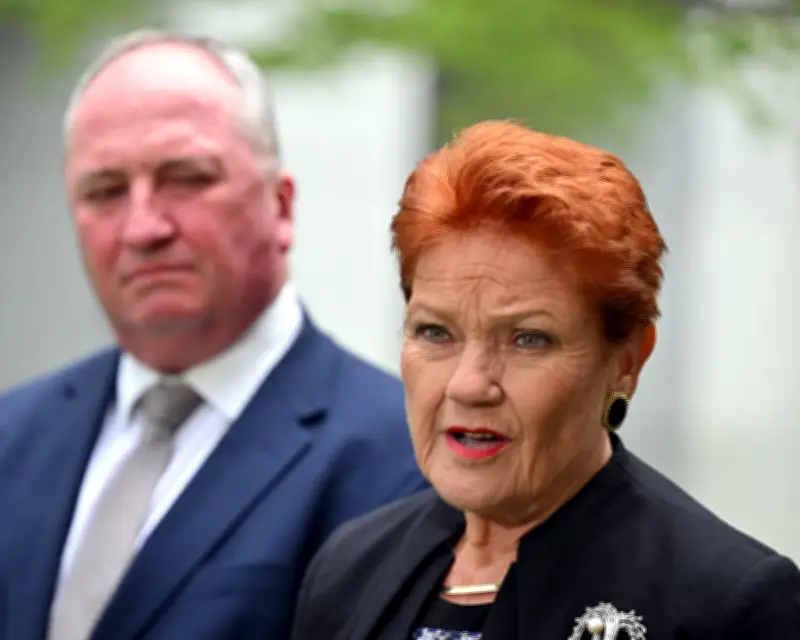
Pauline Hanson and Donald Trump both exploit voters' fury, but her popularity is rising while his is at a low. The Australian firebrand and the former US president draw on similar sources of grievance — resentment of elites, fears about immigration, and a sense of cultural loss — yet their political fortunes are diverging sharply.
Hanson's resurgence in Australian politics
Hanson's One Nation party has seen a surge in support, with recent polls showing her personal approval rating climbing to 35%, the highest in years. This comes amid growing discontent with mainstream parties over cost-of-living pressures and immigration policy. According to political analyst Dr. Sarah Cameron, 'Hanson has successfully positioned herself as the voice of the forgotten Australian, capitalizing on disillusionment with both Labor and the Coalition.'
Her rise is particularly notable in Queensland, where One Nation is polling at 18% ahead of the state election. Hanson has focused on issues such as housing affordability, fuel prices, and opposition to renewable energy mandates, which resonate with working-class voters.
Trump's declining appeal
In contrast, Donald Trump's popularity has waned considerably since leaving office. A recent Gallup poll found his favorability rating at 38%, down from 42% in 2021. Even among Republicans, support has softened, with 68% holding a favorable view compared to 78% in 2020. Legal troubles, including his conviction on 34 felony counts in New York, have eroded his standing.
Trump's influence remains significant, but his grip on the party is loosening. 'He is no longer the unstoppable force he once was,' said Republican strategist Mark Weaver. 'Voters are looking for a fresh face who can win elections.'
Common tactics, different outcomes
Both politicians employ similar rhetorical strategies: attacking the media, portraying themselves as victims of a rigged system, and promising to 'drain the swamp.' Yet Hanson's message appears to be gaining traction in Australia's current climate, while Trump's has lost some of its potency. Hanson has avoided the overt scandals that have dogged Trump, and her party has made inroads at the state level.
According to political scientist Professor James Curran, 'Hanson benefits from being a protest figure in a system where minor parties can wield influence. Trump, on the other hand, is weighed down by the baggage of his presidency and legal battles.'
Implications for global populism
The contrasting trajectories highlight the volatility of populist movements. While the underlying grievances remain — economic insecurity, cultural anxiety, distrust of institutions — the fortunes of individual leaders can shift rapidly. Hanson's rise suggests that populism is far from spent in Australia, while Trump's decline may signal a recalibration in the US.
As both countries head into election cycles, the lessons are clear: exploiting voter fury can be a powerful tool, but sustaining momentum requires more than outrage. Hanson's ability to channel anger into policy proposals may offer a blueprint for populists elsewhere.




