
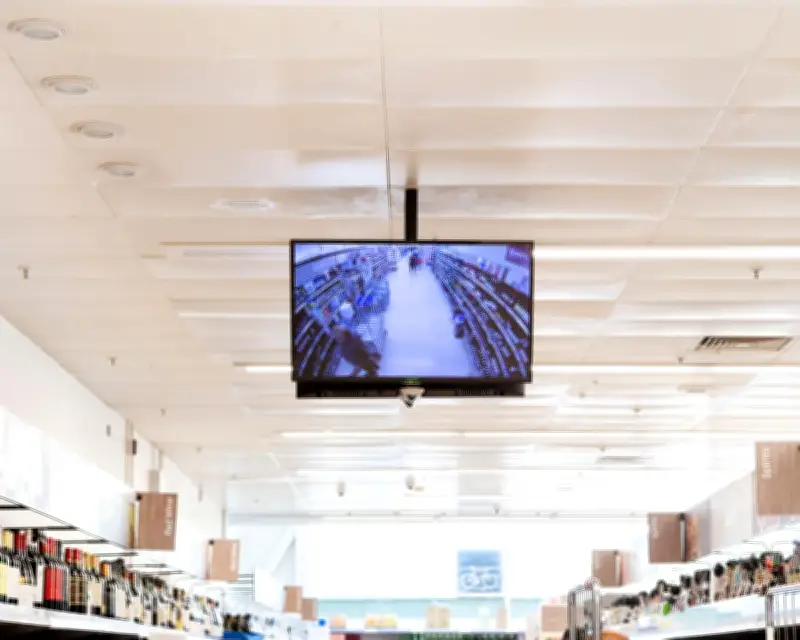
Facial recognition technology in UK shops will soon alert police in real time when serious offenders are detected, a development that civil liberties groups have described as a 'dangerous escalation' towards surveillance and criminalisation in the retail sector. The system, called Facewatch, is already used by more than 100 businesses including Sainsbury's, B&M and Spar to monitor for thieves.
Real-time police alerts for serious offenders
Facewatch's chief executive, Nick Fisher, announced that a new feature would be launched in autumn, enabling the system to 'alert police instantly when the most serious offenders trigger a live facial recognition match'. Fisher stated that the technology would warn police in an average of four seconds when the 'worst offenders' were flagged on its network. This marks a first for the UK, according to the company.
However, civil liberties groups have voiced alarm at the development. Charlie Whelton, policy and campaigns officer at Liberty, said the group was concerned about this 'untested, opaque development' and the way facial recognition technology had been allowed to 'proliferate without anything to govern it'. He added: 'It's not against the law to walk into a shop even if you've committed crimes in the past. The idea of calling the police on somebody who hasn't committed a crime, but there's a concern they might, is really upending the way we do things. And of course, it's not infallible. These systems do make mistakes, and it's very hard to argue with that when it happens to you.'
False identifications and bias concerns
Several individuals have been forced to leave shops after being falsely identified by Facewatch as shoplifters, with some describing the experience as 'Orwellian' and feeling 'guilty until proven innocent'. Evidence suggests that black and Asian people are more likely to be incorrectly identified than white people. Britain's biometrics watchdogs have also warned that national oversight of facial recognition is lagging behind the rapid expansion of the technology across police forces and the retail sector.
Sarah Lasoye, pre-crime programme manager at Open Rights Group, said the technology was 'entrenching a climate of surveillance across public life'. She stated: 'Fundamentally, it's an infringement of data and privacy rights. People's faces being scanned without consent and being added to lists is worrying enough, but the speed which Facewatch technology now makes it possible for someone to encounter the police force in the middle of their daily shop is a really dangerous escalation.' Lasoye argued that the technology fails to address the social and economic root causes of shoplifting and 'only served to further criminalise working-class communities'.
Expansion plans and industry data
The use of Facewatch technology is set to expand rapidly, with Sainsbury's recently announcing plans to increase its use from 55 stores to more than 200 by the end of the year. Facewatch reported that it alerted retailers almost 300,000 times that a 'known repeat offender' had entered a store during the first six months of 2026, and that its system allowed staff to intervene 'before theft, abuse or violence could occur or escalate'.
Office for National Statistics figures for England and Wales show there were 509,566 shoplifting offences in the year ending December 2025, and the British Retail Consortium has warned that violence, abuse and theft is 'spiralling out of control'. However, experts argue that the use of facial recognition in shops to catch shoplifters is disproportionate.
Criticism from experts and calls for regulation
Nuala Polo, UK public policy lead at the Ada Lovelace Institute, said: 'There are other, much less intrusive means that you can use to catch shoplifters where you don't need to be scanning millions of faces every day, virtually without consent.' She expressed concern that government plans for a legal framework for facial recognition technology would not apply to the private sector. 'If we agree this technology poses significant risks in police use, but we continue to let it be used unchecked in the private sector, there's a discrepancy there. We're acknowledging the technology is risky, but saying we're only going to mitigate that risk in one instance. We could be creating backdoors into this technology that is partnered with the police but isn't held to the same standards.'
The campaign group Big Brother Watch has criticised police for 'inserting themselves into this cowboy operation' and said people would be matched against 'a secret blacklist compiled by unaccountable businesses and private security guards'.
Facewatch's defence
Nick Fisher, CEO of Facewatch, defended the system, stating: 'No single organisation will solve retail crime on its own. Government, policing, retailers and businesses all have a role to play in tackling the small number of prolific repeat offenders responsible for a disproportionate amount of offending and the harm it causes to shop workers, customers and our high streets. The work we are doing sits alongside that wider national effort.' He added: 'It is not about alerting police every time someone enters a shop, it is about exploring how technology can help support a coordinated response to the highest-risk and most prolific offenders. This is about the people who commit dozens and, in some cases, hundreds of offences, not the millions of people who simply want to do their shopping. If technology can help protect retail workers, prevent further crime and support policing, we believe it has a responsible role to play.'




