
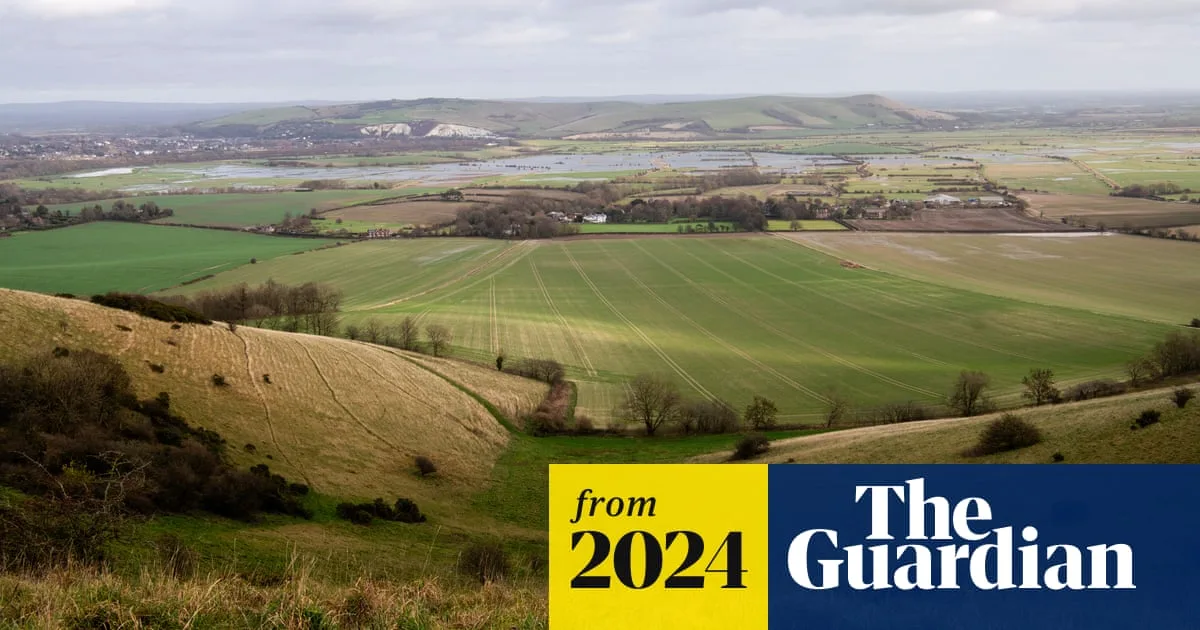
In a field in the South Downs national park, a wildflower meadow planted with yarrow, vetches, clovers and oxeye daisies awaits spring. This field is part of a pilot project for England's biodiversity net gain (BNG) scheme, which requires developers to achieve a 10% net gain in biodiversity when building new projects. If nature is damaged on site, developers must recreate similar habitats plus 10%, either on-site or locally.
Ben Taylor, manager of Iford Estate farm near Lewes, East Sussex, is selling offsite biodiversity units from 32 hectares of land managed for wildlife. Each unit sells for £25,000 to £30,000, potentially generating over £75 million over 30 years. Taylor plans to convert two-thirds of his 3,000-hectare farm into BNG, but uncertainty looms as the scheme faces delays and risks of being scrapped.
The scheme, expected to launch this month, aims to transform thousands of hectares of English farmland, but researchers from the universities of Kent and Oxford have raised concerns. Their study found that over a quarter of BNG units risk leading to no tangible increases in biodiversity, mainly due to lack of checks on on-site credits promised by developers.
Taylor cites the climate crisis as a driver for change, noting increased flooding and unpredictable weather. He hopes the scheme will rehabilitate marginal land and create floodplain grazing marshes, but warns it's a gamble on an emerging market locked in for 30 years.




