
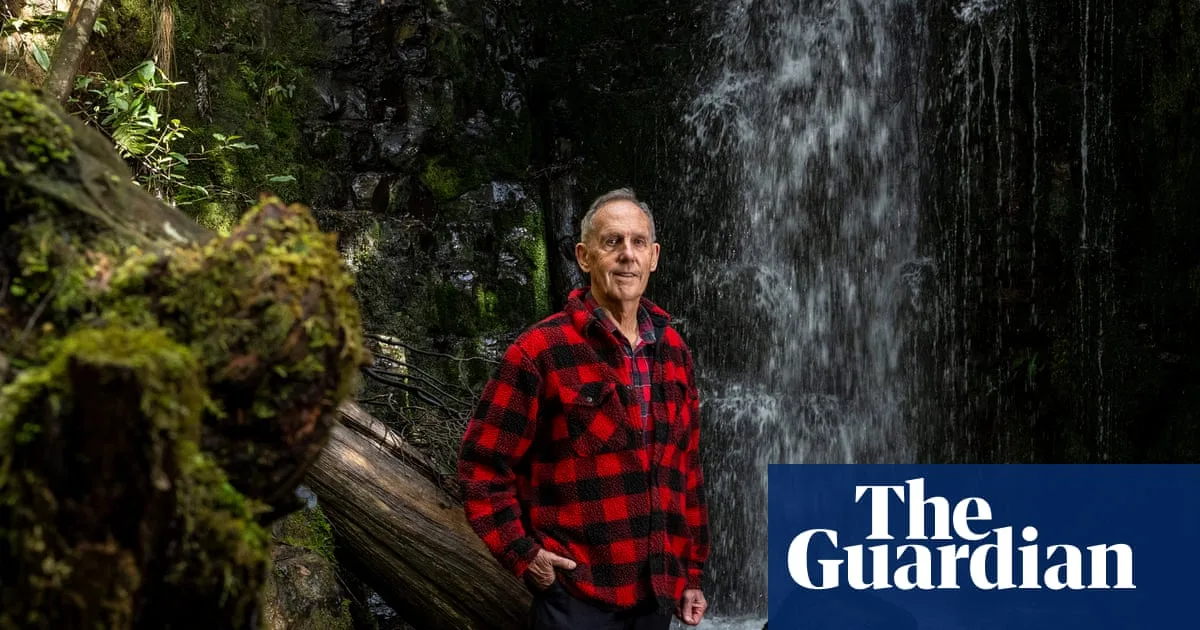
At 80 years old, the trailblazing environmentalist reflects on the state of activism, optimism, and why he is comfortable with the concept of his own 'perpetual annihilation'. In July, while staying at a friend's cabin on the Tasman Peninsula with his partner Paul Thomas, Brown experienced a pulmonary embolism. He diagnosed himself, having trained as a doctor more than 50 years ago, and chose to stay at the cabin rather than rush to hospital.
Brown recounts the health scare as he walks along a fire trail on kunanyi/Mount Wellington. He describes feeling relaxed about the possibility of death, noting that he sees brilliant young people coming along who think like him, making him 'increasingly redundant'. He says he has thought a lot about death during his lifetime, unlike most people who rely on concepts like heaven or nirvana.
Brown's reflections on a life in activism are collected in his new book, 'Defiance', which he says will be his last significant work. The book covers his most celebrated moments, including the campaign to save the Franklin River and Tasmania's south-west wilderness, as well as his shift into state and federal politics. It also touches on his post-political work with the Bob Brown Foundation, which takes a direct and confrontational approach to conservation.
Brown emphasises that the goal of 'Defiance' is inspiration, not straightforward autobiography. He argues that being an environmentalist is sensible and that he likes defying the growth mentality because it is irrational. He calls for a return to seeing life as a flowing and innovative thing on the planet, rather than something exclusively created for individual existence.




