
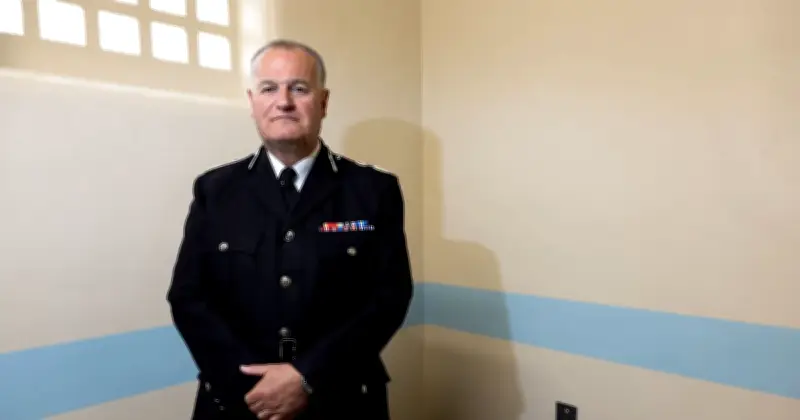
Greater Manchester Police (GMP) Chief Constable Sir Stephen Watson has drawn a hardline on symbolic gestures such as taking the knee and wearing rainbow-coloured lanyards, stating that his officers will not engage in such activities. Speaking after the murder of 18-year-old Henry Nowak, Watson emphasised the need to dispel perceptions of two-tier policing in the UK.
Watson's stance on policing and symbolism
Sir Stephen Watson said of his officers: "We won't take the knee, we're not going to wear rainbow coloured lanyards, we're not going to dance around with environmental protesters." He made these remarks while observing officers using a 14-kilo 'wham ram' to breach a door during a raid in Woodley, Stockport. Watson acknowledged that his position has earned him the 'anti-woke' moniker, but he insists it stems from a commitment to impartial policing.
Henry Nowak case and two-tier policing concerns
Henry Nowak was fatally stabbed in Southampton in December by Vickrum Digwa, who falsely claimed racial abuse and self-defence. Digwa was jailed for life on June 1 with a minimum term of 21 years. However, police bodycam footage showing Nowak handcuffed as he lay dying has sparked intense scrutiny and claims of 'anti-white' two-tier policing. Sir Stephen said he does not believe such claims are justified within his force but added: "I recognise we need to work hard to overturn it."
Public perception and impartiality
Watson stated: "We have to acknowledge the public perceive there to be two-tier policing and whether that be historically people from minority communities or in the aftermath of the tragic Henry Novak case, I think people perceive it now from different quarters and across the board." He stressed that GMP must double down on treating everybody fairly, "but without fear or favour." He added: "Everybody is equal before the law, and I do think there is something for wider policing to understand that we have, more assiduously, to stamp our mark on what impartiality looks like."
Criticism of police language and commitments
Since the Nowak trial, the National Police Chiefs' Council (NPCC) anti-racism commitment has faced scrutiny. The commitment states that ensuring racial equality "does not mean treating everyone 'the same' or being 'colour blind'." The NPCC is reviewing the wording after opposition politicians cited it as evidence of unequal standards. Watson said: "I think we have, from time to time, strayed into difficult and contentious areas. We've uncritically adopted language that persuades people that perhaps we are not as impartial as we should be."
Watson's background and 'anti-woke' label
Sir Stephen Watson, originally from Warrington, grew up in Rhodesia before leaving in 1981 after Robert Mugabe came to power. He considered a career in the Royal Navy but became a police officer after speaking to GMP officers near his home in Prestwich. After five years as Chief Constable, he accepts the 'anti-woke' label. He said: "It's for others to label me as they see fit, but in a sense, it almost proves the point, because I would urge upon everybody not to get involved in the cultural wars." He explained that asserting "professional, impartial policing without fear or favour has got me branded as anti-woke." He concluded: "What we need to do is plough that impartial furrow right down the middle."




