
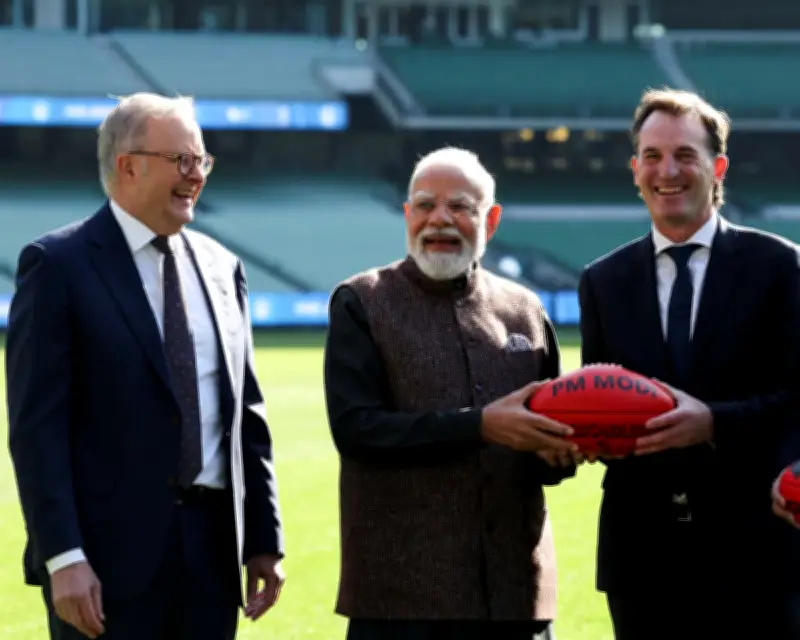
For most of her life, Rana Hussain felt that being Indian, Muslim, Australian, and devoted to sport was not a contradiction. That changed when she saw AFL chief executive Andrew Dillon and cricket legend Steve Waugh smiling alongside Indian Prime Minister Narendra Modi at the MCG last week. It was not merely a diplomatic engagement; it was two institutions she loves celebrating a leader whose name carries deep pain for many like her.
Symbolism and Strategy Collide
Hussain, a former diversity, equity, and inclusion lead at Cricket Australia, says the embrace broke her heart and made her wonder whether these organisations wanted her identity on paper but not what came with it. Some family members hoped she would not write this, fearing backlash from publicly criticising the Modi government. That fear is not hypothetical—it is their reality.
Cricket Australia used Modi’s visit to announce the Big Bash League’s first match in India as part of a broader trade and cultural delegation, while the AFL showcased ambitions to grow the game across India. Both organisations see India and its diaspora as central to their future. Modi is the democratically elected leader of the world’s largest democracy and a key strategic partner for Australia. However, for many Indian Sikhs, Muslims, and Christians, Modi’s name represents a decade of growing fear, with Amnesty International and Human Rights Watch criticising his Hindu nationalist government over discrimination against religious minorities, crackdowns on dissent, and erosion of democratic freedoms. Australia has also publicly dealt with allegations of Indian government interference on its soil.
Trust Eroded by Selective Engagement
Hussain notes that sport understands symbolism—who stands beside whom sends a message. Both CA and the AFL have active multicultural strategies targeting India and Indian Australians, yet this embrace risks sending a message that only Indian voices reflecting the majority are worth engaging. For minority communities, it feels like being overlooked twice—first as a minority in India, then again in Australia.
When organisations celebrate diversity but do not listen to those most affected by their decisions, trust erodes. Hussain argues this explains why diverse talent is hard to attract and retain, why national teams do not reflect modern Australia, and why diaspora communities do not feel the connection sport works to build. Belonging cannot be built through strategy while it is eroded through decisions.
A Call for Genuine Inclusion
Hussain remains involved with both organisations—she sits on the AFL’s equity, inclusion, and safety committee and is part of CA’s Indian ambassador group. She has stayed because she knows Australian sport’s potential to create genuine belonging and shared national identity. But as photos from “Modi Mania” filled her CA ambassador group chat and social media feeds, she noticed whose voices were missing: anyone who carried a different experience of Modi’s India.
She says this is not about having a veto or expecting a single conversation to change the outcome, but consultation communicates that the institution cares. When institutions tell people they belong, do they mean all of them, or only the uncomplicated parts? Belonging is a practice tested when values collide with commercial interests or political convenience.
The contradiction Hussain returns to is that these organisations have celebrated her identity for years, asked her to shape their thinking and represent their values, but identity cannot be selectively engaged. You do not get expertise without experience, nor credibility without complexity. Don’t ask people to be the face of your values if you do not want all of them.
The Modi visit brought this into sharp focus, but the bigger question is whether sporting institutions truly practise the inclusion they ask others to believe in. Belonging is not something paraded; it is something felt. Last week, many did not feel it.




