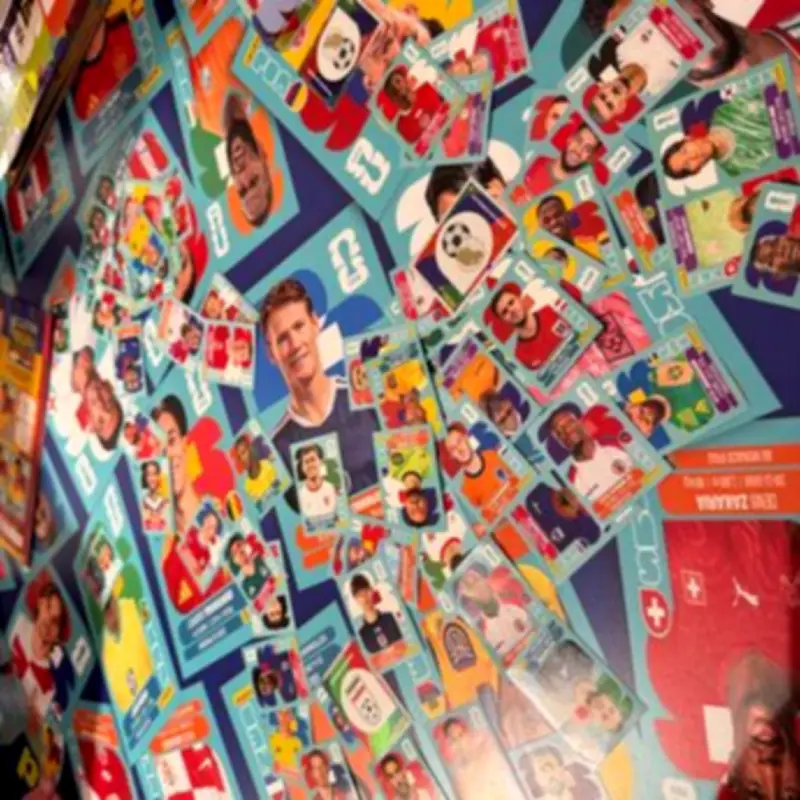
Football stickers have brought joy to millions for decades, especially since Panini began producing World Cup sticker books for the 1970 tournament in Mexico. Today, the hobby thrives both online and in physical spaces, as demonstrated by a pop-up shop at Selfridges in London.
Selfridges Pop-Up Becomes Collector Hub
Panini launched a pop-up store in the upmarket department store's Oxford Street flagship, opened earlier this month by former England striker Emile Heskey. It will remain open throughout the World Cup and until at least the end of July. Staff report that some special products sold out within days. Brand specialist Nathania Jones stated: “We’ve actually sold through our exclusives.” One premium pack “sold out in the first day”.
At the heart of the space is a trading table covered with stickers, where strangers bond and recreate the swapsies scenes of childhood. Jones noted that this happened organically: “There was no signage… people just started trading.” While located in the toy department, adults also frequent the table to complete their collections. “We’ve had someone come in with a binder and a full-on spreadsheet of what cards they need,” Jones added.
Collectors Share Passion
Miguel, a collector for over 20 years since Euro 2004, stood at the trading table. He recalled childhood memories of packing stickers into envelopes for a factory in Portugal to earn pocket money. When asked about his total spending, he replied: “No idea. I don't want to know!” His most prized sticker this time is Portuguese icon Cristiano Ronaldo, which he refuses to swap.
Social media has fueled interest in the pop-up. With estimates that completing an album costs over £1,000, collectors seek alternative ways to obtain needed stickers. “You can’t complete without swapping,” another visitor admitted.
Decades of Tradition
Stickers have been a staple of football fandom for decades, primarily associated with Panini. The company, founded by two Italian brothers, launched its first album in the UK for the 1970 Mexico World Cup. A Euro album featuring exotic clubs arrived in 1977, followed by the first album of only English and Scottish teams in 1978.
After Panini changed hands—including a sale to British tycoon Robert Maxwell—it missed the first Premier League season in 1992. Merlin provided collectors with an album for the new era in 1994. Older albums and individual stickers, such as an early Diego Maradona, can be worth substantial sums. In 2025, a Lionel Messi sticker from his 2006 World Cup debut sold for £825.85, though many others fetch less on eBay.
FIFA has agreed that Topps will produce stickers for the 2030 World Cup in Morocco, Portugal, and Spain. Topps currently makes Premier League stickers, while Panini produces the EFL collection for the Championship, League One, and League Two. The decision has drawn mixed reactions due to Panini's long tradition.
Why the Hobby Endures
The tactile nature of collecting stickers offers a contrast to digital hobbies. Peeling and placing stickers into an album remains a thrill. As one observer noted, the hobby teaches negotiation skills and fosters social interaction. Despite the digital age, football stickers continue to captivate collectors of all ages.