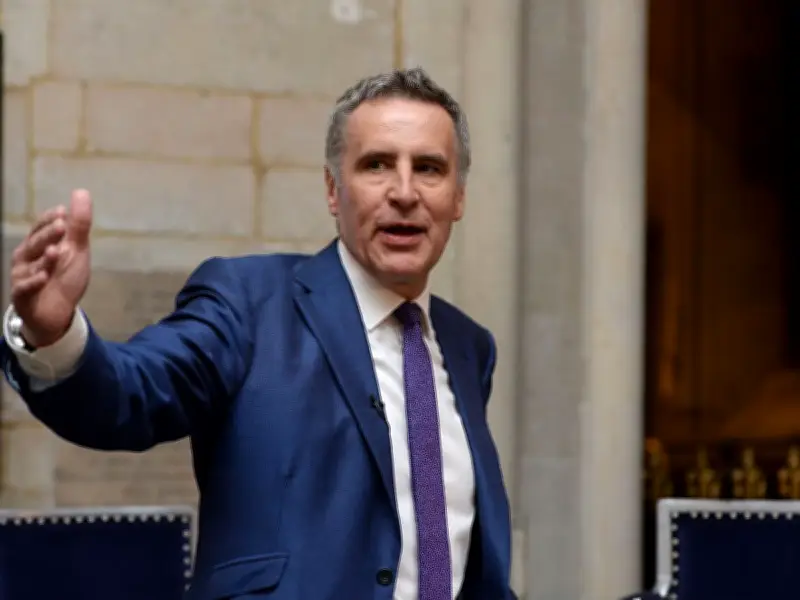
Dermot Murnaghan, the veteran newsreader who anchored Sky News for 15 years and presented for BBC, ITV and Channel 4, died at home in North London on Saturday at the age of 68 following a battle with stage four prostate cancer. His family announced the news in a statement on his X account, saying he passed away peacefully with his family at his side.
The statement thanked the medical teams who cared for him with “sensitivity and extraordinary compassion” and noted the many kind messages he received since his diagnosis last year. Murnaghan had revealed his illness publicly, describing it as “incurable but not untreatable,” and campaigned to raise awareness for prostate cancer screening, urging men in high-risk groups to get checked—admitting he had delayed his own tests “because I felt fine.”
Colleagues and politicians pay tribute
Sky News political editor Beth Rigby called Murnaghan “peerless in the presenter chair, as sharp as a tack, and hugely charismatic.” She added: “I loved being on set, or in Downing Street, with Dermot because he was always in absolute command but so cool too. He made handling the most high pressure moments look effortless.”
Sky News presenter Anna Botting said he would “always be a legend of news.” Former Prime Minister David Cameron praised Murnaghan’s decision to talk about his illness: “I think it's really important that Dermot came out in the way that he did - as in his broadcasting life, he did it with incredible clarity and just simplicity. And as someone who was so well-known to people through his broadcasting career over 40 years, it will have had a huge impact.”
Broadcasting career spanned five decades
Murnaghan’s career included presenting the news for Channel 4, ITV Evening News, and the BBC News at Six and Ten. He famously announced the death of Princess Diana and later the death of Queen Elizabeth II. Liberal Democrat leader Ed Davey described him as “a broadcasting legend who we have lost far too soon,” adding that his advocacy “will no doubt have saved lives.”
Channel 4 presenter Krishnan Guru-Murthy said: “Dermot was a very fine journalist and presenter whose career spanned all the main British broadcasters.” Broadcaster Anne Diamond urged men to get tested, saying: “68 is too young to die” and that prostate cancer “if it's caught early enough, isn't a death knell.”
Prostate Cancer Research remembers his advocacy
Prostate Cancer Research expressed profound gratitude for Murnaghan’s support as an ambassador. Chief executive Oliver Kemp said: “Dermot was not only one of Britain’s most respected broadcasters, but also a passionate supporter of efforts to improve outcomes for men with prostate cancer. He spoke about his diagnosis with remarkable honesty and courage, helping to raise awareness of a disease that affects thousands of families every year.”
Radio DJ Liz Kershaw, whose brother Andy Kershaw died of cancer in April, wrote: “Dermot was a lovely, friendly, funny, clever bloke and so generous of spirit.” She urged followers to have their prostate checked to “honour his memory.” ITV’s Susanna Reid called him a “legendary news journalist and presenter” who was “a serious journalist who never took himself too seriously.” Political journalist Lewis Goodall praised a “broadcasting giant” who was “the most unfailingly kind, generous and warm colleague.”
Murnaghan’s family said the funeral will be a small private ceremony, with a memorial service for friends and colleagues later this year. They asked anyone wishing to remember him to consider supporting Prostate Cancer UK, Prostate Cancer Research, or North London Hospice.