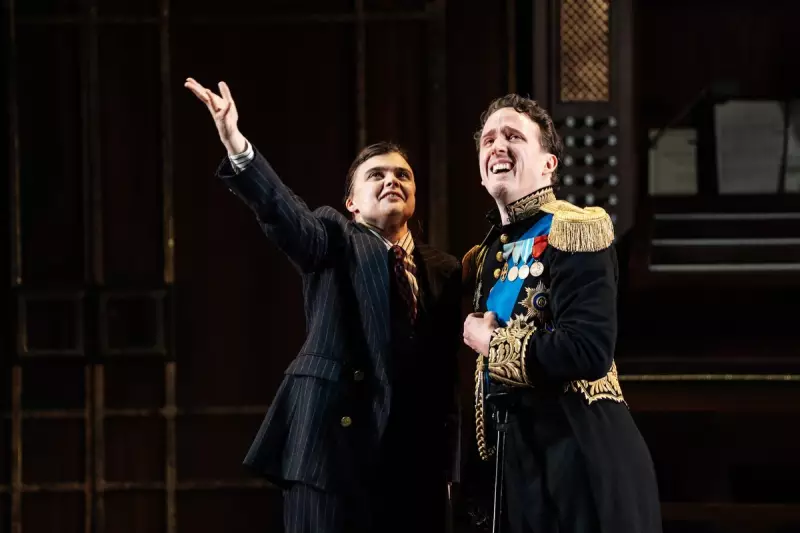
A spellbinding and deliciously melancholic production of Shakespeare's Twelfth Night from the Royal Shakespeare Company has taken residence at London's Barbican Centre. Directed by Prasanna Puwanarajah, this interpretation masterfully uncovers the play's stranger, queerer undertones, creating a theatrical experience that lingers like the final glass of wine by a fireside.
A Measured Boldness on the Barbican Stage
While the stage is decked with festive, twinkling greenery, this is no simple Christmas romp. Puwanarajah's vision allows the cruelty, grief, and yearning that simmer beneath the comedy to seep across the stage with a potent, intoxicating boldness. The production offers a persuasive and original re-reading of nearly every character, refusing to smooth over the text's complexities.
Gwyneth Keyworth delivers a subtle and compelling performance as Viola, the shipwrecked heroine who disguises herself as a man. Her portrayal suggests Viola finds more than mere safety in male attire; she discovers a freedom that suits her forthright nature and allows her desires to surface. Her task to woo the countess Olivia (a captivating Freema Agyeman) on behalf of her master Orsino (played with louche charm by Daniel Monks) leads to the expected romantic entanglements, but with fresh emotional depth.

Comedy with a Darker Edge
The comic subplots are reinvented with equal originality. Michael Grady-Hall is a standout as the clown Feste, acting as the night's mischievous host. He engages directly with the Barbican audience, even building hype for the legendary electric doors closing at the interval, and serenades with Matt Maltese's moody ballads.
However, the humour here often carries a bleak weight. Demetri Goritsas plays Sir Andrew Aguecheek as a loose-limbed American showman, a sunny foil to Joplin Sibtain's strikingly ruined Sir Toby Belch—more shambling alcoholic than jolly drunkard. Samuel West's Malvolio descends into truly dark territory; his appearance in yellow cross-gartered stockings is hilariously absurd, but his subsequent fury feels monstrous and sobering.
A Visual and Aural Masterstroke
The production's centrepiece is a gigantic, fully operational organ, designed by James Cotterill. It provides both the soundtrack and a magnificent climbing frame for the play's tipsy revellers. The design feels perfectly at home in the Barbican's copper-toned auditorium, making its transformations—into a bank of muddied primroses or a vast, storm-like emptiness—all the more shocking.
Puwanarajah juggles the play's tones with skill, rearranging its comedic notes and investing traditional funny business with a new solemnity. This creates a deliberate, ponderous rhythm in places, but the payoff is immense: a finale that exposes the profound emotional messiness beneath Shakespeare's seemingly neat conclusion. This is a production to savour, running at the Barbican until 17 January 2025.