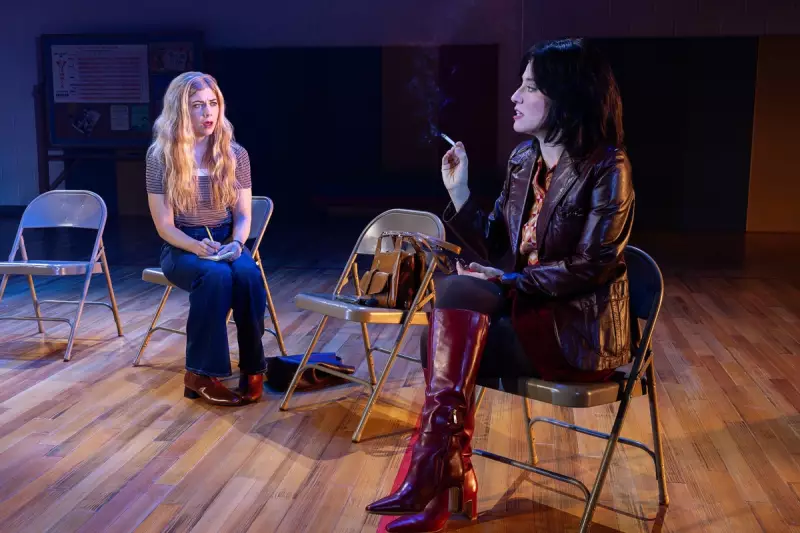
A bold theatrical moment on Broadway is generating buzz not just for its content, but for the unique atmosphere it creates in the auditorium. Bess Wohl's new play, 'Liberation', which explores a 1970s women's consciousness-raising group, features a scene where six characters remain naked for approximately 15 minutes of dialogue.
The Power of Vulnerability On Stage
Before a single line is spoken in the second act, audiences often respond with cheers and applause for the disrobing characters. Playwright Bess Wohl initially feared the production might become reductively known as 'that play with the naked scene'. However, she has been gratified that the conversation has been broader, noting the nudity feels integral rather than gratuitous.
The idea stemmed from Wohl's research into real consciousness-raising groups, where women from diverse backgrounds explored their bodies as a form of agency. The play, which toggles between the 1970s and the present, is contextualised by the 1970 publication of the seminal feminist health book 'Our Bodies, Ourselves'.

Actress Susannah Flood, who performs the scene nightly, explains the historical necessity: "They were growing up in a time where their doctors were male... There was no conversation about female anatomy that was considered polite. And they needed, as a way of taking agency … to get to know their bodies. So, they got naked."
A Phone-Free Pact for a Shared Experience
A crucial, and perhaps unexpected, element of the show's impact is a strict no-phones policy. Upon arrival, theatregoers must surrender their devices to be sealed in locked pouches that remain with them but can only be opened by staff after the show. This rule, prominently flagged on the show's website, is rigorously enforced.
Producer Daryl Roth believes this policy offers the audience a sense of freedom, allowing them to fully immerse themselves in the performance for its two-and-a-half-hour duration. Actress Susannah Flood agrees, stating the phone ban is a "huge reason the show has garnered the organic response it has," forcing a return to live conversation in the intervals.
New York theatregoer Tracy Bonbrest, 62, who attended with her book club, confirmed she was far more attentive and engaged with a stranger seated next to her than if she'd had her phone.
Choreographing Intimacy and Embracing Vulnerability
Staging the sensitive scene required meticulous planning from the first rehearsal. Intimacy coordinator Kelsey Rainwater, who also teaches at Yale's drama school, led a detailed process to choreograph movement, describing it as "its own miniplay." She praised the production's exceptional approach, including having security staff undergo sensitivity training.
For the actors, the true challenge isn't the nudity but the emotional exposure of the script. Flood quips, "My parents were acting teachers, and they always said acting is controlled humiliation." The scene involves each character describing something they like and dislike about their body, leading to moments that are both raunchy and poignant.
With the show running through 1 February after opening in late October, the cast finds repetition has brought comfort. The ultimate goal, Wohl emphasises, is to create a uniquely live and ephemeral event. "It’s never going to happen again," she says. "You have to be in the room. And it’s very alive, for that reason."
In an age of constant digital distraction, 'Liberation' offers a radical return to communal, uninterrupted storytelling, proving that sometimes the most daring act in theatre is simply being present.