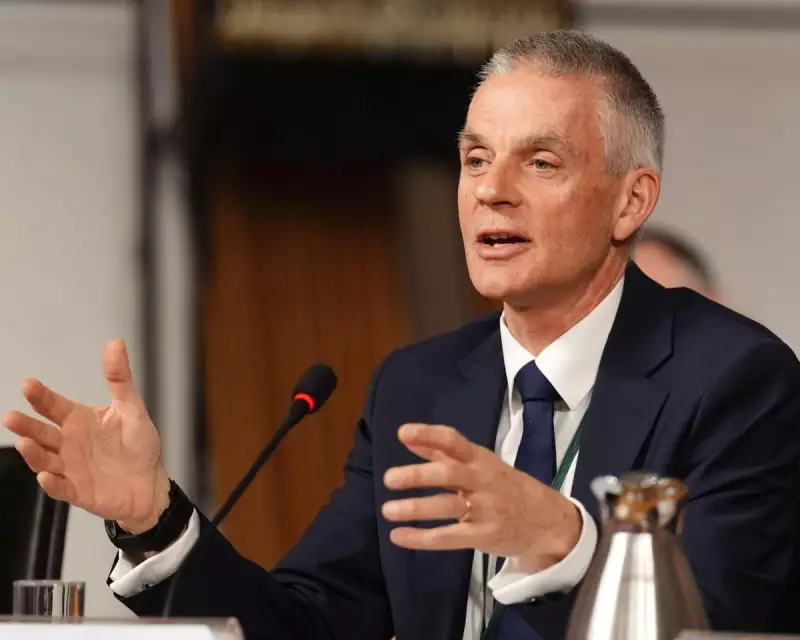
Tim Davie, the former marketing executive who rose to become the Director-General of the BBC, has led the corporation through some of its most turbulent years. His long and varied career within the broadcaster saw him occupy nearly every major role before taking the top job in 2020.
From Pepsi to the BBC: A Corporate Ascent
Davie's journey to the helm of Britain's public service broadcaster began not in media, but in the corporate world. After being hired by Procter & Gamble while studying English at Cambridge, he moved to PepsiCo in 1993. There, he served as vice-president of marketing and franchise, making bold moves such as colouring a Concorde jet and the Daily Mirror newspaper Pepsi blue for a major campaign.
He joined the BBC in 2005 as Director of Marketing, Communications and Audiences, bringing his commercial expertise to the public sector. His career within the corporation accelerated quickly. By 2008, he was leading the audio and music division, with responsibility for flagship stations like Radio 1, 2, 3, and 4.
Controversial Decisions and Crisis Management
His tenure in radio was immediately marked by controversy. Davie spearheaded plans to close radio stations 6 Music and the Asian Network, arguing the BBC had overstretched and needed to focus on 'unique, high-quality' content. However, the corporation was forced into a dramatic U-turn following a significant public outcry and campaign to save the stations.
Davie's capacity for crisis management was tested more severely in 2012. After the resignation of George Entwistle amid the fallout from the Jimmy Savile scandal, Davie was appointed as the Acting Director-General. His brief stint was eventful, requiring him to handle the aftermath of a Newsnight report that falsely implicated Tory peer Lord McAlpine in a child abuse scandal.
During this period, he was also chief executive of the BBC's commercial arm, BBC Worldwide. It was under his watch that the corporation finally ended its ill-fated ownership of the Lonely Planet travel publisher, selling it at a loss of £80 million in March 2013.
Securing the Top Job and Modernising the BBC
After his acting role concluded with the arrival of Tony Hall, Davie continued to shape the BBC's commercial future. In 2018, he oversaw the merger of BBC Worldwide with the corporation's production arm, leading to the formation of BBC Studios, which remains its primary commercial subsidiary.
His commercial success was reflected in his salary, making him the BBC's highest-paid executive with £642,000 in 2019. Despite turning down an offer to lead the Premier League that same year, he was named the new Director-General in June 2020, formally taking the role in September.
In a symbolic move, he initially agreed to a lower salary of £475,000, matching his predecessor's pay, before it rose to £525,000 in mid-2021. His time as DG was defined by navigating accusations of 'serious and systemic' bias in the BBC's coverage, a row that intensified amid a week of hostile headlines from right-wing media.
Beyond the BBC, Davie has held significant roles in the wider cultural and broadcasting landscape. He served as chair of Comic Relief until his DG appointment and was an executive board member of the European Broadcasting Union. He has also been a trustee of both the Tate galleries and the Royal Television Society, and a co-chair of the Creative Industries Council. In 2018, his services to international trade were recognised with a Commander of the Order of the British Empire (CBE).