Oscars 2026: Why Film Still Matters Amid Endless Global Crises
It used to be that these sorts of appeals were amusing and we could all patronize the Hollywood cheerleaders. The Oscars feel increasingly silly in an era of endless crisis. But film still matters profoundly, argues writer Dave Schilling.
A Decade of Change: From 2016 to 2026
It's been a full decade since I attended the Academy Awards ceremony for this publication. Rereading my 2016 piece titled "My first Oscars" reveals a younger, more cynical perspective filled with eyerolling and snark about the event's soullessness. Back then, I wouldn't stop talking about seeing Gary Busey.
The big talking point of 2016, dominated by the investigative journalism drama Spotlight, was the #OscarsSoWhite social media movement highlighting diversity issues in nominations and voting bodies. Chris Rock hosted what became a drab affair, though hosting would later become the least memorable part of his Oscar history.

In 2026, with widespread retreats from DEI initiatives in corporate America and "woke" considered a slur, such conversations have faded. Yet the Academy has made progress broadening its membership, and this year's Best Picture frontrunner is Sinners, an unapologetically Black horror film.
Existential Threats to Cinema
The Academy faces more pressing issues than diversity, however. The potential collapse of the entire film industry looms large. Studio consolidation marches ceaselessly forward while theater operators teeter toward insolvency. The rise of artificial intelligence combines with good old-fashioned audience apathy to create what Schilling calls "a hideous Megazord of existential crises."
Even casual Hollywood observers wonder if movies might become as irrelevant as opera or ballet to younger generations. This malaise casserole with a side of despair stems partly from how the Oscars are routinely overshadowed by white-hot new terrors engulfing the news cycle.
Crisis After Crisis: Oscars in Troubled Times
The 2021 ceremony was almost canceled due to Covid, eventually held half inside a train station. Imagine winning an Oscar then immediately hopping on the 8:23 to Bakersfield. In 2022, awards were distributed a month after Russia's invasion of Ukraine began, with a moment of silence honoring war victims before returning to business.
By 2025, the Oscars did their level best to brush past Donald Trump's re-election and accompanying tumult. This year, the show broadcasts under the pall of American bombardment of Iran plus approximately 700 other depressing developments. Each year, the Academy must apologize for holding the event "under the current circumstances."
The Oscars' Evolving Role
In 2016, the Oscars could comfortably be dismissed as fluff awarding self-important celebrities for vanity. Of course, they never truly were that. Film remains the most powerful, meaningful medium for mass-market art. Even as multiplexes worldwide are inundated with blockbuster IP schlock, real cinema persists, and the Oscars present those films to wide audiences.
Now, the Oscars exist within a constant cycle of madness making it nearly impossible to treat the event as a fun diversion full of beautiful people enjoying good fortune. I remember being young, outside Hollywood's machine, starstruck by the Academy Awards. Famous people in beautiful clothes getting photographed appeals to a primal side of human psychology.
Hollywood's Aspirational Power
Marketers and corporate types love using "aspirational" to describe products and content pieces. The Oscars epitomized this concept well before the term became ubiquitous. Hollywood's beauty standards have shifted from polished and slim to altered and gaunt, creating unsettling new aesthetics.
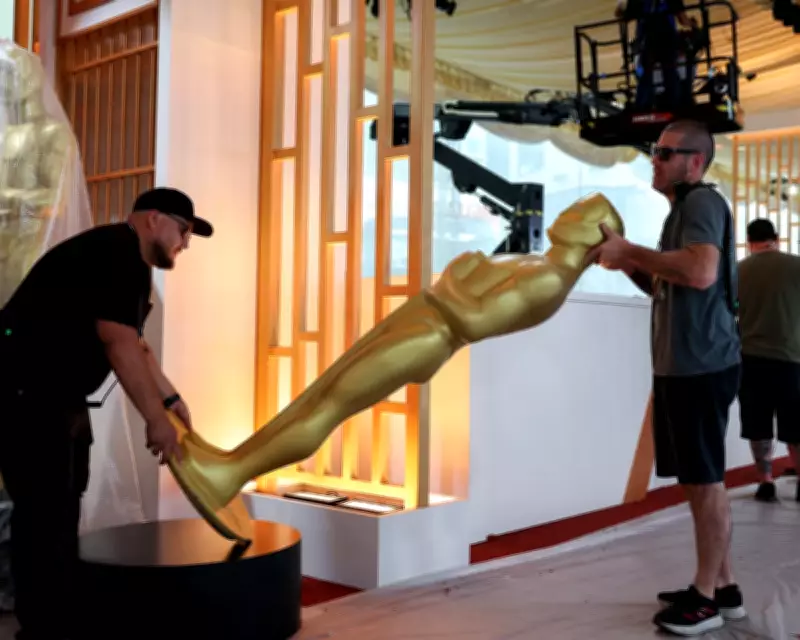
Countless film industry workers likely entered the business because of watching Academy Awards ceremonies. Annually, the Oscars function as a long, expensive advertisement for movies themselves. Introductions, video packages, and acceptance speeches reinforce one basic truth: motion pictures are important physical manifestations of our dreams requiring protection at all costs.

Patronizing Hollywood Cheerleaders
It used to be that these appeals were amusing, allowing us to patronize Hollywood cheerleaders. Sort of like watching your child languish in right field during a Little League game, then telling them how great they did standing upright for twenty minutes. "Oh, buddy, I was so impressed with how you ... stayed focused while absolutely nothing happened."
Movies, like your baseball-challenged child, are great. Film is a powerful artistic medium shaping every aspect of civilization in ways we cannot fully comprehend. But eventually, children grow up and experience the real world. And I'm not afraid to say it: the real world sucks.
The Oscars' Diminished Dream
The Oscars can no longer be what we truly need them to be: an opulent dream transporting us from mundane to magnificent. They slowly turn into more goop slopped on an overflowing plate of "content." The news constantly reminds us that none of this matters facing unspeakable horrors.
But even if the awards ceremony has lost its way, film does matter. Art will always matter because it's humanity's only way to truly know itself. It's the mirror we hold to ourselves, telling us we're beautiful or, more often, showing how ugly we can be.
That's something you learn growing up as 2016 becomes 2026 and stretches toward infinity. I certainly did.