Oscar Documentary Nominees 2026: Real-World Impact and Ongoing Stories
The year 2025 marked a significant milestone for nonfiction cinema, with several extraordinary documentaries capturing moments of courage, heart, and vulnerability. However, it also proved a challenging period for politically charged films, as many struggled to secure distribution after arduous production journeys. Despite these hurdles, five remarkable films have earned Oscar nominations, each demonstrating how individual actions can confront vast systems of oppression and find transcendence in everyday miracles.
The Perfect Neighbor: A Harrowing Portrait of Racialized Gun Violence
Geeta Gandbhir's The Perfect Neighbor, widely considered the Oscar frontrunner, is a masterful editing feat available on Netflix. The 96-minute film primarily uses bodycam footage to chronicle the 2023 murder of Ajike "AJ" Owens, a mother of four, by Susan Lorincz in Ocala, Florida. Gandbhir condensed approximately 30 hours of police footage into a sobering examination of racialized gun violence, highlighting how Florida's "stand your ground" law emboldened Lorincz.
Lorincz received a 25-year manslaughter sentence in November 2025, shortly before the film's Sundance premiere. Since then, Owens's family and the filmmaking team have launched the Standing in the Gap advocacy campaign to overturn stand your ground laws in her memory. Pamela Dias, Owens's mother, emphasized that without the film and fund, her daughter "would have been just another dead Black person." Lorincz remains incarcerated and has contemplated a defamation lawsuit against the victim's family, maintaining her actions were justified due to trespassing, though witnesses disputed this.

Gandbhir described the conviction as "bittersweet," noting that Owens's children, all under 14 at her death, supported the film despite its devastating impact. The community has largely moved away from the Ocala block, with only one family remaining.
The Alabama Solution: Exposing Prison Abuses and Sparking Reform
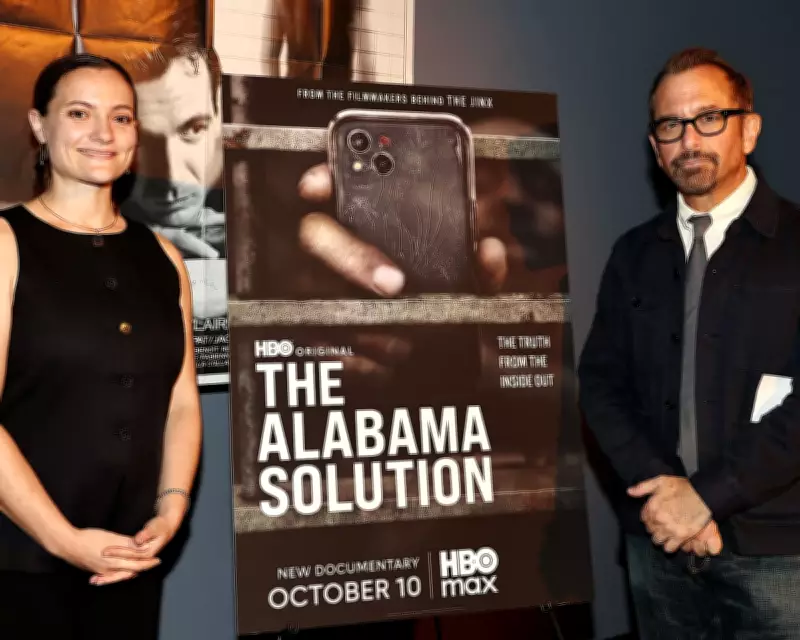
Andrew Jarecki and Charlotte Kaufman's The Alabama Solution, produced for HBO, offers a harrowing look into Alabama's state prison system. Filmed secretly over six years using contraband cell phones, it documents inhumane conditions, including beatings, drug abuse, forced labor, and murder. The film focuses on organizers Robert "Kinetik Justice" Earl Council, Melvin Ray, and Raoul Poole, who led a 2022 prisoners' strike.
In January 2026, just before the Oscar nomination, these men were transferred to solitary confinement at Kilby state prison without explanation, where they remain. Meanwhile, the film has spurred legislative action; a bipartisan bill for independent prison oversight, inspired by the documentary, recently had a public hearing. Co-sponsor Larry Stutts acknowledged the film's role, stating, "You cannot unsee what you've seen."
Jarecki invited Governor Kay Ivey and Attorney General Steve Marshall to a pre-Oscars screening, but both declined. Marshall dismissed the offer as "agenda-driven" and touted progress in Alabama prisons, including a new $1.3 billion facility funded by education cuts and Covid-19 relief.
Mr Nobody Against Putin: Documenting Propaganda in Rural Russia
Mr Nobody Against Putin provides a unique microcosm of authoritarian propaganda, filmed by Pavel Talankin, a school event coordinator in the Ural mountains. The documentary shows how grenade-throwing classes and "denazification" curricula have replaced standard education. Talankin fled Russia in 2024 under threat of imprisonment and remains in exile in Europe.
Bootlegged copies have allowed some in Karabash to view the film, eliciting mixed reactions from gratitude to threats. Talankin hopes it helps future children understand they were victims of indoctrination. The Kremlin and school administrators have ignored the project, likely to avoid acknowledgment. At the Baftas, co-director David Borenstein praised Talankin's courage, emphasizing the power of individual actions against darkness.

Come See Me in the Good Light: A Poetic Journey Through Terminal Illness
Ryan White's Come See Me in the Good Light, available on Apple TV, is a searing yet humorous portrait of poet Andrea Gibson facing terminal ovarian cancer with partner Megan Falley. The film ends with Gibson alive and vibrant; they died in July 2025, after the Sundance premiere.
Falley continues Gibson's legacy through their Substack, Things That Don't Suck, and a press tour that serves as a public grieving process. She describes feeling like "Andrea's earth-side delegate," carrying forward their lessons to bring people closer to truth. Gibson's wish for mortality to be everyday conversation has, in a way, been realized through post-screening discussions.
Cutting Through Rocks: Courage in Rural Iran
Cutting Through Rocks, the least viewed nominee due to limited distribution, portrays Sara Shahverdi, a female farmer and village council member in north-west Iran. The film, shot over eight years by Sara Khaki and Mohammadreza Eyni, shows Shahverdi challenging patriarchal norms by riding motorcycles, wearing pants, and advocating for women's rights, despite significant risks.
Shahverdi's council term has ended, but she remains a fierce advocate for women and girls, supporting a new school construction in her village. Travel bans prevent her from attending the Oscars or U.S. screenings, but she is thrilled her story reaches global audiences. The filmmakers report her legal issues, depicted in the film, have been safely resolved.
These five documentaries not only captivate audiences but also drive real-world change, from legal reforms to personal legacies, proving the enduring power of nonfiction cinema to challenge, inspire, and transform.