
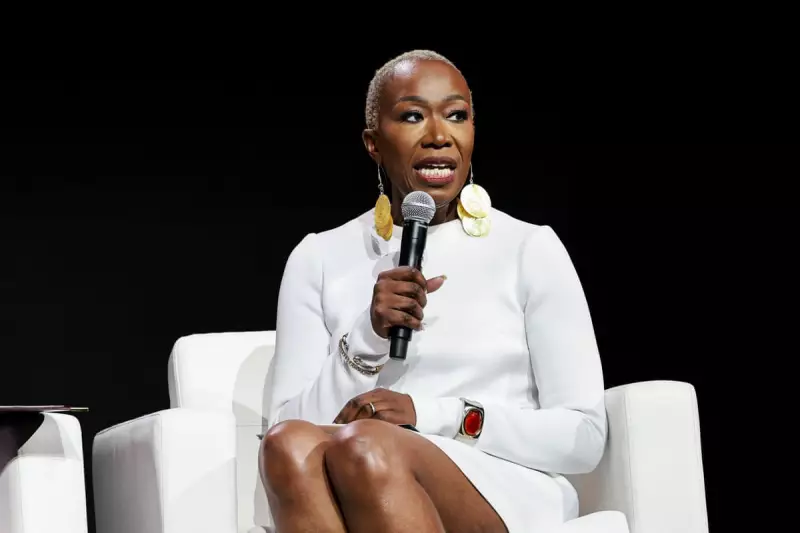
Nearly a year after her abrupt departure from MSNBC, veteran journalist Joy Reid is reflecting on what she describes as the 'blessing' of leaving corporate media behind. The former host of The ReidOut, who dominated the network's 7pm slot for almost five years, was suddenly ousted in February as part of a broader programming shakeup that saw her entire team laid off.
The Liberation of Independence
Speaking candidly about her unexpected exit, Reid admits she still misses her 'ReidOut family' but overall views her departure as positive. 'I think in this moment, not being a part of corporate media is actually a gift,' she revealed. 'From now, on the outside looking in, I don't know that I could live with the kind of restrictions that people in corporate media are facing.'
Since her departure, Reid has launched her own streaming show on YouTube, The Joy Reid Show, embracing what she calls her 'entrepreneurial era' alongside her husband and daughter in a significantly smaller operation.
The Corporate Pressure Cooker
Reid didn't hold back when explaining the restrictions she believes are plaguing mainstream media outlets. She pointed to corporate owners having business before the Federal Communications Commission (FCC) as a primary concern, suggesting this influences editorial decisions.
'These corporations are all doing business with the administration,' Reid stated. 'They all have business before the FCC, and therefore they are going to make their content and the journalism being done at those institutions bow to the bigger corporate need.'
She specifically highlighted concerns about diversity initiatives being rolled back across major networks, including recent cuts to race and culture units at CBS News and NBC News. Reid connected this trend to what she sees as a national backlash against diversity efforts that began during the Obama administration.
The Gaza Coverage That Changed Everything
Perhaps the most revealing part of Reid's reflection concerns her coverage of the conflict in Gaza. The journalist admitted she felt 'tremendous frustration' about the difficulties in presenting what she called 'the other side of the story.'
'Internally, I will say, you could feel that coverage of the genocide as a genocide was unwanted,' Reid revealed. She believes this coverage ultimately contributed to her departure from MSNBC.
When asked about crossing lines that might risk her position, Reid was unequivocal: 'What was the point of having the platform if I couldn't speak out against a genocide?' She acknowledged receiving warnings from colleagues and even family members to stop discussing Gaza, but maintained she has no regrets about her coverage.
The aspect that surprised her most was the network's decision to lay off her entire staff rather than simply cancelling her show. 'That is not normal,' she noted, adding that this unusual move prompted fellow MSNBC host Rachel Maddow to publicly criticise the network's parent company, Comcast.
Building a New Media Future
Despite the challenges of running a much smaller operation, Reid reports that her audience has followed her to new platforms. 'People who enjoyed me will still find me on Substack, they're still gonna find me on my YouTube show,' she said, though acknowledging that the audience becomes fragmented across different platforms.
The work, however, is significantly more demanding without the support of a full production team. 'I am realizing it is an incredible blessing to have 15 staffers, 15 producers to make your TV,' Reid admitted. 'I used to be a booking producer, I used to be a producer-producer, a news producer, and I am a booking producer and a news producer again.'
Yet despite the increased workload, Reid maintains her newfound independence is worth the sacrifice. She no longer has to worry about 'what punishment Brendan Carr might mete out to my organization based on the journalism I do on my little show' or whether 'Donald Trump tweeting at me somehow impacts my staff.'
As media landscapes continue to shift under political and corporate pressures, Reid's journey represents both the challenges facing traditional journalism and the emerging opportunities for independent voices willing to build their own platforms.