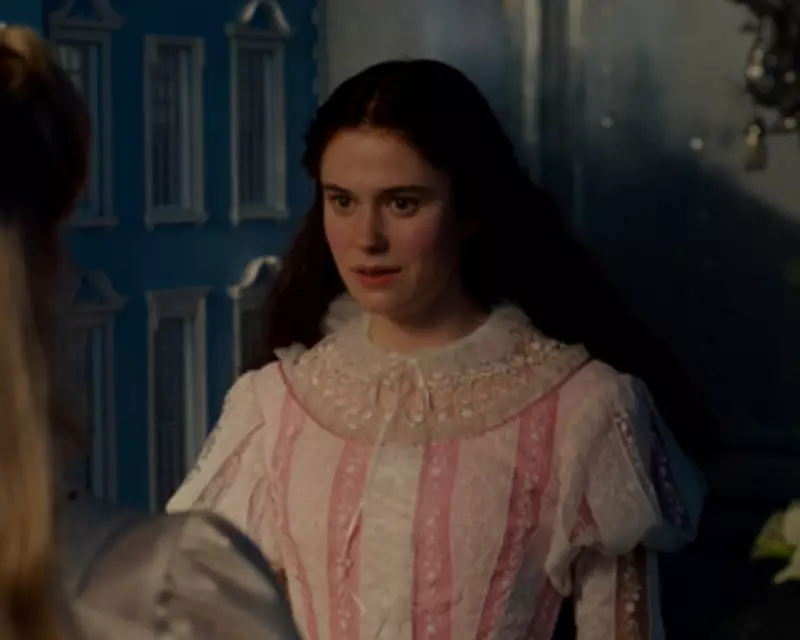
Emerald Fennell's Wuthering Heights Adaptation Betrays Isabella Linton's Agency
In the era of the 'rough sex defence', Emerald Fennell's treatment of Isabella Linton in her adaptation of Wuthering Heights is grotesque. By depicting the young woman abused by Heathcliff as a sexually willing participant in her own degradation, Fennell's film betrays both Emily Brontë's original novel and its audience.
Tragedy and Agency in Brontë's Original
Tragedy forms the beating heart of Emily Brontë's gothic masterpiece, Wuthering Heights. Set in a society built on hierarchy and oppression, the novel exposes the fragility of love and its dangerous distortion into obsession, offering no happy endings. While every character is stalked by tragedy, Isabella Linton endures immense suffering. Unaware of Heathcliff's vindictive motives, she becomes trapped in an intensely abusive marriage, escaping only by fleeing to London. Crucially, Isabella retains agency in the book; she is a victim who actively liberates herself, albeit with lasting scars. This pivotal moment defines her character, yet it is stripped away in Fennell's so-called adaptation.
Fennell's Controversial Creative Choices
Fennell is no stranger to controversy, with criticism already targeting the film for whitewashing Heathcliff and erasing regional authenticity. After expunging Heathcliff's ethnicity to facilitate a romantic fantasy, Fennell reduces Isabella to a willing BDSM participant—chained and treated like a dog, she consents to humiliation. This scene may tantalise those unfamiliar with the source material, but Isabella essentially becomes the dog Heathcliff hangs in the novel. With this context, the fetishisation of her degradation is glaringly problematic.

While some argue Fennell's decision grants Isabella agency, the film version serves as a narrative tool for Heathcliff rather than developing her character independently. She falls victim to 'fridging', a term coined by Gail Simone describing disposable female characters used as plot devices for male arcs. Fennell has rejected claims of significant alterations, telling Entertainment Weekly that she 'visually added some things' to the dog scene but it is 'almost all Brontë'. Actor Jacob Elordi offered an alternative view, noting how the scene shows Heathcliff and Isabella going 'off the deep end' in a 'kind of hell' of their own making. Elordi added that Heathcliff's obsession with Cathy devolves into 'rabid desperation', but this only reaffirms that Isabella's bondage extends his experience, not her own.
Mirroring the 'Rough Sex Defence'
More troublingly, Isabella's depicted consent mirrors the 'rough sex defence', where defendants argue harm resulted from willing rough sex, placing blame on victims. This tactic excuses violence against women, and despite legal reforms, abusers still shift responsibility. For abuse survivors, seeing Isabella objectified as a caricature is alarming. Whether intentional or not, it sends a worrying message to viewers whose sole interaction with Wuthering Heights is through Fennell's girlypop smut rather than Brontë's gothic masterpiece. Fennell's execution is deliberate—designed to shock as a cheap, sexually charged attention grab that misses the generational trauma Brontë explores. By turning Isabella into a consenting submissive, Fennell implies Heathcliff's actions are easier to swallow, making his behaviour seem less monstrous, even sexy.
Broader Trends in Romanticising Abuse
Unfortunately, romanticising abusive relationships isn't unique to Fennell's work. The recent film Pillion, based on Adam Mars-Jones's Box Hill, also diluted tougher material, transforming a rape scene into a consensual exchange lacking clear boundaries. In trying to avoid sensationalism, it romanticises abuse, muddying the original's intent. While Pillion offers an unvarnished portrayal of extreme relationship dynamics, Fennell's film, with its lavish cinematography and extravagant design, lacks transgressive complexity or genuine discomfort, coloured by her teenage reading of the book.

Brontë's Wuthering Heights is a story of violation—not meant to be arousing but to depict unhealed trauma poisoning all it touches. Brontë's world of anguish cannot be reconciled with Fennell's fanciful naivety. The filmmaker has robbed Isabella of her story to sell a grotesque sexualisation of a domestic abuse survivor, betraying the essence of the original work.