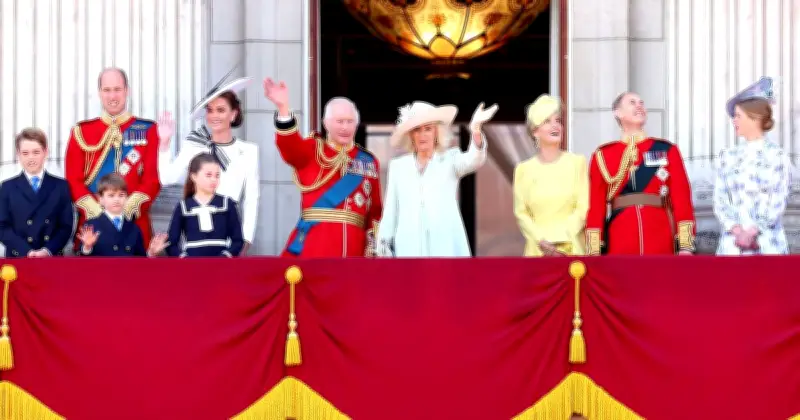
Some members of the Royal Family do not have titles due to a rule the family has followed for generations. Being part of the Royal Family comes with a huge amount of perks, but a title is not guaranteed. Royal titles are reserved for "the direct children and grandchildren of the current monarch." Titles are usually given at birth, but they can be granted later in life or even revoked if there is reason to do so.
Which royals do not have titles?
Today, several royals do not have titles, for example all of Princess Beatrice and Princess Eugenie's children do not have royal titles. For example is Sienna Mapelli Mozzi, Princess Beatrice's daughter. Born in 2021, she is the first child born to Beatrice and her husband, Edoardo. In 2025, the princess and her husband welcomed their second daughter, Athena.
Princess Beatrice herself holds a title, as when she was born, she was a grandchild of the reigning monarch, but the same doesn't apply to Sienna. Another royal without a title is August Brooksbank, the son of Princess Eugenie. When he was born, he was a great-grandchild of the then-reigning monarch, Queen Elizabeth II, so he did not receive a title.
The rule explained
His brother, Ernest Brooksbank, who was born in 2023, also does not get a title. The family also welcomed baby Adelaide this summer, and the same rule applies to her. Lady Louise Mountbatten-Windsor does have a form of a title, but there's a notable difference between her and her brother.
Lady Louise, the niece of King Charles and the daughter of the Duke and Duchess of Edinburgh, does not use an HRH royal title, giving her and her brother James, Earl of Wessex, the opportunity to live a more ordinary life. However, Lady Louise missed out on a secondary royal title for one very simple reason, which did not apply to her younger brother.
When James was born in 2007, he was given a courtesy title. James is now known as the Earl of Wessex, a title never given to Lady Louise under a centuries-old rule. This is because similar titles were only used by a peer's eldest living son, the eldest son's eldest living son, and so on, with other descendants not permitted to use subsidiary titles.