A research group claiming “100% confirmation” of Noah’s Ark’s resting place has released a “first look” inside an underground structure beneath eastern Turkey, prompting fresh questions about the Bible’s account of where the vessel landed.
The update was posted by Noah’s Ark Scans (@noahsarkscans), an independent biblical archaeology and research group led by American researcher Andrew Jones. It shows fieldwork at the Durupınar formation, a boat-shaped site that has fuelled Ark speculation for decades.
Robot mission into borehole
In the new video, researchers drill and lower a custom-built miniature subterranean robot, nicknamed “Gopher”, down into newly made core holes, trying to reach what the team describes as mapped voids beneath the ground.
The group says the robot was deployed into an 18-metre borehole to capture visual evidence of underground cavities. Alongside the footage, the caption reads: “FIRST LOOK: footage from inside Noah’s Ark”.
It continues: “Gopher drone was sent down into the core drilling holes in an attempt to reach the mapped voids.” However, the dramatic underground mission appears to hit issues almost immediately, with the footage showing the small rover struggling to move around after reaching the loose structure below.
What the Bible says
The team explained: “Gopher needs some modifications in order to look around, as his wheels had trouble moving on the very loose sediment on the ground.” Despite the difficulties, Noah’s Ark Scans insists the attempt supports what it says earlier scans suggested – and ends its post with a striking claim: “As radar scans accurately told us, No rock or bedrock found.”
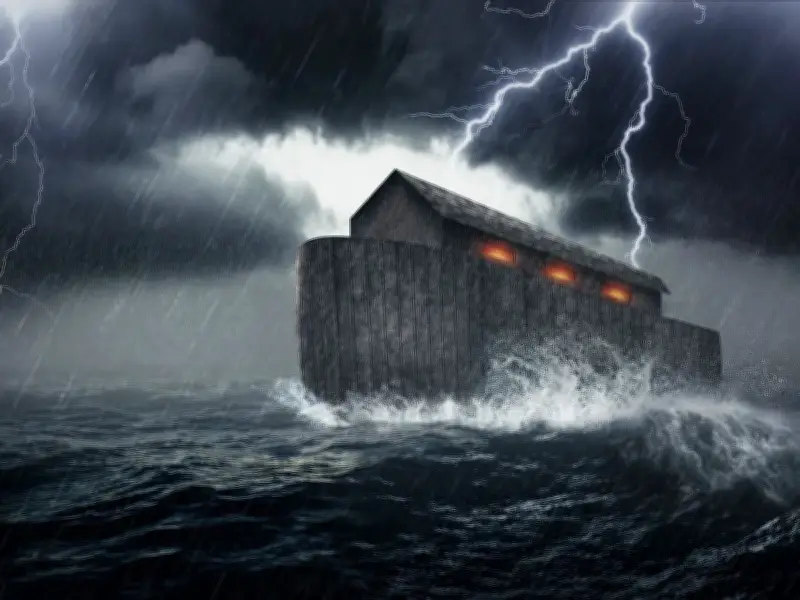
In the Book of Genesis, the text says the floodwaters receded over time – and pinpoints the Ark’s resting place as the “mountains of Ararat”.
The passage reads: “At the end of the hundred and fifty days the water had gone down, and on the seventeenth day of the seventh month the ark came to rest on the mountains of Ararat.”
The story continues with Noah sending birds out to test whether the land had dried. It says: “After forty days Noah opened a window he had made in the ark and sent out a raven, and it kept flying back and forth until the water had dried up from the earth.”
Debate reignited
Genesis then describes Noah sending out a dove – and the moment he realises the flood is easing: “When the dove returned to him in the evening, there in its beak was a freshly plucked olive leaf! Then Noah knew that the water had receded from the earth.”
According to the Bible, the massive vessel saved humanity and every kind of animal from annihilation during a catastrophic flood that some biblical chronologies place more than 4,300 years ago. Now, the latest footage and claims of “100% confirmation” are reigniting debate over whether the Durupınar formation could match the biblical location described as the mountains of Ararat.