As King Charles III settles in to deliver his traditional Christmas message to the nation and Commonwealth this year, he might want to check the sturdiness of his seat. A surprising historical precedent serves as a cautionary tale from his great-grandfather's time.
A Reluctant Broadcaster and a Wicker Mishap
The now-cherished tradition of the monarch's Christmas broadcast began with considerable reluctance. King George V made his first radio address at the British Empire Exhibition at Wembley in April 1924 and disliked the experience so intensely he vowed never to repeat it. His biographer Kenneth Rose noted the broadcast, amplified by loudspeakers arranged by the Daily Mail in cities like Manchester, Leeds, and Glasgow, reached an audience of ten million.
Despite efforts by the BBC to entice him—including sending a free wireless set to Buckingham Palace—the king remained stubborn. Years of pressure from the Daily Mail finally wore him down. On Christmas Day 1932, he gruffly recorded in his diary: 'At 3.35, I broadcasted [sic] a short message of 251 words to the whole Empire.' The occasion was memorably marred when the king fell through his wicker chair mid-broadcast and had to be helped up.

Spectres in the Stately Homes
No festive season is complete without a ghost story, and the royal family's residences have their fair share. The Prince and Princess of Wales, who traditionally spend Christmas at Anmer Hall in Norfolk, were warned about its spectral resident before moving in. The ghost of Henry Walpole, a 16th-century religious dissenter who was tortured and executed in 1595, is said to stalk the redbrick mansion.
Alan Murdie, chairman of The Ghost Club, suggests the royals are accustomed to otherworldly company. He reveals that the ghost of a monk is said to appear on the terrace of Buckingham Palace on Christmas Day, a building erected on former monastic land. Even Sandringham House is not immune, with a spectre reportedly appearing in an upstairs corridor on Christmas Eve and lingering for weeks.
Festive Bans, Frugality, and Feasts
Royal Christmases have witnessed everything from outright bans to remarkable frugality. In the 17th century, following the victory of Oliver Cromwell's forces in the Civil War, Christmas was effectively outlawed by an Act of Parliament in 1644. The Puritans deemed festive celebrations sinful, leading to rebellious acts like decorating homes with holly and ivy in defiance. The tradition was only restored fully after the monarchy returned with King Charles II in 1660.
Centuries later, Queen Elizabeth II, known for her careful housekeeping, ended a long-standing tradition of giving a hundredweight of coal to poorer Windsor residents at Christmas, as more homes converted to gas and electricity.
On the more extravagant side, royal feasts have been legendary. Queen Victoria's Christmas dinner at Osborne House in 1895 stretched to 20 dishes, including five different pies, while medieval menus featured boar's head and pies filled with larks' tongues.
Curious Gifts and Startling Incidents
Royal Christmases have often been punctuated by unusual events. In 1950, the Stone of Scone, the ancient coronation stone, was stolen from Westminster Abbey on Christmas Day by Scottish students, triggering a nationwide search before it was returned a year later.
Gift-giving could be equally peculiar. Queen Mary, wife of George V, once gave friends brocade-covered miniature cupboards to hide their telephones, which she called 'an instrument of unparalleled vulgarity.' Princess Alice, Duchess of Gloucester, earned a reputation for frugality after giving her staff pot plants for Christmas one year, instructing them to return the pots once the plants died.
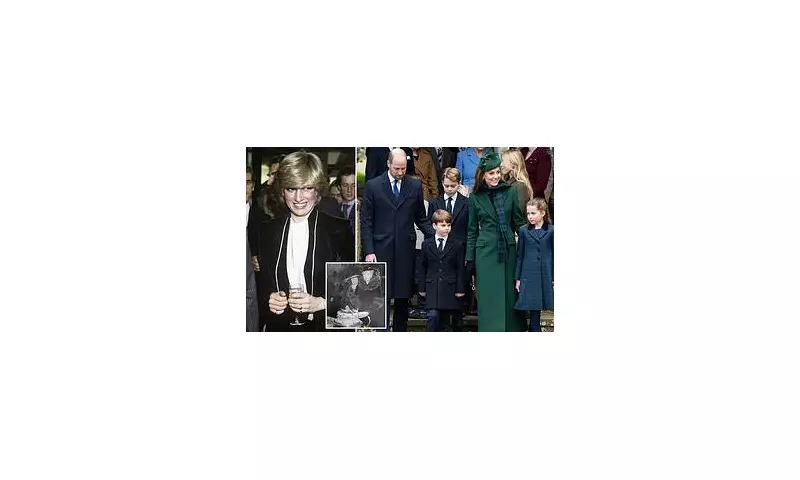
From the first solo engagement of Princess Diana—switching on the Regent Street lights in 1981—to the record-breaking pheasant shoots of Kings Edward VII and George V, the festive season has always been a time of unique tradition and occasional turmoil for the Royal Family, a legacy King Charles continues today.