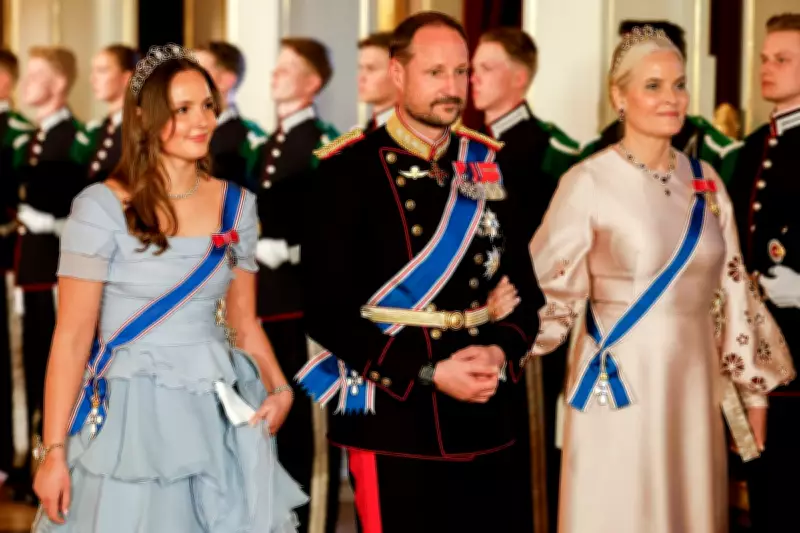
The Norwegian royal family finds itself under an intense international spotlight as Crown Princess Mette-Marit's eldest son, Marius Borg Høiby, continues to face serious allegations in court. The 29-year-old returned to the courtroom on Wednesday for the second day of a seven-week trial where he is accused of multiple offenses, including rape. Høiby has pleaded not guilty to the most serious charges, maintaining his innocence as the legal proceedings unfold.
A Royal Family in the Crosshairs
While Marius Borg Høiby holds no royal title or official duties within the Norwegian monarchy, his connection to the crown princess has drawn unprecedented attention to the case. Høiby is the first son of Crown Princess Mette-Marit from a previous relationship and the stepson of Prince Haakon, the heir to the Norwegian throne. This familial connection has transformed what might otherwise be a private legal matter into a public spectacle with implications for the entire royal institution.
The Epstein Connection Emerges
Compounding the royal family's difficulties are newly released documents revealing details about Crown Princess Mette-Marit's contacts with the late financier and convicted sex offender Jeffrey Epstein. Following the largest release of Epstein-related documents last Friday, the crown princess issued a statement expressing regret for her association with Epstein.

"I take responsibility for not having investigated Epstein's background more thoroughly," Mette-Marit stated, adding that it was "simply embarrassing" to have had any contact with him at all. She extended "deep sympathy and solidarity" to Epstein's victims.
The released correspondence includes a particularly revealing email exchange from November 2012, in which Mette-Marit asked Epstein whether it would be inappropriate to suggest "two naked women carrying a surfboard" as wallpaper for her then-15-year-old son. Epstein's response advised letting the son decide while suggesting the mother should "stay out of it."
Courtroom Drama Unfolds
As Høiby took the witness stand on Wednesday, Norwegian media reported emotional moments during his testimony. According to tabloid VG, he cried at one point and expressed frustration with the intense media scrutiny he has faced since childhood. The crown prince and princess have maintained distance from the proceedings, issuing a statement last week confirming they would not attend court nor comment during the trial.
"We care about him, and he is an important member of our family," the statement read, while clarifying that Høiby is not a member of the Royal House. The couple's planned absence from public duties has been extended, with communications adviser Sara Svanemyr confirming that Mette-Marit has "until further notice, postponed the planned trip" she was scheduled to take during the trial period.
Health Concerns Add to Royal Woes
Further complicating matters, the Royal Court revealed last month that Crown Princess Mette-Marit's health has shown "clear worsening" in connection with pulmonary fibrosis, a serious lung disease diagnosed in 2018. Medical professionals have reportedly begun exploring the possibility of lung-transplant surgery for the 52-year-old crown princess, adding another layer of concern to an already difficult period for the royal family.
Public Support Shows Signs of Erosion
The Norwegian monarchy has traditionally enjoyed widespread public affection, but recent developments appear to be testing that loyalty. Since Oslo police announced in August 2024 that Høiby was under suspicion for causing bodily harm and criminal damage, the royal family's popularity has shown measurable decline.
Royal expert Tove Taalesen of Nettavisen newspaper observed: "This has been like a shocking one and half year for the Norwegian people because we really love our royal family. We respect them, and we look at King Harald as like our grandfather."
Recent polling data supports this assessment of shifting public sentiment. A Norstat agency survey conducted for Dagbladet daily and public broadcaster NRK revealed that while two-thirds of respondents still support the constitutional monarchy as a form of government, this represents a decline from nearly three-fourths in August. Similar polling for VG has indicated comparable erosion of support.

Public Reaction Reflects Growing Complexity
The convergence of legal proceedings, Epstein revelations, and health concerns has created a complex situation for Norwegian citizens who have long cherished their monarchy. Student Gustav Onarheim, speaking in Oslo, captured this ambivalence: "I like the king, but with Høiby and the new released Epstein files and Mette-Marit, it's so much to think about. I'm really looking forward to get the results in court."
Historical Context of the Norwegian Monarchy
King Harald, now 88, heads a monarchy with roots stretching back more than 1,100 years, though like many European royal houses, the Norwegian monarch wields no real political power today. The royal family maintains connections across Europe, with King Harald related to both Britain's King Charles III and Spain's King Felipe VI through their shared descent from Queen Victoria.
The modern Norwegian royal family has embraced progressive changes, including the 1990 constitutional amendment that established absolute primogeniture, meaning the firstborn child regardless of gender takes precedence in the line of succession. This makes Princess Ingrid Alexandra, the 21-year-old daughter of Crown Prince Haakon and Crown Princess Mette-Marit, the future queen of Norway.
As the trial continues and the royal family navigates these multiple challenges, all eyes remain on how one of Europe's most beloved monarchies will weather this unprecedented period of scrutiny and difficulty.