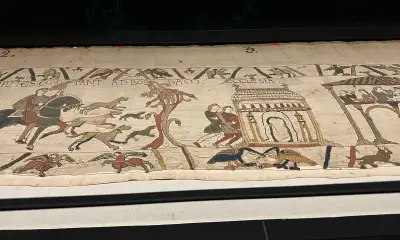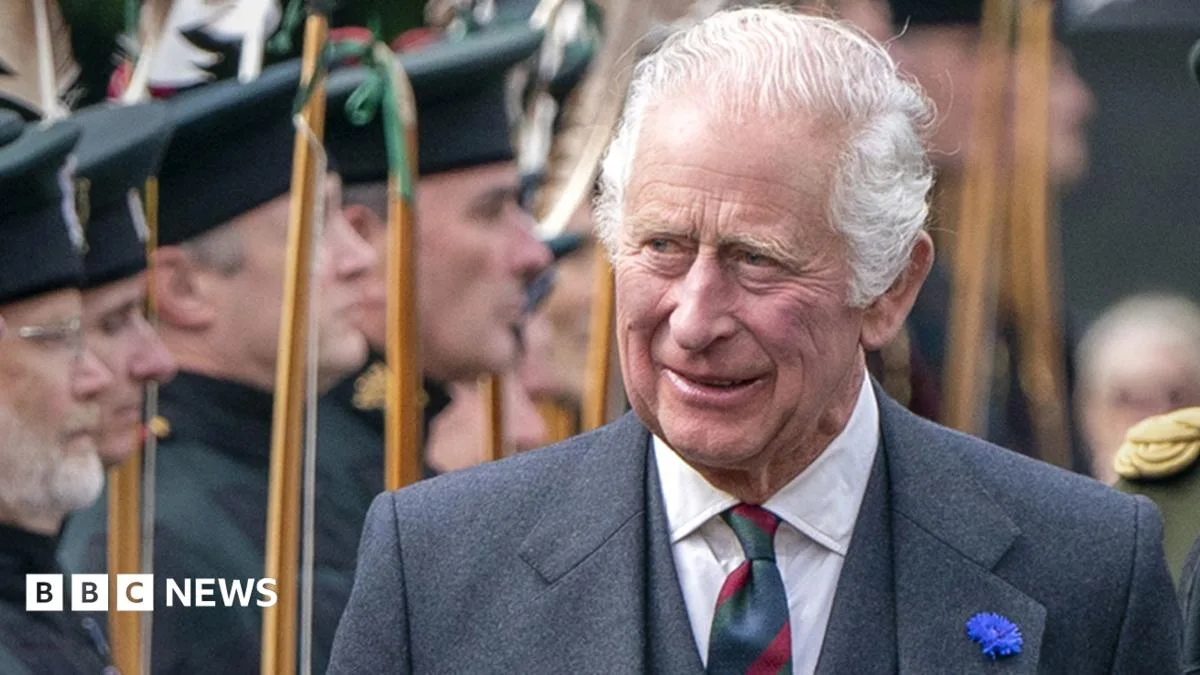
King Charles III has returned to Edinburgh's St Giles' Cathedral for a ceremony steeped in Scottish tradition, where he was presented with the Crown Jewels of Scotland. The event, which included the crown, sceptre, and a new sword named after the late Queen, took place in the presence of the Stone of Destiny. This follows the footsteps of his mother, Queen Elizabeth II, who participated in a similar ceremony in 1953.
The autumn sunlight streamed through the east window of St Giles', illuminating a scene reminiscent of the late Queen's lying in state. The fragile golden crown of Scotland, first worn by James V in 1540 and later used to crown the infant Mary Queen of Scots, was a palpable reminder of both the individual who had died and the ancient institution she led.
However, the event was notably scaled down compared to 1953. The monarch travelled directly from the Palace of Holyroodhouse to St Giles' in an enclosed limousine, rather than processing down Princes Street in an open landau carriage. Commentators have speculated about sensitivity to cost of living pressures, though travel by State Bentley hardly screams austerity.
Prof Anna Whitelock, director of the Centre for the Study of Modern Monarchy, described the occasion as a "reduced, imitation coronation" and a "poor man's re-enactment, where no-one actually gets to wear the crown." She added that it was "shadowboxing with the past."
Times have changed since the 1950s. The United Kingdom is wealthier, more ethnically diverse, less deferential, and less Christian. The ties binding the union of Scotland and England have frayed as memories of World War II have faded and the British Empire has been reappraised. Politics has also shifted, with the Scottish National Party now running the devolved parliament, a body Queen Elizabeth initially cautioned against before embracing in 1999.