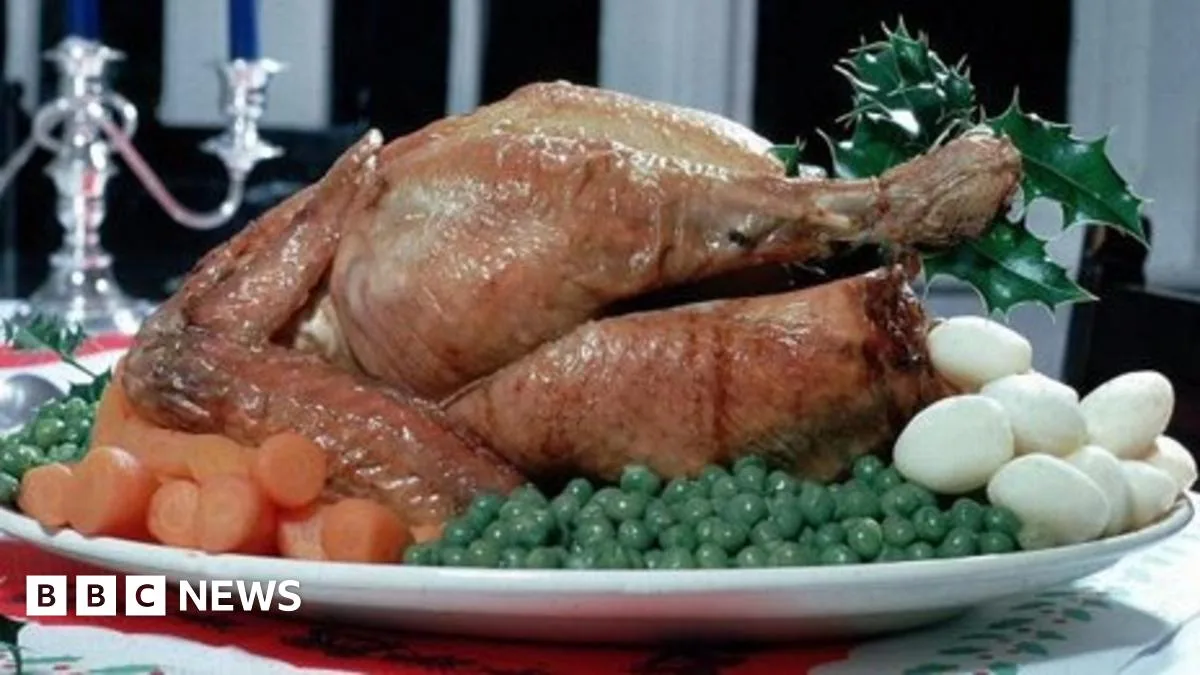
As the UK sits down for its Christmas lunch, some may wonder how the turkey, a bird native to the Americas, became the centrepiece of the festive meal. The popular story credits William Strickland, a Yorkshireman, with introducing the turkey to England.
According to tradition, Strickland acquired six turkeys by trading with Native Americans during an early voyage to America in 1526. He brought the birds back and sold them at Bristol market for tuppence each. The trade reportedly made him wealthy enough to build Boynton Hall, a stately home near Bridlington, East Yorkshire.
Richard Marriott, a descendant of Strickland and current owner of Boynton Hall, is searching for firm evidence of his ancestor's role. He hopes newly discovered family documents found in Canada might shed light on the story. 'Unfortunately, there is no real proof that he was the original man who brought the turkey into England,' Mr Marriott said. 'He is reputed to have sailed with one of the Cabots out of Bristol, but unfortunately we cannot make the facts fit the story.'
Despite the lack of definitive proof, Strickland seemed keen to promote the connection, adopting the turkey as his family crest in 1550. The drawing of his coat-of-arms, held at the College of Arms in London, is thought to be the first depiction of the bird in Europe. The village church where Strickland is buried is adorned with turkey images, including stone sculptures, stained-glass windows, and a carved lectern.
Strickland became a Member of Parliament during the reign of Elizabeth I. A strict Puritan, he earned the nickname 'Strickland the Stinger' for his ferocious debating style. Mr Marriott believes his ancestor's hard-line approach to politics and religion led him to adopt the turkey as his crest: 'I believe that William, wanting to prove himself to be a new man, took a new bird from the New World as his crest.'