
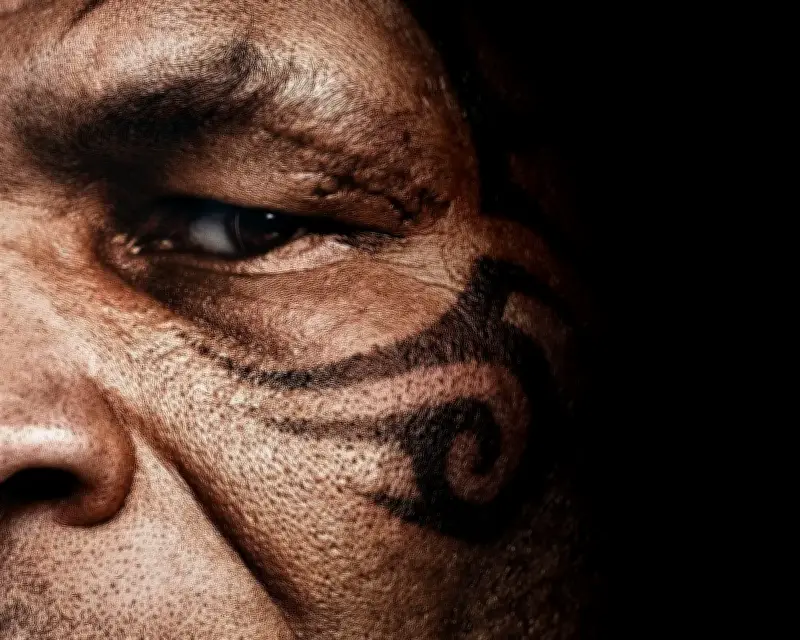
Netflix's latest docuseries on Mike Tyson presents a compelling but incomplete portrait of the former heavyweight champion, showcasing his frankness while revealing an unwillingness to take full accountability for his most troubling actions. The four-part series, directed by Floyd Russ, follows Tyson as he reflects on a life that has outlived his parents, his early struggles in Brownsville, his rise to boxing stardom, his imprisonment for rape, and his battles with addiction.
A Life of Extremes
Tyson, now 60 and a grandfather, remains a figure of fascination. From his early days as a knockout machine who terrified opponents to his infamous episodes—the turbulent relationship with Robin Givens, the six-year prison sentence for rape, and biting Evander Holyfield's ear—his life has been marked by extremes. The docuseries captures his ongoing engagement with the public, including his recent fights with Jake Paul and appearances on podcasts and at a White House press briefing.
This is not the first attempt at rehabilitating Tyson's image. In 2008, the HBO documentary produced with James Toback, and in 2012, the one-man Broadway show with Spike Lee, both sought to reframe his narrative. His cameos in The Hangover further softened his public persona, but the charm offensive never fully obscured his ugliest moments, such as threatening to eat Lennox Lewis's children.
Omissions and Interviews
The docuseries notably omits direct accounts from Robin Givens and Desiree Washington, the woman who accused Tyson of rape in 1991. The documentary acknowledges these omissions, noting that Washington's 1992 interview with Barbara Walters, where she claimed she was offered $1m to recant her story, is the primary source available. Tyson dismisses Washington in the series, saying, "Whatever bad she tried to do, she lost. What did she get, a million and a half bucks? I came out of prison with 400m bucks, so you tell me. I'm invincible."
An interview with Donald Trump, conducted at the White House, adds little depth. Trump, who promoted Tyson's fights in Atlantic City, reflects on the media's treatment of both men: "The media was rough on Mike, but it just made Mike hotter. They're rough on me, and I'm president!" The assault allegations are not discussed.
A Complex Legacy
The series includes moments of vulnerability, such as Tyson discussing the death of his mentor Cus D'Amato and the tragic loss of his four-year-old daughter in 2009. Yet, his candor often feels unsettling, as he revisits dark chapters without accepting responsibility. Tyson, who serves as a producer on the project, acknowledges the camera's pull: "This camera, to me, is a narcotic. I'm so overwhelmed and overpowered by this narcotic, I'll make a fool out of myself. It's just that addicting."
Ultimately, the docuseries makes clear that redemption is not the goal for Tyson, who continues to captivate audiences despite his troubled past.




