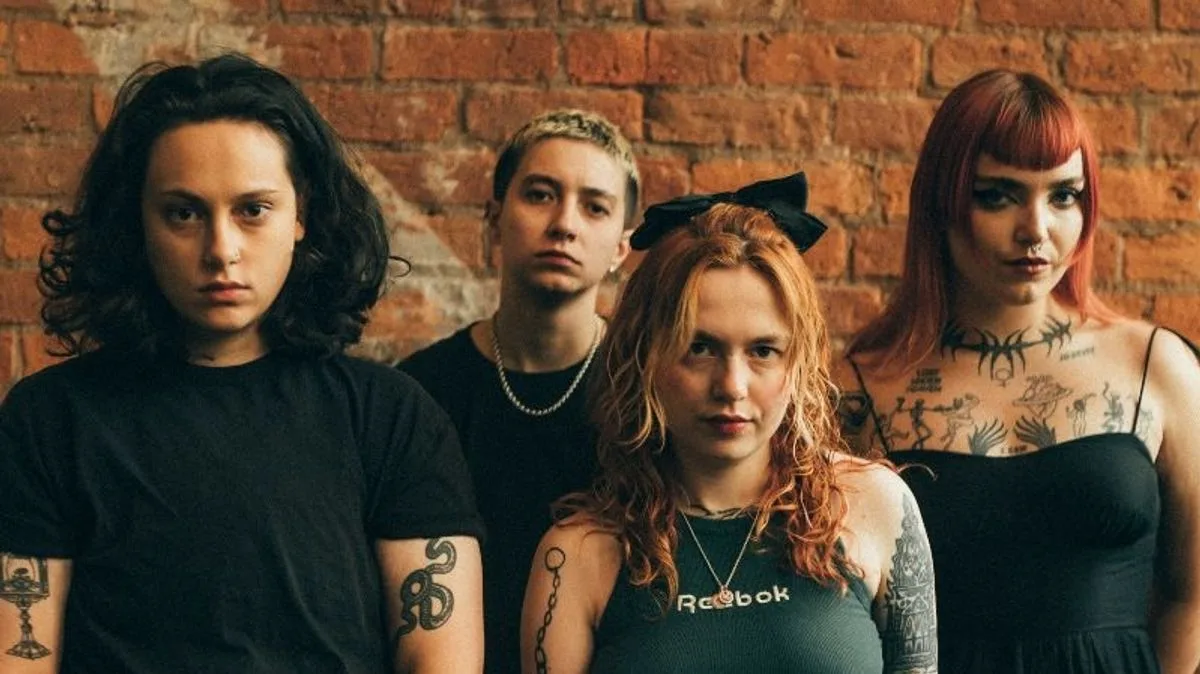
In a stark revelation that highlights the precarious state of the modern music industry, Manchester-formed doom-punk band Witch Fever have declared themselves financially "broke" despite completing a two-month arena tour supporting a major international act.
The Arena Tour That Left Them Penniless
The four-piece band opened for Danish rock giants Volbeat across the UK and Europe last year, playing prestigious venues including London's Wembley Arena. Despite receiving performance fees intended to cover their costs, the group found themselves in a dire financial situation at the tour's conclusion.
Bassist and backing vocalist Alex Thompson explained their predicament on the latest episode of the '101 Part Time Jobs' podcast, released on Tuesday 20 January 2026. "We just got off tour with Volbeat. We did two months in arenas and stadiums," Thompson told host Giles Bidder. "You know, we played Wembley [Arena]. We got to the end of it… and our profit is all stuck in withholding taxes across Europe."
Singer Amy Hope Walpole delivered an even blunter assessment of their circumstances. "So we're broke as f*** – and we just did two months in arenas," she stated. The financial strain is compounded by an inability to secure temporary employment. "We also can't get a job because we're back on tour in March, so nowhere will hire us."
A Signed Band's Struggle and a Wider Industry Crisis
Remarkably, Witch Fever's struggles occur despite being signed to Music for Nations, a subsidiary of the major label Sony Music. "This is just crazy that this is what the music industry is like at the moment," Walpole remarked, underscoring the depth of the systemic issue.
Walpole revealed she is currently surviving on a £4,000 inheritance from her late mother's pension, which is rapidly depleting. Her personal story reflects a bleak national picture for music creators. The inaugural Musicians’ Census in 2023 found that the average annual income for UK musicians was just £20,700, with a staggering 43 per cent earning less than £14,000 a year from their music.
The post-Brexit landscape has severely exacerbated these challenges. Artists now face costly permits and carnets—detailed documents listing all equipment taken out of the UK—which add significant expense and administrative burden to touring.
The Chilling Impact of Brexit on UK Music
Industry data confirms the severity of the situation. In its annual This is Music report, UK Music found that while the UK music industry generated a record £8bn for the economy in 2024, its growth rate had more than halved from the previous year. A survey of music creators revealed that 32 per cent felt negatively impacted by the UK's departure from the EU, with 95 per cent of those experiencing a decrease in earnings.
In 2024, Creative Industries Minister Chris Bryant conceded that Brexit had made European touring "simply not economically viable" for many artists. Sarah Woods, Chief Executive at the charity Help Musicians, told The Independent: "A career in music can be rewarding, but for many musicians it is also financially precarious."
She highlighted the "complexity and costs" now associated with touring, from rising travel expenses to additional paperwork. "Changes are needed to create conditions where musicians can build sustainable careers at home and internationally," Woods urged.
Witch Fever are scheduled to embark on their own headline tour of the UK and Europe from 12 March. Their story serves as a potent warning of the barriers now facing a generation of British musical talent seeking to perform abroad.