Bruce Springsteen's Political Anthems: From Vietnam to Trump Protests
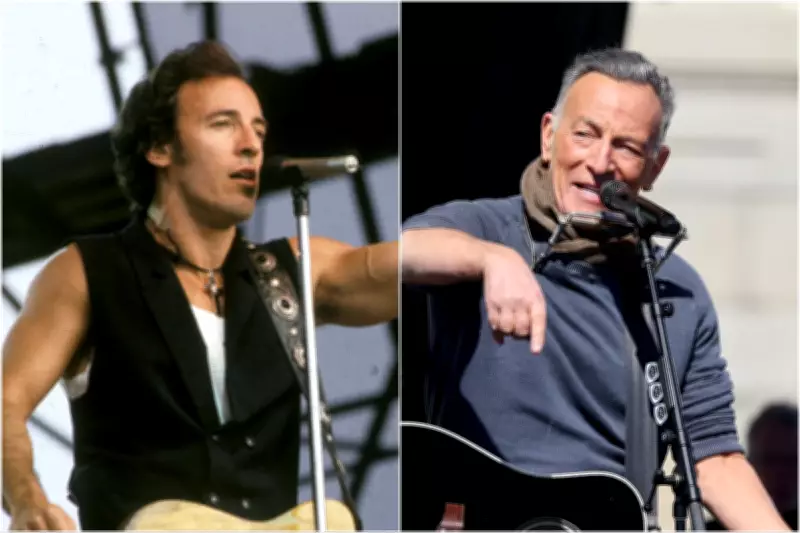
Bruce Springsteen, the iconic 76-year-old rock legend from New Jersey, has launched his latest US tour with a series of pointed political statements targeting President Donald Trump. This bold move is not an isolated incident but rather the latest chapter in a career-long commitment to social and political advocacy through music.
Current Tour Sparks Controversy
The Land of Hope & Dreams American Tour began deliberately in Minneapolis, Minnesota, as a tribute to the city's anti-ICE protests. Springsteen explicitly stated to the Minnesota Star Tribune that this tour would be "political and very topical about what's going on in the country." His plan includes starting in Minneapolis and concluding in Washington, DC, creating a symbolic journey through contemporary American political landscapes.
From the stage, Springsteen praised "the power and the solidarity" of Minnesota residents. President Trump responded by labeling the musician a "dried-up prune" and encouraging his supporters to boycott the tour. Despite this criticism, Springsteen remains undeterred, continuing a tradition of political engagement that spans more than five decades.

Early Political Commentary
Springsteen's political consciousness emerged early in his career. His 1973 debut album, Greetings From Asbury Park, included "Lost in the Flood," which depicted a Vietnam War veteran returning to an unrecognizable America. The song's vivid imagery of police violence and urban decay established Springsteen as a chronicler of America's social struggles.
By the 1980s, Springsteen's popularity had grown significantly, attracting attention from politicians. President Ronald Reagan referenced Springsteen during his 1984 re-election campaign, praising the "message of hope" in his music. Springsteen responded during a Pittsburgh concert by questioning which album Reagan preferred, then performing "Johnny 99," a stark narrative about economic desperation leading to murder.
Misunderstood Anthems
Springsteen's 1984 hit "Born in the U.S.A." became widely misinterpreted as patriotic celebration. Beyond the anthemic chorus, the song actually tells the story of a disillusioned Vietnam veteran facing unemployment and inadequate support from the Veterans Administration. The irony was compounded by Reagan's admiration for the song, given his administration's significant cuts to VA funding.
Similarly, "We Take Care of Our Own" from 2012's Wrecking Ball album was used extensively by Barack Obama's re-election campaign, yet contained subtle criticism of government failures during Hurricane Katrina. Springsteen's ability to embed social commentary within accessible melodies has often led to political co-option and misinterpretation.
Police Violence and Social Justice
Springsteen has repeatedly addressed police violence throughout his career. "American Skin (41 Shots)," inspired by the 1999 shooting of Amadou Diallo by NYPD officers, was revisited in 2020 following George Floyd's death. Springsteen dedicated the song to Floyd's memory and reflected on America's "original sin of slavery" as an unresolved societal issue.
His 1995 song "The Ghost of Tom Joad" updated John Steinbeck's Depression-era protagonist for modern times, addressing contemporary social inequalities. The song has been covered by Rage Against the Machine and remains relevant in discussions about economic justice.
War and Economic Critique
Springsteen's 2005 album Devils & Dust included the title track examining a soldier's moral conflict during the Iraq War. The lyrics explore the psychological toll of combat and the difficult choices soldiers face in survival situations.
Following the 2008 financial crisis, Springsteen released "Death to My Hometown" on his 2012 album Wrecking Ball. The song expressed outrage at financial institutions whose "crimes have gone unpunished" while devastating communities. This economic critique continued his tradition of holding power accountable through music.

Recent Activism
Springsteen's latest protest song, "Streets of Minneapolis," addresses ICE-related violence and specifically references the shooting deaths of civilians Renee Good and Alex Pretti. The lyrics describe ICE agents as "federal thugs" and criticize "King Trump," demonstrating that Springsteen's political fire remains undiminished at age 76.
The song debuted at a "No Kings" protest before receiving its first full E Street Band performance during the tour's opening night in Minneapolis. This strategic choice reinforces Springsteen's commitment to connecting his music with contemporary political movements.
Enduring Legacy
From his early Vietnam-era commentary to his current critiques of immigration policy, Bruce Springsteen has maintained a consistent voice of social conscience throughout his career. His willingness to engage with political issues has sometimes drawn criticism but has also cemented his reputation as an artist deeply engaged with American society's struggles and aspirations.
As his latest tour progresses, Springsteen continues to prove that protest music remains a vital form of political expression, bridging generations of activists and maintaining relevance in an increasingly polarized political landscape.