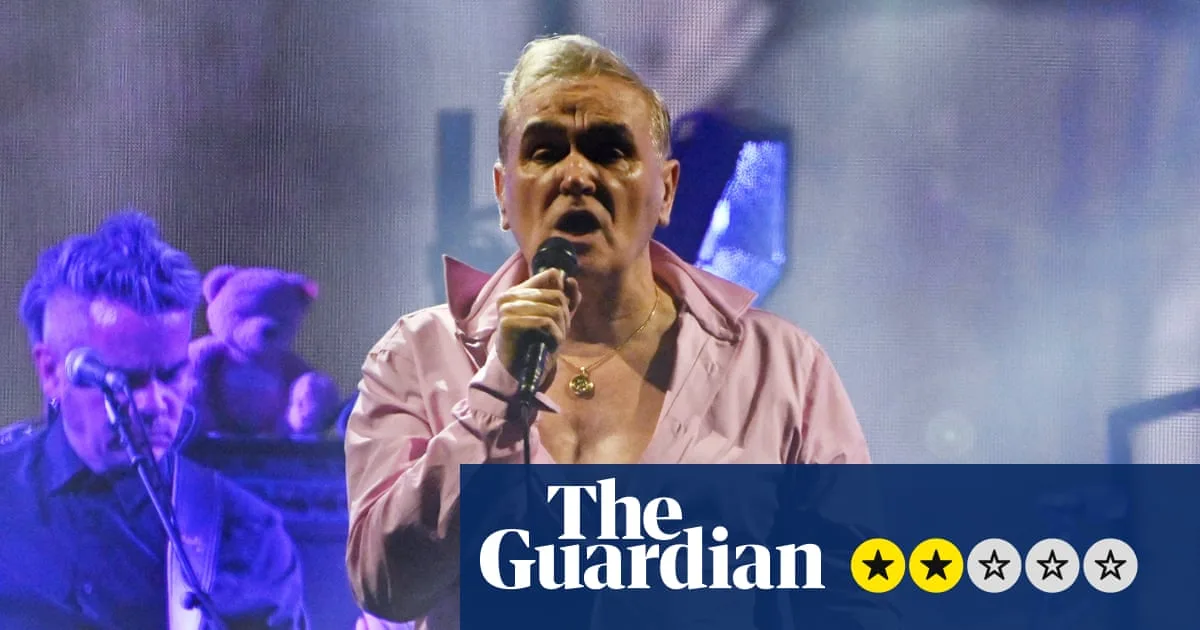
Morrissey performed at a sold-out O2 Arena in London, delivering classic Smiths songs alongside controversial political commentary. The former Smiths frontman, dressed in a pink shirt, opened with Suedehead, drawing roars from the crowd. He quipped about morphine use, saying it had just kicked in, and railed against "jealous bitches" and cancel culture, despite performing on a large stage to 20,000 fans.
His recent single Notre-Dame sparked criticism for its apparent reference to debunked Islamophobic conspiracy theories about the 2019 Notre-Dame fire. Morrissey sang, "We know who tried to kill you," addressing the cathedral, and added, "Before investigations they said: there's nothing to see here." The crowd seemed unaware of the insinuations.
The Smiths songs, including A Rush and a Push and the Land Is Ours and I Know It's Over, were highlights, though the latter's live arrangement fell flat. Morrissey's vocals carried the ballad, accompanied by images of his late mother. Between songs, he expressed concern for "all communities, but the one that's at risk now is my own," drawing parallels to far-right rhetoric.

Irish Blood, English Heart was performed with red lights, its ambiguous nationalism now seeming aligned with proto-Reform politics. The set included a mammoth How Soon Is Now?, leaving Morrissey collapsed by the drum kit. He joked about needing more morphine "or else I die." The encore, There Is a Light That Never Goes Out, offered a nostalgic finale before Morrissey left the stage.