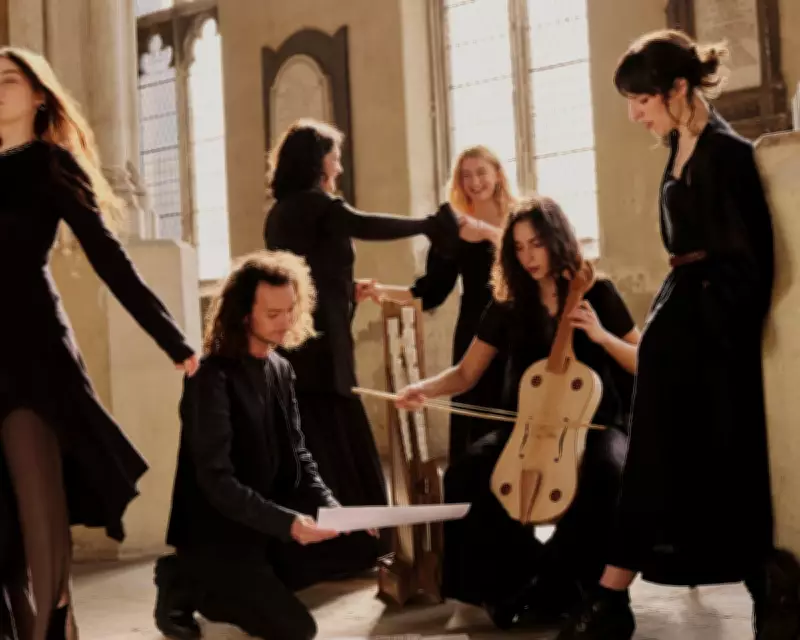
Idrîsî Ensemble Reimagines Corsican Medieval Music with Modern Female Voices
The Idrîsî Ensemble, a London-based musical group, serves as a powerful corrective to the common stereotyping of medieval music as smooth, pious, and sleepy. With up to 19 members at times, their performances feature howls and expressive vocals that highlight song's enduring capacity to evoke fresh pain and emotion.
Origins and Inspiration
In 2016, Thomas Fournil, a Corsican composer studying at the Guildhall School of Music, became deeply obsessed with the ancient music of his homeland. This music is characterized by pre-modern notation and florid, trembling embellishments. He gathered a group of college friends to experiment with these traditional sounds, aiming not for a historical re-enactment but for a modern reinterpretation.
Fournil recast male-dominated repertoires for mixed voices, and today, the Idrîsî Ensemble is distinguished by its distinctly individual female voices. These singers are drawn from diverse backgrounds in pop, jazz, and multinational folk traditions, making them a central draw for the group.

Political and Artistic Themes
A political strain runs through their work, as they celebrate the trobairitz—the frank, subversive female troubadours of 12th-century Occitania. Their recent release, Dieus Sal la Terra, is a paghjella created by Fournil for mixed voices and was sung in solidarity with those struggling to remain on their ancestral land.
The group's relationship with their practice deepens over time. Like traditional Corsican singers, they often perform in a horseshoe shape with arms linked, without sheet music. Their sound is coarser and spikier compared to other British vocal ensembles that value pure blends, emphasizing individual improvisation and a reluctant heaviness in unison movements.
Musical Arrangements and Sound
Over drones from a portative organ—a handheld instrument with a funky side bellow—and a vielle, a medieval fiddle, the ensemble unfurls expressive, ornate vocal lines. This approach creates a unique auditory experience that remains heavy with the pain of the past while feeling fresh and modern.
Recommended for fans of Arooj Aftab, Maria Callas, and the choral tragedy of Self Esteem's Prioritise Pleasure era, the Idrîsî Ensemble continues to push boundaries with their innovative take on medieval music.
This Week's Best New Tracks
Underscores – Tell Me (U Want It): After three perfect singles in a row, this hyperpopper's latest track skips along in bovver boots, with a sweet melody offset by brostep flourishes, promising one of the pop albums of the year.
The Womack Sisters – You Went Away Too Long: With heavyweight music genes from relatives like Bobby Womack and Sam Cooke, this Daptone-signed trio delivers a handsomely upholstered vintage soul ballad, its chorus charged with hurt and disappointment.
Friends& – Man of Constant Sorrow: From their album Folx, which features 112 tracks, many just one or two seconds long, this 1.53-minute effort is a highlight, blending AI voices and samples from My Little Pony and O Brother, Where Art Thou? in twee-core bliss.
Terror – Still Suffer: After a quarter-century, this US hardcore band sounds as energised as ever, with vocalist Scott Vogel venting about shame and self-doubt in centrifugal mosh pits.
Squarepusher – K2 Central: The first track from Tom Jenkinson's upcoming album Kammerkonzert, this is essentially a concerto for bass guitar, featuring a fiendish and funky bassline surrounded by stately orchestration.
Maria BC – Rare: From her new album Marathon, this spellbinding ballad is anchored in a sure-footed vocal melody sung in Vashti Bunyan-ish tones, backed by a gently heaving mass of noise.
John Carroll Kirby – Suntory: The zen guru of urbane Los Angeleno lounge jazz returns with gentle piano figures emerging through a soft veil of synths, evoking a waft of incense and quality hair products.