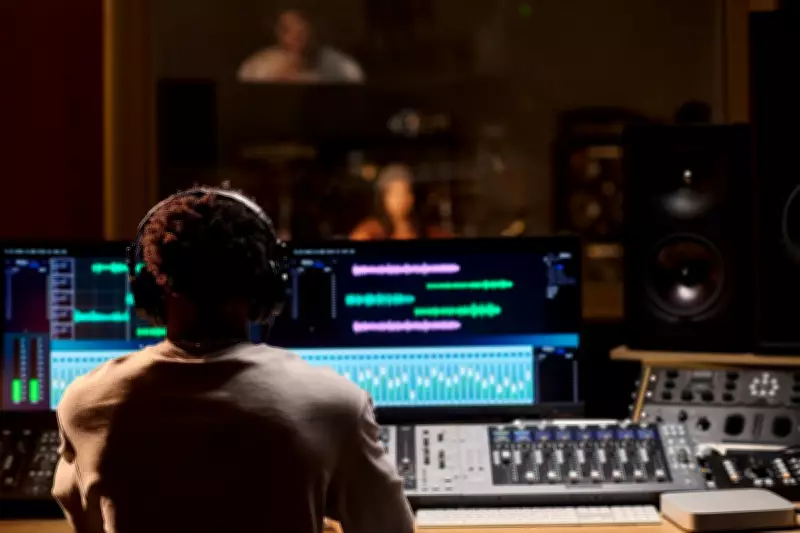
The rapid emergence of artificial intelligence in music creation has presented the Grammy Awards with a profound ethical and practical dilemma. As AI-generated tracks accumulate millions of streams on major platforms, the National Academy of Recording Arts and Sciences maintains that only works with "meaningful and significant" human authorship qualify for consideration.
The Grammy Stance on Artificial Intelligence
The Recording Academy has established clear boundaries in response to advancing technology. Their official position states unequivocally that "a work that contains no human authorship is not eligible in any categories." This creates a fundamental tension within an industry increasingly embracing AI tools at various creative stages.
Current guidelines permit technical assistance from AI features, such as volume standardisation or file organisation within digital audio workstations. These are viewed as productivity enhancers rather than creative replacements. However, the academy draws the line at AI generating complete songs through text prompts, even when human artists subsequently refine and perform the material.

The Expanding Gray Zone of Creation
The boundaries become increasingly blurred when examining specific applications. Is it acceptable to use AI for adding backing vocals to a human-written composition? The academy would likely approve. What about employing AI to generate a drum pattern with authentic "swing"? Again, probably permissible.
The controversy intensifies when AI contributes to core creative elements. Consider a scenario where an artist uses AI to generate an eight-measure pop hook in G major at 120 beats per minute, with lyrics celebrating human resilience. If the artist then writes complementary verses and bridge sections, arranges the instrumentation, and records human performances, does this constitute "meaningful" human contribution?
This question highlights the Recording Academy's challenge in applying consistent standards to rapidly evolving technology. The performance aspect clearly involves human creativity, but the songwriting credit becomes ambiguous when AI generates the most memorable melodic and lyrical elements.
AI Music's Current Market Presence
While the Grammys debate theoretical boundaries, AI music has already established substantial real-world presence. Major streaming services like Spotify currently host AI-generated content without prominent disclosure requirements. The AI artist "Aventhis" exemplifies this trend, boasting over one million monthly listeners without clear identification as artificial intelligence.
YouTube comments on Aventhis's track "Mercy on My Grave" reveal most listeners assume human creation, raising transparency concerns. Platform descriptions vaguely reference "harnessing the creative power of AI" without explicit clarification about the extent of machine involvement.
Beyond Creation: The Algorithmic Amplification
The AI music ecosystem extends beyond composition to distribution. Artificial intelligence can generate not only songs but also simulated engagement through automated streams and clicks. This practice potentially trains recommendation algorithms to prioritise AI content, creating a self-reinforcing cycle that disadvantages human creators.
While streaming platforms officially discourage artificial amplification, the technical challenge of detection creates enforcement difficulties. This technological arms race between creation tools and detection methods further complicates the regulatory landscape.
Historical Precedents and Future Projections
The current AI controversy echoes previous technological disruptions in music production. Pitch correction software like Auto-Tune initially faced significant resistance but eventually became ubiquitous across genres, with no impact on Grammy eligibility. This historical pattern suggests possible normalization of certain AI applications over time.
Within a decade, mainstream listeners may accept AI involvement as routinely as they currently accept digital production techniques. The distinction between "tool" and "creator" will likely continue evolving as technology advances.

Alternative Platforms and Consumer Choice
For listeners concerned about AI's impact on human creativity, alternatives exist. Bandcamp has implemented guidelines prohibiting music "generated wholly or in substantial part by AI," creating a platform explicitly centered on human creation. This approach provides artists and audiences with spaces prioritizing traditional creative processes.
Ideally, major streaming services would offer transparent labeling and customizable filters allowing users to control their exposure to AI-generated content. Until such features become standard, consumers face challenges distinguishing between human and machine creation in their daily listening.
The music industry stands at a technological crossroads, balancing innovation with artistic integrity. As artificial intelligence capabilities expand, the Recording Academy's human-centric standards will face increasing pressure to adapt while preserving the essence of creative recognition that has defined the Grammy Awards for decades.