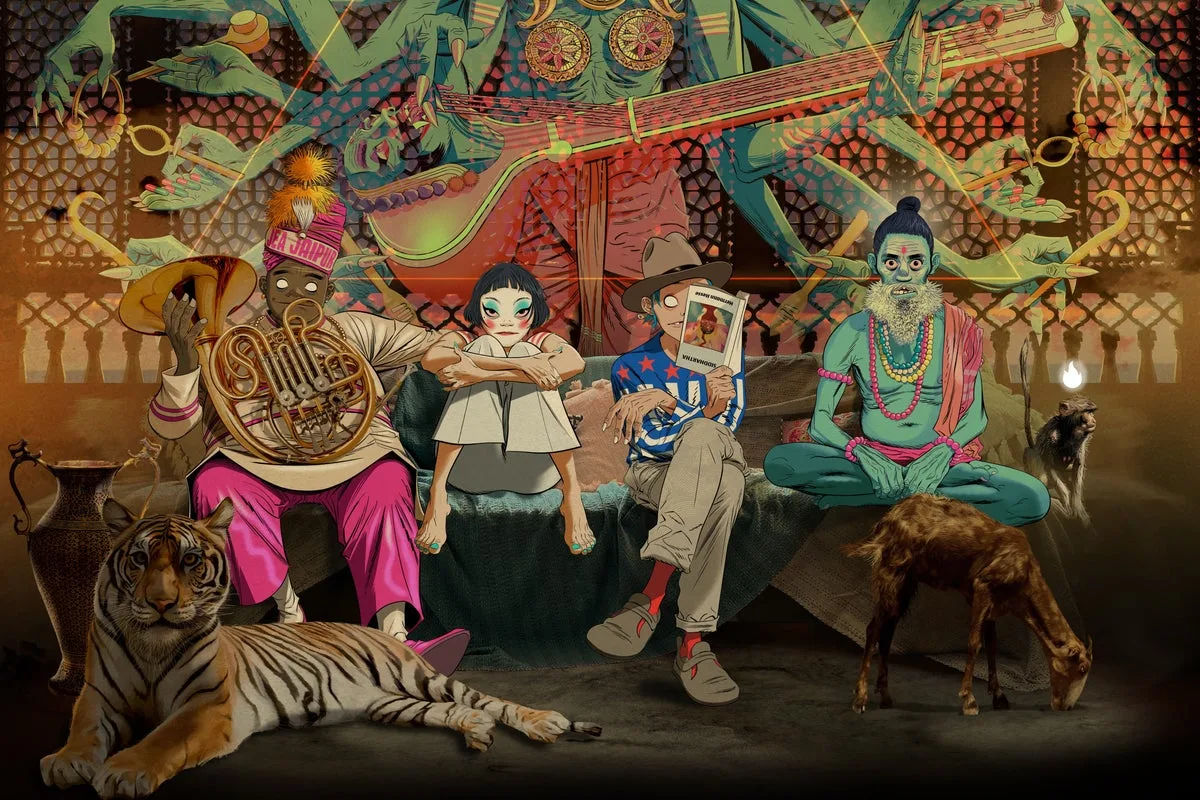
Gorillaz's 'The Mountain' Review: A Virtuosic Musical Mandala of Joyful Wisdom
Gorillaz 'The Mountain' Review: Musical Mandala of Joyful Wisdom

Gorillaz's 'The Mountain': A Virtuosic Musical Mandala of Joyful Wisdom

The ninth album from the virtual band Gorillaz, titled The Mountain, stands as a richly expansive and deeply philosophical work that masterfully blends eclectic global sounds with poignant themes of loss and reincarnation. Released in 2026, this album serves as a testament to the enduring power of music to transcend time and mortality, weaving together contributions from living artists and posthumous voices into a cohesive, joyful whole.

Processing Grief Through Global Sounds

At the heart of The Mountain lies the personal grief of co-creators Damon Albarn and Jamie Hewlett, who both lost their fathers in 2024. Albarn's direct sentiment, "You know, the hardest thing is to say goodbye to someone you love," echoes through the multi-layered single "Orange County," where sadness is balanced by breezy whistled melodies, sunny brass blasts, and soothing sitar echoes. The duo processed their loss through two transformative trips to India, with Albarn scattering his father Keith's ashes in the river Ganges, embracing what he described as the country's more open and "positive outlook on death." This philosophy of fire and water flows through the album's swirling currents, infusing it with a sense of spiritual renewal.

Posthumous Contributions and Musical Reincarnation

The Mountain features a remarkable array of posthumous contributors, reminding listeners that music can keep ghosts alive and even serve as a form of reincarnation. By spinning outtake samples of vanished voices into new forms, the album breathes life into artists like the late Mark E. Smith of The Fall, whose manic laughter and free-associated lines about sin, shrunken heads, and wooden tits energize the industrial, choir-backed pulse of "Delirium." Other ghostly visitations include rebel actor Dennis Hopper (from 2005's Demon Days), Nigerian-Ghanian drummer Tony Allen (featured on 2020's Song Machine), and rapper Proof (who recorded "911" with Gorillaz in 2001). These contributions highlight the album's theme of continuity beyond death.

A Global Festival of Eclectic Sounds

Over 15 tracks, The Mountain presents a giddy mix of moods, genres, cultures, languages, and time periods, woven together with virtuosic ease. Key collaborators include 92-year-old Bollywood legend Asha Bhosle, whose joyful wisdom soars over arcade game synths on "Shadowy Light"; Argentine rapper Trueno, who brings Latin muscle to "The Manifesto"; and a host of others like Anoushka Shankar on sitar, Johnny Marr on guitar, and Ajay Prasanna on bamboo flute. Highlights span from "The Happy Dictator" with Sparks, to the swaggering "The God of Lying" with IDLES, and the hectic Arabic jam "Damascus" with Omar Souleyman and Yasiin Bey.

Contemplating the Album as a Musical Mandala

With so much happening across its tracks, The Mountain is best experienced as a musical mandala—a dense pattern of times, places, and people meant for contemplation. Listeners are encouraged to sit back and allow their minds to drift through its geometry of recurring ideas, such as Albarn's undimmed gift for bittersweet melodies and lyrics. On tracks like the elegantly subdued "Casablanca," mundane experiences like "tunnels to suburbia" contrast with abstract concepts like "the abyss," or the alienated viewpoint of the "lone shooter" with the warm connection of "the kiss." This approach guides listeners to the summit through the album's creative sprawl, offering a journey of emotional and sonic discovery.

In summary, Gorillaz's The Mountain is not just an album but a profound exploration of life, death, and artistic legacy, delivered through a virtuosic blend of global sounds and heartfelt wisdom.