What is it about music that makes even non-professionals want to hit the dancefloor? Is it disco, funk, or even classical that does it best? Four leading choreographers discuss their theories, with the science to back them up.
“I don’t know what it is about house music that makes me move, but I just can’t help it,” says Faye Stoeser. “And I don’t care what I look like. I just go for it.” “If a Missy [Elliott] track comes on, that’s me, I’m in the zone,” says Dannielle “Rhimes” Lecointe. “With hip-hop it’s something deep within the gut that makes you want to move. It has so many rhythms to it – a heartbeat, a pulse, a ricochet – that you feel in so many different places of your body.”
Popular Floorfillers and Danceable Classics
Stoeser and Lecointe should have some insight since, as performers and choreographers, dancing is what they do for a living. When it comes to popular floorfillers, the DJ Intelligence platform found the most-requested track from UK DJs last year was Whitney Houston’s I Wanna Dance With Somebody (with Abba’s Dancing Queen second, and Mr Brightside by the Killers third). In the US, Billboard’s top wedding song is Uptown Funk by Mark Ronson featuring Bruno Mars. A 2013 Mixmag poll named Daft Punk’s One More Time as the ultimate dance track, whereas Radio 2 listeners in 2008 voted for Michael Jackson’s Billie Jean.
But what about those for whom dancing is more than recreation? When it comes to dance on stage, there is plenty that isn’t driven by music at all. Back in the 1940s, the US choreographer Merce Cunningham began to disconnect dance and music in his collaborations with the composer John Cage, rehearsing the dancers in silence. Some choreographers use music to create dance in the studio that is totally different from what they’ll perform to on stage. Dance that’s focused on musical connection definitely went out of fashion for a while, but there are a bunch of shows coming up where music is the absolute driving force.
Funk's Irresistible Groove
“We won’t choreograph until we have the music,” says Nahum McLean, of dance company BlacBrik, “which sometimes can be scary because it will be a week before the show, and we’re, like: ‘Still not found that music yet!’” McLean and his BlacBrik co-founder Darius Drooh had no trouble with the music for their current show The Brown Suite, which is soundtracked by godfather of funk James Brown – a legendary dancer himself – along with songs by Etta James and Sam Cooke. “It’s so infectious,” says McLean of Brown’s music. “Sometimes I’ll have the music on in my headphones, and I’m trying to block [some choreography] mentally or write something down, and then I get lost and distracted because I’m like: This beat is so funky!” Drooh agrees: “Sometimes we’re just too busy dancing in the studio when we should be trying to choreograph.”
What is it about funk that makes it so irresistible? “There’s something about the bassline and the way they used it during that era, and you can’t help it, your body starts to have this natural response,” says McLean. “The way it’s layered with the percussion and the horns. In performances, I can see people tapping their feet. It’s an involuntary reaction.” There’s actual science that bears this out. Oxford professor Morten Kringelbach is one neuroscientist who set out to pin down what’s so funky about funk. He played his test subjects funk drum breaks with different amounts of syncopation – meaning the beats that land between the regular pulse – and found an inverted-U shape; simply put, too little syncopation equals not funky enough, too much and your body can’t hook into the rhythm. James Brown hits the sweet spot. Plenty of others have also investigated “groove” – that’s the official scientific term for the quality in music that makes people want to dance.
The Science of Groove and Tempo
In a 2012 study, cognitive neuroscientist Petr Janata used various measures, including tracking people’s spontaneous movements, to find the grooviest piece of music. The result: Stevie Wonder’s stone-cold classic Superstition (1972). Neuroscientist and musician Daniel Levitin has pointed to Wonder’s drumming and clavinet-playing on the track and how he varies the tones so that even though there’s a strong pulse, it never sounds uniform; “ear candy”, he’s called it. People have been put in brain scanners while listening to groovy music and areas in their basal ganglia, which control motor activity and reward, lit up. Other elements that have a positive correlation with groove include: a prominent pulse or rhythm; a high number of different notes in each bar; short or accented beats; harmonic complexity – it should be low to medium; and the presence of low-frequency sounds, ie, heavy bass. Tempo matters, too. Superstition hovers around the 100bpm mark, slightly slower than the perceived optimum – 107-126bpm, according to one 2018 analysis; other studies landed on 120bpm.
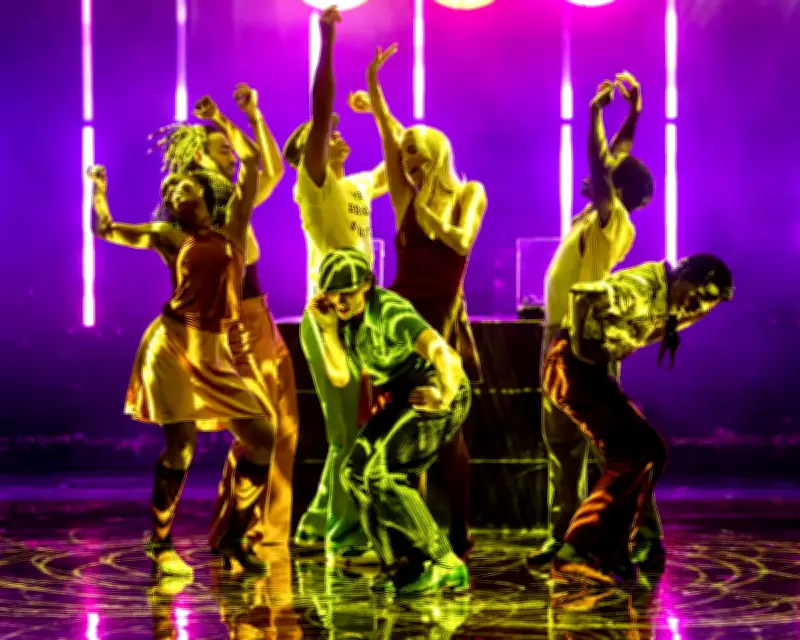
Hannah Ekholm, who along with Stoeser leads dance company Ekleido, would agree with that. “One hundred and twenty to 126bpm, that’s when it’s really groovy,” says Ekholm. “We make work to 130-135bpm,” adds Stoeser, “but I agree that between the 120-128bpm range it feels like it has that steady pulse but you still have that groove within it; the space to play.” Ekleido are specialists in “new way vogue” (a progression from the type of voguing Madonna sang about), which is danced to house music. On stage, their soundtrack isn’t just a steady four-to-the-floor – Ekholm’s partner Sam Shepherd, AKA Floating Points, writes music for them, including for their latest show Femina – but they do like a thumping beat. It is also more than just the technical aspects of the music. “When you’re in a club space, you almost transcend together collectively,” says Stoeser. “I learned this term the other day: ‘collective effervescence’, the feeling when someone scores a goal in football and people lose their sense of self for a minute. We’re trying to bring a piece of that into the theatre.”
Dancing to Hip-Hop and Classical
I ask Lecointe, who’s about to take the lead role in her hip-hop dance show Ebony Scrooge, where exactly she feels the music. “In the solar plexus,” she says. “Hip-hop sometimes feels to me a bit like a speaker. I’m vibrating at different levels: the bass, the snare, the hi-hat, can be the isolation in the feet, the hips, the chest.” Music doesn’t need to have a banging bassline to make you want to dance, though. When Anna Rose O’Sullivan, principal dancer with the Royal Ballet, says “the music almost makes me want to take off”, she’s not talking about techno but Tchaikovsky – specifically the Act II pas de deux she dances in The Nutcracker. “It’s the emotion that it evokes, the melody, the swell. It’s something deeply romantic, but it has this soar,” she says. “Tchaikovsky wrote some bangers.” He certainly did, and some of the most danceable tunes in ballet have kept The Nutcracker in business Christmas after Christmas. It helps that when O’Sullivan performs at the Royal Opera House, the music is played live. “The orchestra is like an engine for me,” she says. “I could be doing something in the rehearsal studio for months, but until I hear it live I can’t really access my full capacity. It’s like if someone’s listening to a piece of music and their hairs stand up,” she adds, “but for us it’s not just hairs, it’s everything, every muscle feels alive.” That’s borne out by the science, too: tactile sensation makes you want to dance, whether that’s vibration from a subwoofer or the orchestra in the pit.
There is definitely no single answer to the question of groove. James Brown may have taken over BlacBrik’s playlist, but McLean and Drooh insist there’s no music they couldn’t dance to. “My father is from west Africa and I have an African dance background. We will always hear the rhythm,” Drooh says. “We will always hear the bass in anything. You can put on Beethoven and we can find a boom-taka, boom-taka!”
The Brown Suite is touring nationwide to May. Ekleido: Femina is at Gulbenkian Arts, Canterbury, 29 to 30 October; and The Place, London, 5 to 7 November; Ebony Scrooge is at Sadler’s Wells East, London, 24 November to 3 January; The Nutcracker is at Royal Opera House, London, 3 December to 13 January.