From Sheffield's Rubble to Global Ritz: Arctic Monkeys' Debut Album Legacy
Twenty years have passed since Sheffield's Arctic Monkeys unleashed their debut album Whatever People Say I Am, That's What I'm Not upon the world. This landmark release not only became the fastest-selling debut for a British band in history but continues to serve as the bedrock of contemporary British guitar music. The album's journey from a tumbledown Sheffield studio to international acclaim represents one of the most remarkable stories in modern music history.
The Humble Beginnings at 2fly Studios
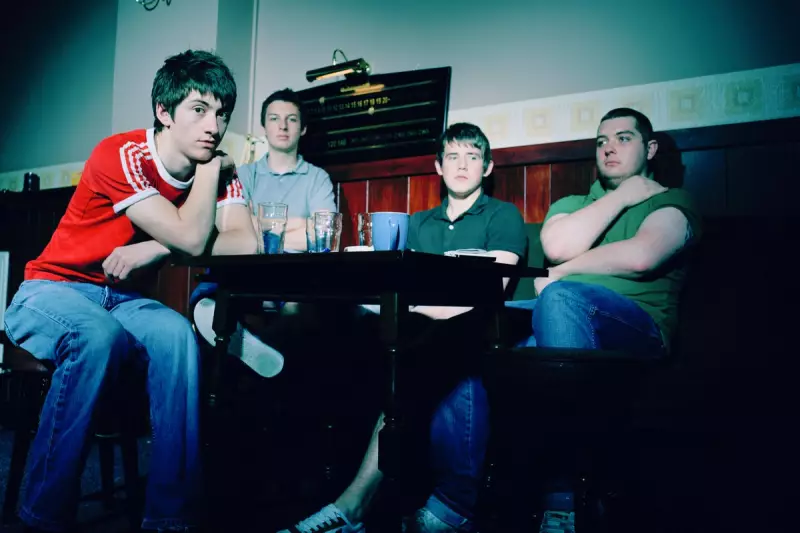
The Arctic Monkeys phenomenon began not in a major label boardroom or primetime television studio, but in the modest surroundings of Sheffield's 2fly Studios. Producer Alan Smyth recalls the pivotal moment when a seventeen-year-old Alex Turner approached him following a community music session. "He said, 'We've got another band, me and Matt [Helders, bongos], called the Arctic Monkeys. We're playing next weekend, do you want to come and see them?'" Smyth remembers clearly.
That invitation led to Smyth witnessing the band's second ever performance at Sheffield Boardwalk, where they played to just fifteen people. "They were just a bunch of kids playing guitars and writing songs," Smyth reflects, noting how even at this formative stage, their original material sounded as polished as the covers they performed.

The Evolution of a Reluctant Frontman
During those early demo sessions for tracks like "Curtains Closed" and "Knock A Door Run", Turner remained a withdrawn presence around strangers. "He was lovely to talk to," Smyth says, "but if anyone else came into the studio at that time, someone he didn't know very well, Alex was kinda quiet." This reticence extended to Turner's creative process, with the future frontman keeping his lyrical ambitions hidden from even his closest friends.
Turner later revealed to NME: "I've been penning things since school. I've been writing for longer than my friends realise. You couldn't be creative at school, could you? You'd have the p*** ripped out of you... But I'd always write things down in secret and one day I just thought, 'F*** it!'"
The Sheffield Sound Takes Shape
Drawing from an early love of hip-hop, Turner's lyrics developed a distinctive sardonic social commentary. As the band immersed themselves deeper into Sheffield's clubland and rock scene, his words gained a grainy authenticity that captured the tension between youthful excitement and inner-city cynicism. This lyrical sophistication, combined with Helders' machine gun drums and the band's incendiary guitar work, created a unique sonic signature.
By their third demo session, the classics began to emerge. "I Bet You Look Good on the Dancefloor" and "Dancing Shoes" drew inspiration from Sheffield's club scene, while "Fake Tales of San Francisco" originated from Turner's observations of local rock poseurs during his shifts behind the Boardwalk bar. "When the Sun Goes Down" originally titled "Scummy" spotlighted the sex workers and ne'er-do-wells of Neepsend.
The Recording Breakthrough
Smyth noticed a transformation in Turner during recording sessions. "When it came to the lyrics and Alex singing, we only ever did two or three takes," he recalls. "He'd say 'shall I do it again?' and I'd say 'no, it sounds fantastic'." Remarkably, some demo takes proved so perfect they made the final album. "'When the Sun Goes Down', on the album, that's the original take for the first bit," Smyth confirms. "The opening guitar and him singing, it's never changed."
The Internet Revolution and Major Label Interest
As the band began circulating demo CDs collectively dubbed Beneath the Boardwalk, they found themselves swept along by the technological zeitgeist. With file-sharing in its infancy, fans posted tracks to MySpace pages and shared them across cities and continents, making Arctic Monkeys the first breakout success of the internet's free-music revolution.

The subsequent label scrum saw Domino Records emerge triumphant, with producer Jim Abbiss brought in to record the debut album. "The demos had this amazing rawness and energy but sounded a bit small and thin," Abbiss explains. "The newer recordings sounded much better but the band's takes were a little lacking. [Domino] asked if I could marry the two by getting them back in the studio."
Crafting a Cultural Landmark
Recording at Victorian Chapel Studios in Lincolnshire, Abbiss found the band initially shy and insular. "They were incredibly young and they'd arrived at a studio with people they didn't know," he says. The pressure was particularly intense when recording "...Dancefloor", already designated as the first single. "It was early days in our session and I hadn't earned the band's trust yet...I knew I wouldn't get many takes from them. But luckily they literally hammered it out in three takes. Alex pretty much snarled the vocal take. I think their attitude added to its impact."
The album was structured like a night out in Sheffield's clubs, moving from pre-drinks anticipation through dancefloor courtships to post-club reflections. "The album doesn't glamorise life, quite the opposite, and it has self-deprecating British humour running through it," Abbiss observes.
Unprecedented Success and Lasting Influence
Upon its release, propelled by chart-topping singles, Whatever People Say I Am... became the fastest-selling debut for a British band ever, eventually selling three million copies. The band treated their sudden fame with characteristic nonchalance, shunning mainstream media, refusing to perform on Top of the Pops, and arriving at the 2007 Brit Awards dressed as Wizard of Oz characters.
Reflecting on their success, Turner later admitted: "If we were a bit older it probably would have been more of a headf***. We were just young...so I didn't take it that seriously or think it was the end of the world if it all ended."
The album's impact proved seismic, influencing generations of British musicians from Jamie T and The Maccabees to The Vaccines and beyond. Even as Arctic Monkeys themselves evolved through desert rock, funk, and space lounge influences on subsequent albums, the adrenaline of their debut continued to shape British guitar music. "That's how I felt," says Smyth. "The very first gig I saw of them I could tell that their energy was the same [as The Strokes]. And it's still going strong."
Two decades later, Whatever People Say I Am, That's What I'm Not stands not merely as a successful debut but as a cultural touchstone that continues to inspire new generations of musicians while remaining the definitive statement of British guitar music in the twenty-first century.