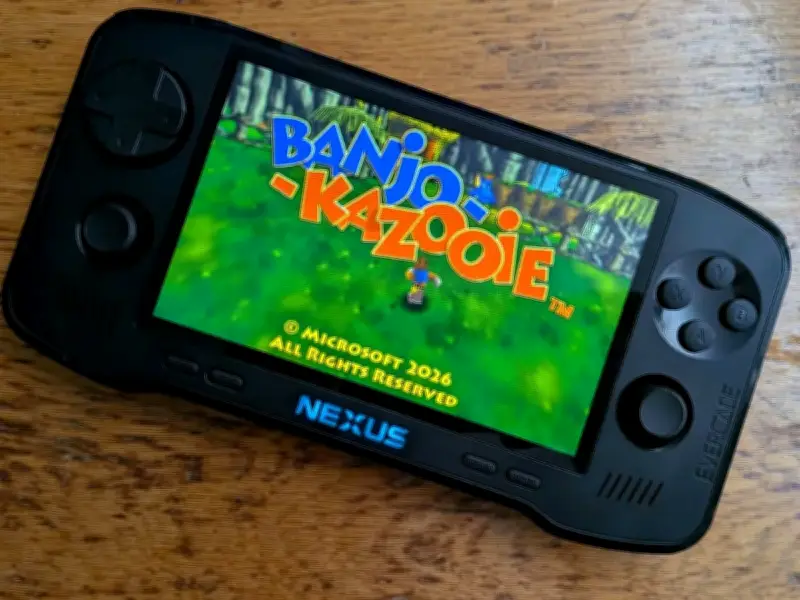
The Evercade Nexus is a vast improvement over the EXP before it, being a luxurious way to play retro games on the go for enthusiasts and collectors. With a larger, more impressive LCD screen and dual analogue stick integration, the Nexus improves on previous Evercade devices by delivering a luxury retro handheld experience.
In an era when physical ownership (and specifically the lack of it) is constantly being called into question, the Evercade lineup of retro consoles have stayed a small glimmer of hope amongst the impending darkness. The brand had previously peaked back in 2022 with the launch of the still great EXP, but parent company Blaze Entertainment had something potentially even better cooking.
It's called the Evercade Nexus, and represents the first way to play your existing library of Evercade compilation cartridges on a device that touts a dual analogue stick setup. Complete with a bigger, brighter 5.9-inch LCD screen, local wireless play built in, and full compatibility with all new and upcoming Evercade cartridges, switching from the Evercade EXP to this feels like upgrading from a Ford Fiesta to a Rolls Royce.
Does the Evercade Nexus get everything perfect? Absolutely not, and there are plenty of niggles on a pure software level. However, for the most part, the Evercade Nexus feels like the most luxurious way for retro enthusiasts to play their growing Evercade cartridge collection - whether you're already part of this tight-knit community of physical enthusiasts or not.
Evercade Nexus design
By far the biggest difference between the Nexus and all previous portable Evercade devices is the enlarged screen real estate. Boasting a high resolution and generously sized 5.9-inch screen, it might not be OLED that something like the Analogue Pocket offers, but with over 500 nits of brightness there’s a greater degree of clarity in the image here than Evercade has ever offered before.
Of course, a larger screen means a larger device to hold in the hands overall, and this does mean sacrificing the level of portability the likes of the Evercade EXP and its line of Super Pockets previously allowed for. And yet, the Nexus still works out to be lighter and smaller than, say, a Nintendo Switch 2, and so is ideal for popping into a backpack on your travels.
The other big get with the Evercade Nexus is the addition of dual analogue sticks and vastly improved shoulder buttons. While it’s true that not every game in the Evercade cartridge library necessitates the feature these input options offer since there’s a heavy focus on retro, as the list of licenced Evercade games has grown so too has its inclusion of early 3D titles such as the original Tomb Raider trilogy, some early Duke Nukem games, and so on. It’s here where the Nexus’ new analogue sticks come into their own, easily accessible during play sessions by being located underneath the face buttons and unified cross D-pad.
The last thing that surprised me in terms of the Evercade Nexus’ design is how light it is to hold. Coming in at just over 400 grams, for the amount of power its packing and its increased size, I never felt my hands getting tired while using it well into the early hours of the night. Overall, design-wise the Evercade Nexus feels like a huge step up, packing in a better screen and improved control features without compromising the play experience.
Evercade Nexus features
It turns out that the Evercade Nexus isn’t just a pretty face either, bundling in a few new appreciated features compared to what’s come before. Chief amongst them is a new local wireless multiplayer option called EverSync, which functions similarly to what Nintendo was doing with the DS back in the day - or even Nintendo Switch 2’s much overlooked GameShare function. EverSync essentially allows you to connect two Nexus devices together wirelessly to jump into a game’s multiplayer mode using only one cartridge. All the host has to do is fire up the option to do from the built-in menu and host the game. This does a lot to reinforce Evercade’s emphasis on community, building in an easier way for fans to play together.
TATE mode, which allows you to tilt the console 90s degrees to comfortably play vertical shooters returns, of course, as does the built-in Wi-Fi compatibility that makes it easy to browse your existing library virtually, receive updates, and enjoy Evercade's continued ‘game of the month’ offer that lets you try before you buy. None of this compromises the beating heart of the Nexus that is physical ownership, of course, but are appreciated extras.
Speaking of built-in extras, though, it’s a shame that the Evercade EXP’s built-in selection of Capcom titles - Final Fight, Mega Man, and others - weren’t able to make their way across. It’s no doubt due to licensing renewals that’d be required to bring this dedicated Capcom collection over. However, a nice consolation prize is the fact that every purchased Nexus device comes with the all-new Banjo-Kazooie/Banjo-Tooie cartridge double pack physically, both of which are titles that really show off the Nexus’ smooth analogue stick function.
Finally, in terms of features, it’s a small touch but one that makes for a big impact... the switch to dual stereo speakers on the front of the Nexus is a welcome upgrade. It results in a sound that is fuller and far truer to the kind of audio experience you’d expect to find when playing games on a TV, doing better justice to the chiptune and more modern soundtracks these games provide. Plus, in addition to the 3.5mm input jack’s return, the option to use wireless headphones via Bluetooth is another welcome modern feature.
Evercade Nexus performance
At a pure-software level the Evercade Nexus doesn’t really change all that much, which is both understandable yet a tad disappointing. Popping in a new cartridge and loading it up for it to be recognised on the device almost always works flawlessly, absolutely, yet it can be a bit sluggish doing so. The time it takes to turn on the device and enter a game can range anywhere from 10 to 30 seconds in my experience, which is far longer than is ideal. The inclusion of a Rest mode, similar to other modern consoles, would help remedy the issue, yet alas the Nexus doesn’t offer one.
However, browsing your collection via the built-in menu’s library page is fast, changing a game’s Display settings from original ratio to pixel perfect to full screen is swift, and there’s a bevy of further customisation options to play with - including the ability to change colour of the Nexus’ RGB logo. When it comes to the actual games, though, all 90+ existing cartridges and any future titles to come are confirmed to work with the Evercade Nexus, serving as a true testament to Blaze Entertainment’s willingness to pull out all the stops features-wise while not leaving fans behind. The dual analogue sticks, meanwhile, as mentioned earlier, serve as a great showcase for the fully fresh Banjo-Kazooie/Banjo-Tooie cartridge double pack that comes with every Nexus purchase. The Nexus offers the best way possible to experience these Nintendo 64 Rare classics, which go well beyond the remits of a port since they now run at 60fps, offer full camera controls, and even provide software-level improvements that let you skip cutscenes, back out of levels via menu, and more.
Honestly, playing through both Banjo-Kazooie and its sequel on the Evercade Nexus has me extremely excited about what other treats from the 64-bit era might be added to the Evercade lineup next. Doom and Doom 2 serve as other 3D treats set to launch alongside the device on Octover 30, but there’s a whole host of 3D platformers and action-adventure games that would all look and play great if given a similar treatment. While other PS1 and Nintendo 64 era games will work on Evercade’s Super Pocket and EXP handhelds too, the Nexus feels like the new home for such titles.
Overall thoughts on the Evercade Nexus
Despite a few niggles such as how long it can take to jump into games after turning the device on, the lack of a dedicated Rest mode, and the inability to transfer the built-in Capcom collection from the EXP, the Evercade Nexus gets a lot of things right elsewhere. The new, 5.9-inch IPS screen works wonders in terms of giving both new and classic games fresh life and clarity, while finally having dual analogue stick support makes playing 3D titles less of a hindrance. As such, the Evercade Nexus truly does feel like the Rolls Royce of Blaze Entertainment’s retro handheld lineup, remaining distinct against a sea of other ROM and emulation-driven devices that lack the same degree of ergonomic quality and are often known to degrade quickly.
Sure, much of the fun you’re able to extract from the Evercade Nexus is reliant on the specific collection of cartridges you’re willing to build, yet it’s an ecosystem worth investing in for players that care about physical ownership and prefer to focus on curation rather than confusion. With the Evercade Nexus, players now have the perfect retro device to reward such efforts. Rating: 4/5. The Evercade Nexus will be available from all good retailers on October 30, 2026 priced at £169.99 / $199.99 / €199.99.