While many might have heard about Midsummer celebrations, Swedish reporter Alice Sjoberg sets the record straight about why it is one of the biggest Scandinavian traditions of the year.
In 2019, most of the world were terrified of Swedish midsummer celebrations after the highly acclaimed horror film Midsommar was released. While some parts of the film were accurate, such as the never-ending sunshine, midsummer pole, and floral crowns, Sjoberg has also had to reassure friends that none of the horror aspects are true. No human or animal sacrifices are made. But that has since left them asking what Swedes actually do on Midsummer and why they celebrate it, as it often seems like an odd concept if you have not heard of it before.
The Origins of Midsummer
The modern Scandinavian midsummer celebration mixes old Pagan traditions with newer Christian celebrations, which works great as the Christian tradition of celebrating St. John the Baptist coincides with the Summer Solstice. While each Scandinavian country has its own traditions and history regarding Midsummer, Swedish Midsummer celebrations have agrarian roots and were originally celebrated to mark the beginning of summer. This continues today, as many people see it as an opportunity to celebrate the best part of the year still ahead, with many Swedes opting to use most of their annual leave throughout the summer months.
What Does a Proper Midsummer Look Like?
As a Swede, Sjoberg argues there are some things which have to be included in order to enjoy a 'proper' Midsummer celebration – and each year, there is always one surprise with the weather.
The Food
If you ever go to Sweden during one of the bigger celebrations, such as Christmas, Easter, or Midsummer, the menu will often look quite similar. Popular dishes include pickled herring, gravlax, and boiled potatoes. A typical Swedish Midsummer menu features different kinds of pickled herring, boiled new potatoes with fresh dill, soured cream and chives. Many often have this for lunch, and then enjoy a normal barbecue for dinner, where you can enjoy your usual staples. As for dessert, anything with strawberries will be good – if you can get them at a good price. As many see these berries as a must for Midsummer, it is common for supermarkets to raise the price to up to £10 per kilo of fresh strawberries. So if you find this too steep, the strawberry cake can be changed for something else.
Floral Crowns
As for attire during these celebrations, people often go summery with dresses for the women, while the guys opt for shorts and tops or whatever else you might be comfortable in. But this will all be accessorized with a homemade floral crown on your head. No matter your gender, most people will don a floral crown that might have been made that morning or a day before, usually from fresh wildflowers and greenery. These headpieces have a long history, going back to pre-Christian fertility rites and ancient traditions. Throughout history, it has evolved from a symbol of nature's power and spring to a beloved cultural icon representing the height of the Nordic summer.
Maypole
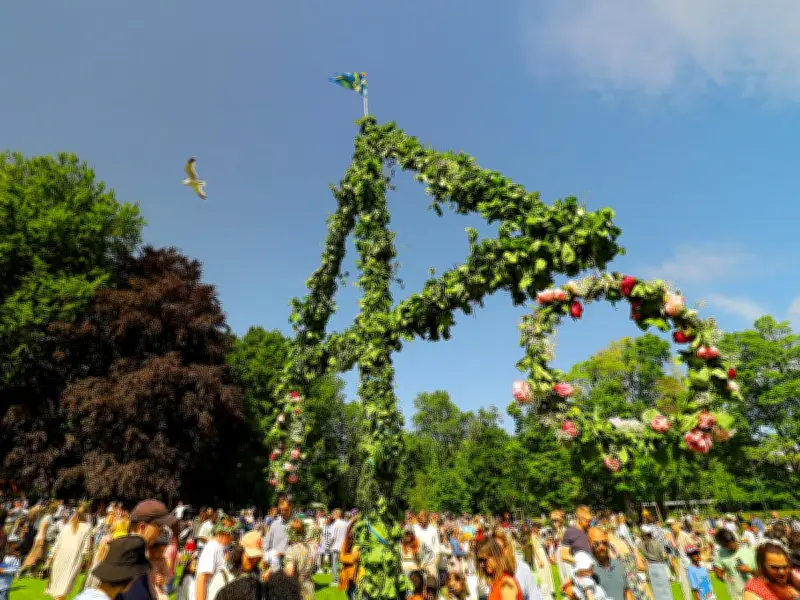
One of the most central parts of midsummer celebrations is the Midsummer pole, also known as a Maypole – and it is vastly different from the maypoles in the UK. From the late Middle Ages, Swedes began raising and dancing around a Midsummer pole. Decorating it with flowers and greenery is called 'maja', which is why it is also known as a maypole. It typically consists of a tall vertical mast with a horizontal crossbeam, from which two leafy wreaths or rings hang.
Dancing Like Frogs
The main reason Swedes make the Maypole today is to dance around it. Again, it is not like in the movie Midsommar. Originating from ancient pagan and Germanic traditions, the dance celebrates fertility, the awakening of nature, and the summer solstice. But today, it has become a tradition many Swedes would describe as 'embarrassing'. Common in all of Sweden are traditional ring dances, mostly in the form of dances where participants alternate dancing and making movements and gestures based on the songs. One example is pretending to scrub laundry while singing about washing, or jumping as frogs during the song Små grodorna ("The little frogs"), which actor Alexander Skarsgård was seen teaching talk show host Jimmy Fallon a few years ago.
It Will Always Rain
Even though Midsummer is the celebration of summer and the longest day of the year, there is a high likelihood that it will rain at least one day during the three-day celebration. In her 27 years, Sjoberg has never had a Midsummer celebration where it has not rained. Even if the weather forecast says it will be nice and sunny, the rain will find a way to surprise you. So just have a rain jacket or umbrella close by.
Picking Seven Flowers Before Bedtime
Once the day is coming to an end, another old tradition is for girls and women of all ages to pick seven flowers, preferably all from different fields. This must be done in silence without saying a word to anyone during the process. Then once done, you place this small bouquet of flowers under your pillow, and you will supposedly dream about your one true love.
Baby Boom
Many seem to have found their 'true love' during the actual Midsummer celebrations, since nine months later, there is often a baby boom happening, with more babies being born than on average. And so, the process starts again, as the next Midsummer celebrations will have even more people celebrating, as it will be fun for people of all ages.