Windbreakers Surge as Symbol of Realism from Greenland's PM to Marty Supreme
Windbreakers: The Garment for Uncertain Times

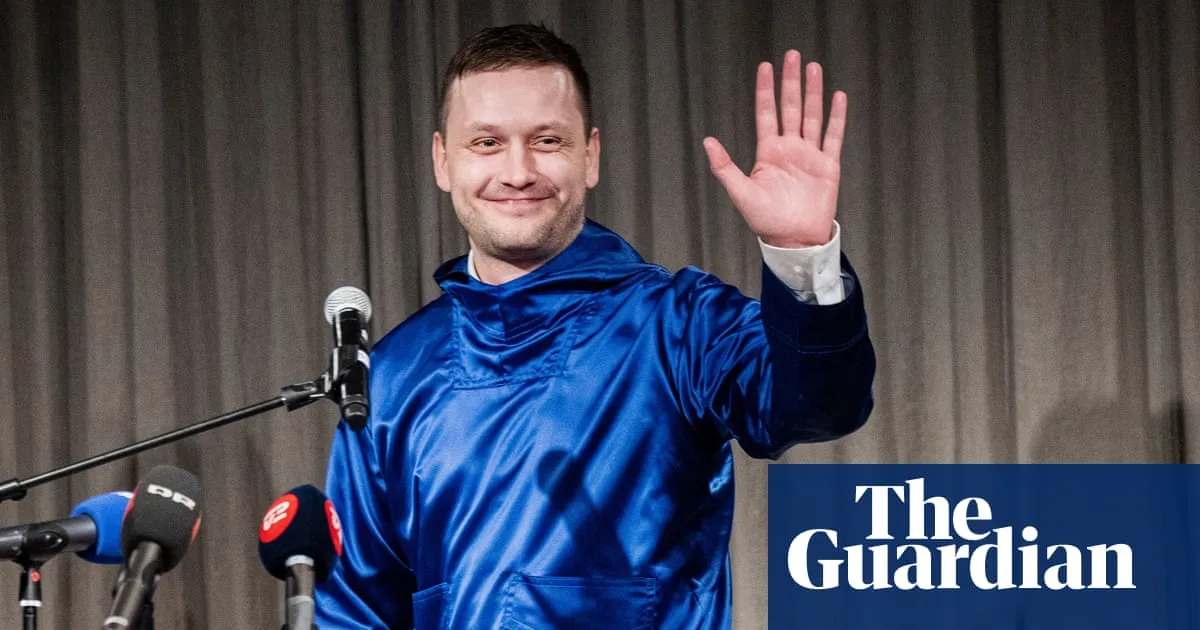
In a striking departure from traditional power dressing, the humble windbreaker is having a profound cultural moment, symbolising a global shift towards practicality and realism. The garment's newfound significance was powerfully illustrated this week when Greenland's Prime Minister, Jens-Frederik Nielsen, stood firm against former US President Donald Trump's expressed desire to "own" Greenland, delivering his defiant message while wearing a bright glacial-blue anorak.

A Garment Loaded with Meaning

While the Prime Minister frequently wears such practical outerwear, the context of the high-stakes geopolitical statement imbued his bright blue windbreaker with potent new symbolism. The piece is a modern interpretation of the traditional Inuit anorak, a garment originally crafted in the Arctic from marine mammal membranes for pure survival. This lineage connects Nielsen's contemporary political stance to a heritage of resilience.

Concurrently, the windbreaker is dominating popular culture, fuelled by the frenzied press tour for the film Marty Supreme. A specific $250 (£185) promotional windbreaker, created by luxury brand Nahmias in collaboration with A24, actor Timothée Chalamet, and stylist Taylor McNeill, became the tour's unlikely star. Emblazoned with the film's title and three gold stars, it was worn by celebrities from Kendall Jenner to Ringo Starr, creating a cultural phenomenon that saw the jacket sell out instantly.

From Resale Sites to the Front Row

The demand for the Marty Supreme jacket has been astronomical, with a blue size large listed for nearly £16,000 on StockX. On Depop, searches for "windbreakers" have risen by 60% in six months, while searches for "Marty Supreme" skyrocketed by 1,475% in just six weeks. The garment's fashion credentials were further cemented when style icons like Hailey Bieber, Zoë Kravitz, and Charli XCX wore versions on the front row of Saint Laurent's Paris show in September.

According to sports and fashion journalist Daniel-Yaw Miller, "windbreakers are definitely having a moment in both menswear and womenswear," driven by an elevated take on 90s sportswear and street fashion. Trend forecaster J'Nae Phillips notes the jacket sits at a crossroads of "practicality, nostalgia and irony," perfectly capturing the current mood.

Dressing for an Unpredictable World

Beyond fashion cycles, there is a compelling, meteorological reason for the windbreaker's rise. As Storm Goretti brought 99mph gusts to the UK, Phillips observed we are in a permanently "in-between" climate moment. "Windbreakers are designed for uncertainty, which mirrors how people are dressing more broadly: adaptable, layerable, non-committal," she explained.

This aligns with a broader cultural pivot. "They align with a broader mood shift away from aspiration and toward realism," Phillips states. "They acknowledge that life is windy, unpredictable, and often a bit damp, and that being dressed for that feels oddly reassuring right now." The garment represents gorpcore domesticated—not for climbing Everest, but for navigating daily errands and an unpredictable world.

The high street has enthusiastically embraced the trend. Zara offers a polka-dot version, London-based Damson Madder has several stylish takes, COS has its own iteration, and Ganni offers a leopard-print option. Leading the charge is K-Way with its reimagined Le Vrai jacket. As Lorenzo Boglione, CEO of K-Way's parent company, notes, windbreakers have evolved from simple protection into true lifestyle pieces—a fitting uniform for our turbulent times.