London Fashion Week Embraces Inclusivity with Groundbreaking Touch Tour for Visually Impaired Guests
In a pioneering move towards greater inclusivity, London Fashion Week has introduced a transformative "touch tour" designed specifically for blind and low-vision fashion enthusiasts. Spearheaded by designer Chet Lo and the non-profit initiative Making Fashion Accessible, this innovative approach is redefining the catwalk experience, ensuring that everyone can engage with high fashion regardless of visual ability.
A Sensory Sneak Preview of the Night Market Collection
At the Mandarin Oriental hotel, ahead of his highly anticipated Night Market show, Chet Lo personally guided a group of six guests through a tactile exploration of his new collection. "If you put your hands out and run your fingers along this skirt, you’ll feel that there are soft feathers appliquéd on to it," Lo explained, describing an emerald green skirt with black panels. The guests, all of whom have low vision or are blind, listened intently as Lo passed around items like spiky-backed jackets and clingy knitted dresses, allowing them to feel each piece's texture and structure.
This immersive touch tour was organised by Making Fashion Accessible, founded by celebrity hairstylist Anna Cofone in 2019. The initiative aims to foster inclusivity in fashion and beauty, addressing long-standing barriers for disabled individuals. "There is this preconceived idea that a blind or low-vision person won’t care about how they look, and actually that couldn’t be further from the truth," Cofone stated, citing her blind father as inspiration for the project.

Multi-Layered Sensory Experience Enhances Catwalk Shows
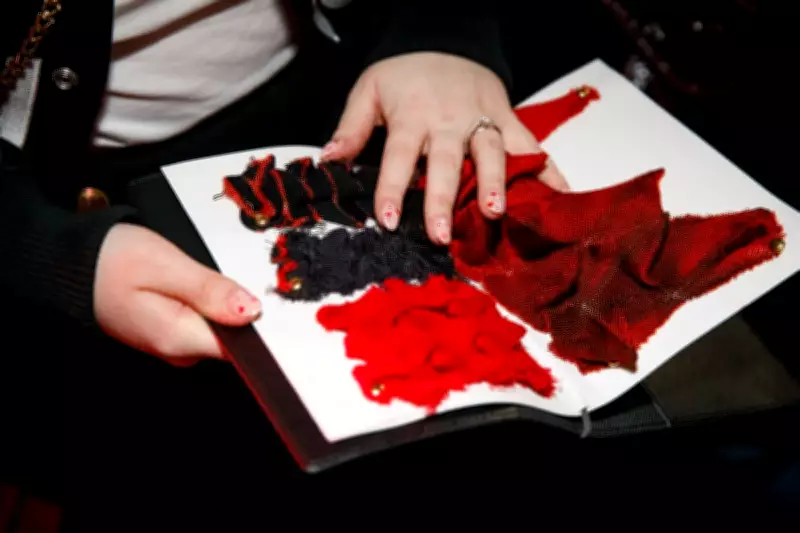
Following the tour, guests were seated front row at Lo's show, where they received headphones for live audio descriptions of each look and a booklet featuring fabric swatches from the collection. Jane Manley, a fully blind data analyst at the Royal National Institute of Blind People, shared her experience: "I am all about feeling the energy in the room and hearing people ‘umming’ and ‘ahhing’ as a model walks by. I can connect that energy with the swatch booklet and the audio description to create a picture of each look in my mind."
Other attendees echoed this sentiment. Livi Deane, a model and beautician who lost her right eye to cancer, noted that the swatches helped her perceive textures despite poor depth perception. Disability activist Catrin Pugh, who has vision loss from burns, added: "Having the capacity to feel, imagine and sense the detail opened the whole show up to me so I could feel completely part of it."
Addressing the Overlooked Purple Pound in Fashion
The initiative highlights a significant market often neglected by the fashion industry. The purple pound, representing the spending power of disabled households, was valued at £274 billion in 2023. Yet, many designers and retailers fail to incorporate adaptive features like braille tags, easy fastenings, or detailed alternative text online. Chet Lo emphasised the importance of change: "Low-vision and blind people are a demographic that are really overlooked in the industry... I wanted to prove to other designers that it is really easy to integrate this demographic into our work."
Making Fashion Accessible, launched in 2024, has already collaborated with designers such as Roksanda, Erdem, and SS.Daley. Cofone explained her motivation: "If we think about fashion as a whole, especially catwalk shows, they are so not inclusive. I began chatting to my team about what features we could implement that would help blind and low-vision guests create their own visual of the looks."
Personal Stories of Empowerment and Identity
For many attendees, the touch tour and sensory aids restored a sense of identity and connection to fashion. Lucy Edwards, a disability activist who lost her sight at 17 due to Incontinentia Pigmenti, described fashion as a crucial part of her identity. "Fashion was part of my identity and suddenly I couldn’t access it," she said, noting that the feathered looks in Lo's collection were her favourite due to their tactile nature. She compared the experience to shopping, feeling for details like neckline cuts and stitching.

Vix Seffens, a brand strategist with Stargardt's disease, praised the event as "a multi-layered sensory experience." She elaborated: "Attending the show is like a puzzle you are able to put together in your mind. You have felt the fabric at the touch tour so you also know how heavy it is and how it moves... Suddenly the experience of seeing the show is so much richer."
A Future of Inclusive Fashion
This initiative not only enhances accessibility but also encourages greater creativity and daring in personal style among visually impaired individuals. Edwards reflected on the impact: "Previously, I would not have clashed colours and textures as I was sticking to an arbitrary fashion law in my head. Now, it’s like we can do whatever we want and we can be whoever we want to be."
As London Fashion Week continues to evolve, the touch tour sets a powerful precedent for inclusivity, demonstrating that with simple adjustments, the fashion world can become a welcoming space for all. Chet Lo and Making Fashion Accessible are leading the charge, proving that fashion's beauty can be experienced through all senses, not just sight.