The recent Milan Fashion Week menswear shows for Fall/Winter 2026-2027 became a platform for pointed cultural commentary and, for one house, a familiar controversy. Two of Italy's most prominent fashion brands, Prada and Dolce & Gabbana, dominated headlines for starkly different reasons, highlighting the industry's ongoing struggle to navigate politics and representation.
Prada's 'Uncomfortable' Dialogue with Power
At Prada, designers Miuccia Prada and Raf Simons presented a collection they openly described as "uncomfortable." This discomfort was not physical but intellectual, born from the challenge of reflecting a volatile global moment through clothing. Backstage, Prada acknowledged the difficulty of merging contemporary world issues with pure fashion discourse in the current climate.
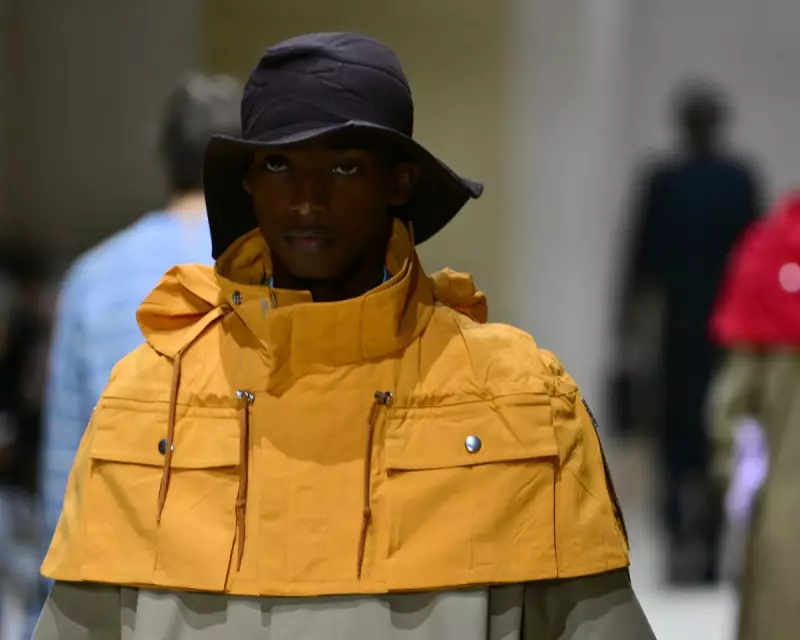
The resulting looks were intentionally jarring, juxtaposing disparate elements within single outfits. A red sou'wester was layered over a trenchcoat; a yellow scoop-neck jumper featured the extended cuffs of a shirt spilling from its sleeves. These deliberate clashes served a conceptual purpose. Raf Simons explicitly stated the deconstructed tailoring, like the unruly shirt cuffs, was a rejection of a specific image of authority. "We don't want the American corporate kind of masculine power," Simons declared, aiming instead for a more "youthful" interpretation of masculinity.

Simons reflected on the evolving link between fashion and politics, noting that while direct sartorial reactions to world events were more overt in past decades, the desire to engage remains. The collection, filled with more questions than answers, stood as Prada's conscious decision not to "sit still" amidst global uncertainty.
Dolce & Gabbana's Recurring Casting Controversy
In stark contrast, Dolce & Gabbana's show on Saturday drew intense criticism for its apparent lack of diversity. Titled 'The Portrait of Man', the presentation featured what commentators and audiences noted was an entirely white cast of models. The disconnect between the inclusive title and the homogeneous runway did not go unnoticed.
Fashion commentators on Instagram, including Lyas who dubbed it "50 shades of white," swiftly called out the brand. The post garnered over 41,000 likes, with model Bella Hadid adding her voice to the critique, questioning continued support for a brand with a history of controversies. This incident is not an isolated one for Dolce & Gabbana. The brand has faced repeated accusations of racial and cultural insensitivity over the past decade.
Past controversies include selling earrings resembling Blackamoor figures in 2012, naming a shoe style "slave sandal" in 2016, and a 2018 advertising campaign in China deemed culturally offensive, which was followed by allegedly derogatory direct messages from Stefano Gabbana. This pattern has cemented a reputation for recurring missteps in matters of race and representation.
A Wider Industry Reckoning
The events in Milan underscore a persistent tension within high fashion. Prada's attempt to deconstruct political aesthetics through clothing demonstrates one approach to engagement, albeit one its creators find complex. Simultaneously, the backlash against Dolce & Gabbana reveals a growing intolerance for outdated and non-inclusive casting practices, especially from major houses.
It is worth noting that Prada itself faced accusations of cultural appropriation during its June menswear show, where models wore footwear inspired by traditional Indian Kolhapuri sandals. In response, Lorenzo Bertelli, Prada's head of corporate responsibility, acknowledged the inspiration and suggested potential future collaboration with Indian artisans, though no such products have yet materialised.
The Fall/Winter 2026-2027 menswear season in Milan has thus served as a potent reminder: in today's climate, fashion choices—from a deconstructed cuff to a model's casting—are increasingly viewed through lenses of politics, power, and social responsibility, whether designers intend them to be or not.