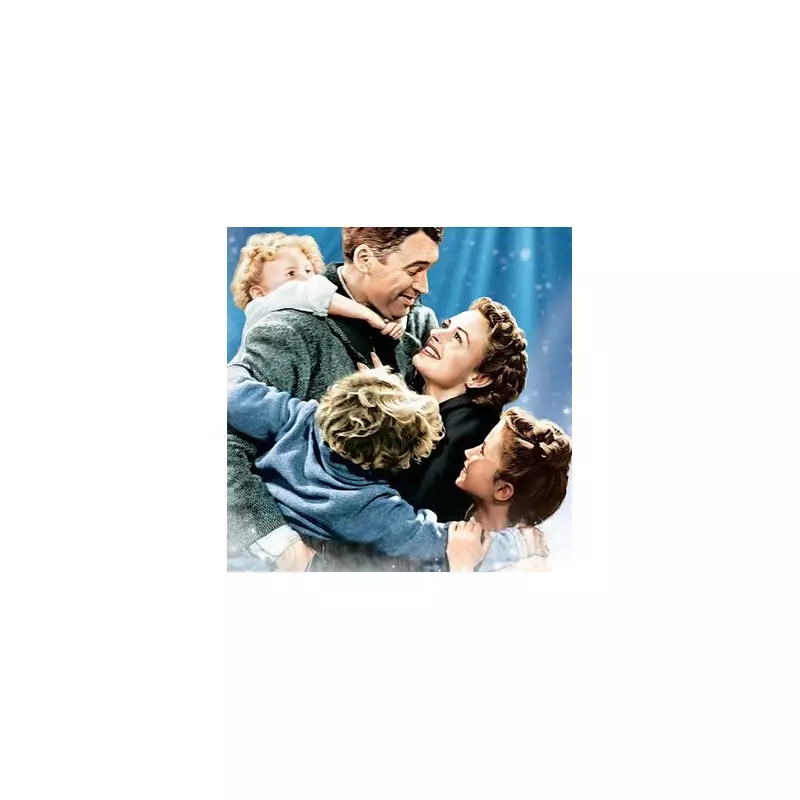
For countless families across the UK, the festive season is incomplete without a viewing of Frank Capra's heartwarming tale, It's a Wonderful Life. Yet, the journey of this 1946 film to becoming an indispensable Christmas classic is a story of initial failure, a monumental legal error, and decades of unexpected television exposure.
From Box Office Flop to Festive Fixture
Despite its current revered status as one of the greatest films ever made, It's a Wonderful Life was a financial disappointment upon its original release. The concept of a perennial holiday movie was not yet established, and the film, starring James 'Jimmy' Stewart as the despairing George Bailey, faded from theatres without fanfare. Its plot, where a guardian angel shows a suicidal man the value of his life, resonated later than anyone anticipated.
The film's fortunes changed irrevocably in 1974 due to a costly administrative oversight. The copyright was not properly renewed, causing the movie to accidentally fall into the public domain. This meant television networks could air it repeatedly during the Christmas period without paying royalties. This constant, free broadcast schedule throughout the 1970s and 80s embedded the film into the cultural fabric of the holiday season, transforming it into the beloved staple it is today.

Behind the Scenes: War, Snow, and Strange Accusations
The film's production and legacy are filled with fascinating details. Jimmy Stewart had recently returned from service in World War II, and many historians believe his raw, emotional performance, particularly in George Bailey's darker moments, was informed by his real struggles with wartime stress.
Capra was determined to create a more cinematic atmosphere. To achieve the film's gentle falling snow, he pioneered a new artificial snow mixture to avoid the loud crunch of painted cornflakes previously used in Hollywood. His crew used a combination of Ivory soap flakes, chipped ice, and fire-extinguisher chemicals.
In a bizarre twist of history, a 1947 FBI memo labelled the film's depiction of the villainous, greedy banker Mr. Potter as potential "Communist propaganda." This accusation, however, never gained public traction. Capra also made the controversial choice to leave Potter unpunished, a realistic decision that fans still debate.
Memorable Moments and Happy Accidents
Several iconic scenes have their own unique backstories. The famous dance sequence where the gym floor opens to reveal a swimming pool was filmed at Beverly Hills High School, which actually had such a mechanism. The school's sliding floor and pool remain in place to this day.
In another moment of unexpected authenticity, actress Donna Reed performed her own stunt during the scene where her character throws a rock at an old house. She successfully broke the window on her first attempt, reportedly stunning director Frank Capra, who had planned to use a special effects shot.
From its inauspicious beginnings to its resurrection via a copyright blunder, It's a Wonderful Life stands as a testament to how fortune and accident can forge a legacy. Its message of hope and community, amplified by its annual broadcast, ensures its place at the heart of Christmas for generations to come.